

INTRODUCTION
Fix Frizzy Hair Naturally
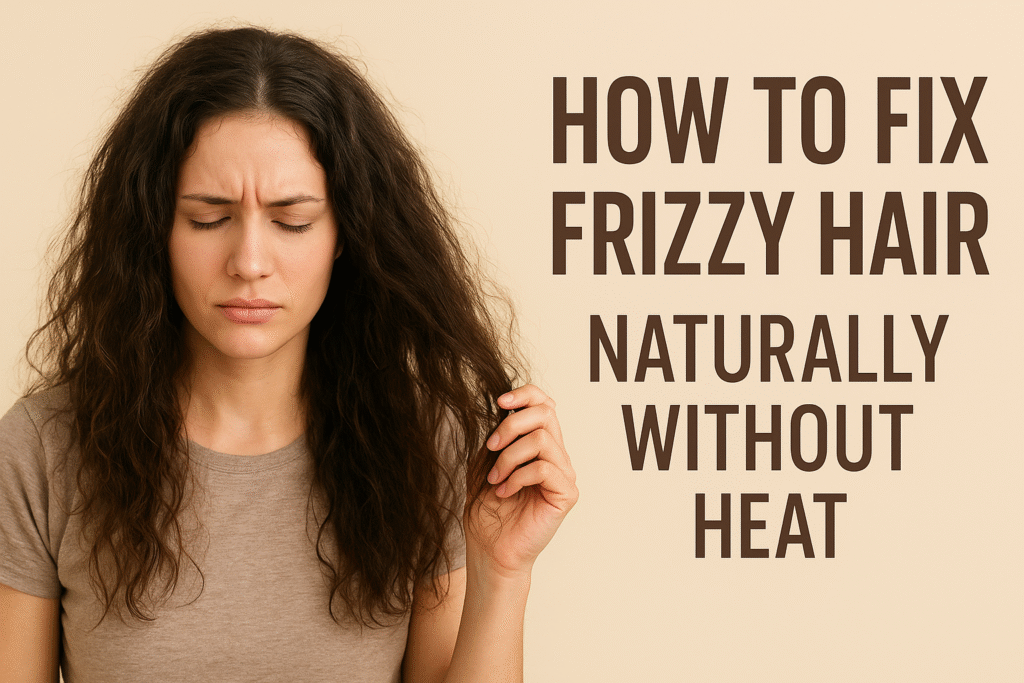
Frizz is one of the most common hair complaints. Even if your hair is healthy, humidity, damage, and lack of proper care can make the strands puff up, become unruly, or lose definition. Many people turn to heat styling (flat irons, blow-dryers, curling irons) to tame frizz, but excessive heat can strip moisture, weaken hair, and cause breakage over time. The good news is: you can tame frizz using natural, gentle, no-heat methods that improve hair health in the long run.
In this article we’ll go through:
- Why hair gets frizzy in the first place
- The fundamentals of combating frizz naturally
- A step-by-step hair care routine
- Natural ingredients and DIY treatments
- Additional tips and lifestyle habits
- Troubleshooting and when to see a professional
1. Why Hair Becomes Frizzy
Understanding the causes of frizz helps you treat it more effectively:
- Lack of moisture / dehydration: When hair is dry, it seeks moisture from the air, making cuticles lift and creating frizz.
- Raised cuticle scales: Hair’s outer layer (the cuticle) can be lifted or damaged, letting humidity in and causing fibers to swell or stick out.
- Humidity & weather: Moisture in the air forces hair fibers to absorb water and expand, disrupting smoothness.
- Damage from chemicals or heat: Bleaching, coloring, perms, or excessive heat styling degrade the cuticle and make hair more porous and frizz-prone.
- Mechanical damage: Rough brushing, towel rubbing, friction (e.g. cotton pillowcases), tight elastic bands can all rough up strands.
- Mismatch of products: Using products with harsh surfactants, alcohols, or ingredients that strip natural oils makes hair more vulnerable.
When you avoid using external heat, you give your hair a chance to heal, retain moisture, and rebuild integrity.
2. Fundamentals of Naturally Taming Frizz
Here are the core principles to guide your natural, no-heat regimen:
- Moisture > Protein balance: Hair needs both water (moisture) and structural proteins (keratin, etc.). Overemphasis on one or the other can lead to limpness or brittleness.
- Sealing the cuticle: After moisturizing, you want to lock in hydration by smoothing and closing the cuticle (via oils, butters, or lightweight sealants).
- Gentle handling: Use wide-tooth combs, microfiber towels or old t-shirts, finger detangle, avoid friction.
- Sulfate- and alcohol-free products: Choose mild surfactants (e.g. sodium cocoyl isethionate, decyl glucoside) and avoid drying alcohols.
- pH considerations: Slightly acidic rinses (pH ~4.5–5.5) help flatten the cuticle.
- Protect from environmental stressors: UV, wind, pollution all stress hair; cover or shield when possible.
With these in mind, let’s build a day-to-day routine.
3. Step-by-Step No-Heat Frizz Control Routine
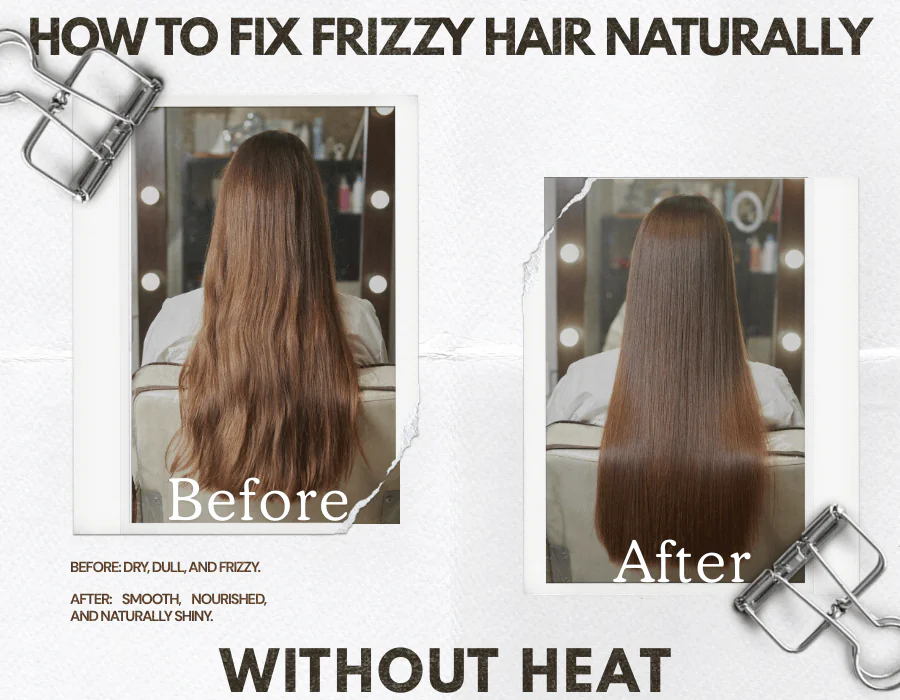
Below is a sample weekly and daily regimen you can adapt to your hair type (straight, wavy, curly, coily):
A. Weekly / Periodic Steps
- Clarify (once every 1–2 weeks)
Use a gentle clarifying shampoo (without sulfates or harsh detergents) to remove product buildup, hard water mineral deposits, and oils. This resets hair so that it can better absorb treatments and natural moisturizers. - Deep conditioning / protein-moisture treatment
Alternate between deep hydration masks and protein treatments (if your hair shows signs of weakness).- For a moisture mask, use aloe vera, honey, glycerin, coconut milk, or plant-based butters.
- For a protein mask, use yogurt, egg white (or whole egg for fine hair), gelatin, silk/amino-acid blends, or cottage cheese.
Apply generously, cover with a shower cap, and allow it to sit for 30–60 minutes (or even overnight, depending on how your hair tolerates it). Then rinse with cool water.
- Cold / cool water rinse
Finish your wash or treatment with as cool a rinse as you can tolerate. This helps flatten the cuticle and lock in moisture.
B. Daily / Frequent Steps
- Leave-in conditioning
After towel (or t-shirt) blotting your damp hair, apply a light leave-in conditioner or detangler while hair is still wet. Focus mid-lengths to ends; avoid the scalp if your hair tends to get oily. - Sealing / oiling
Follow the “moisturizer then sealant” rule: After your leave-in (moisturizer step), take a drop or two of a lightweight natural oil or butter (argan oil, jojoba oil, grapeseed, shea butter, avocado oil mixture). Rub between palms, then smooth over dry or damp hair, focusing on ends and frizzy sections. - Protective styling / low manipulation
Let your hair air-dry in loose styles (braids, twists), or use gentle protective styles (loose bun, pineapple at night). Avoid tight elastics, over-brushing, and constant touching. - Night care
Sleep on a satin or silk pillowcase, or wrap hair in a silk/satin scarf or bonnet. This reduces friction and moisture loss through the night. - Refresh as needed
On non-wash days, you can mist hair lightly with water or aloe vera juice, then reapply a drop of oil or a small amount of leave-in. For curly/coil textures, a “curl refreshing spray” (water + small amount of leave-in) can resurrect definition and reduce frizz.
4. Natural Ingredients & DIY Treatments
Here are some effective natural ingredients and DIY recipe ideas. Always patch-test before use, especially if you have allergies or sensitivities.
A. Natural Ingredients & Benefits
| Ingredient | Properties & Benefits |
|---|---|
| Aloe vera gel / juice | Very moisturizing, helps with protein balance, smooths hair cuticle |
| Coconut oil | Penetrates the hair shaft, reduces protein loss (in moderate use) |
| Olive oil | Good sealant, rich in fatty acids |
| Argan oil / jojoba oil / grapeseed oil | Light oils to seal without heaviness |
| Shea butter / mango butter | Good for sealing ends, especially for thick/coarse hair |
| Honey | Humectant (draws moisture) when used in small amounts |
| Avocado / banana | Emollient, hydrates and softens |
| Yogurt / egg / gelatin / silk protein | Protein sources to temporarily strengthen hair |
| Apple cider vinegar (diluted) | Acidic rinse to flatten cuticle (pH ~3–4 diluted) |
| Flaxseed gel | Natural styling gel, adds definition and holds curls lightly |
B. Sample DIY Treatments
1. Aloe + Honey Hydration Mask
- ¼ cup pure aloe vera gel
- 1 tablespoon raw honey
- 1 tablespoon coconut milk
Mix into a smooth blend. Apply to damp hair from roots to ends. Cover with a shower cap for 30–45 min, then rinse with lukewarm water and finish with cool rinse.
2. Avocado + Banana Butter Mask
- ½ ripe avocado
- ½ ripe banana
- 1 tbsp olive oil
Mash well and apply on damp hair, focusing on mid-lengths and ends. Let sit 30 min or more, then rinse and follow with a light conditioner.
3. Egg + Yogurt Protein Treatment
- 1 egg (or just the white, if hair is fine)
- 2 tbsp plain yogurt
- 1 tbsp olive oil
Whisk together, apply to hair (especially where it feels weak or limp). Leave for 20–30 min under a cap. Rinse with cool water (to avoid cooking the egg), then follow with a moisturizing conditioner. Use this once every 3–4 weeks (or less often for fine/sensitive hair).
4. Apple Cider Vinegar (ACV) Rinse
- 2 tbsp apple cider vinegar
- 1 cup water
After shampooing or conditioning, pour this diluted ACV over hair as a final rinse. Wait 1–2 minutes, then rinse lightly or let the scent dissipate. This helps close the cuticle and improve shine.
5. Flaxseed Curl Gel
- ¼ cup flaxseeds
- 2 cups water
Boil for ~10 minutes, stirring, until it becomes gel-like. Strain seeds, let it slightly cool, then add a few drops of essential oil (optional). Use this as a styling gel for curls/coils to define without frizz.
5. Additional Tips & Lifestyle Habits
To support your frizz-control routine, incorporate these habits:
Nutrition & Hydration
- Drink plenty of water daily; hair health is influenced from within.
- Eat a balanced diet rich in proteins, omega-3 fatty acids (e.g. from fish, flax, chia), vitamins A, C, E, and minerals like zinc and biotin.
Scalp Health
- A healthy scalp supports healthy hair growth. Massage your scalp gently with fingertips or a soft brush to stimulate blood flow.
- Use mild, scalp-soothing ingredients (e.g. tea tree oil, aloe, chamomile) if you have itchiness or buildup.
Trimming / Split Ends
- Trim split or damaged ends every 8–12 weeks (or as needed). Split ends travel up the hair shaft and worsen frizz.
Sun / Environment Protection
- Wear hats, scarves, or UV-protective sprays if you’ll be in intense sun.
- Use leave-ins with antioxidants to protect from pollution.
- In windy or extremely dry environments, consider loosely braiding or twisting hair to reduce exposure.
Gentle Washing & Drying
- Do not wash hair every day (hair needs time to retain natural oils).
- Use lukewarm water rather than hot.
- After washing, blot hair gently with a microfiber towel or cotton T-shirt—never rub.
Avoid Overloading
- More product does not always mean better results. Use the minimum effective amount to avoid buildup.
- When trying new ingredients, introduce one at a time so you can see how your hair reacts.
6. Troubleshooting & When to See a Professional
Even with consistent natural treatments, sometimes frizz persists. Here’s how to troubleshoot:
A. My hair still feels dry and frizzy…
- Possibly you need more moisture (try more frequent hydration masks).
- Or you are under-sealing: try combining oils or using butter sealants on ends.
B. Hair feels overly soft or limp
- You may be over-moisturizing or under-proteinizing. Introduce a protein treatment to restore structure.
C. Oils make hair greasy or flat
- You might be using too much oil or a heavy oil not suited to your texture. Use lighter oils or apply only to ends.
- Ensure your scalp isn’t overproducing oil (wash scalp as needed).
D. Frizz spikes during weather changes
- Reinforce your protection: layer a lightweight leave-in, then a sealant. Use anti-humidity sprays (preferably silicone-free).
- Consider adjusting routines seasonally (more moisture in dry weather, lighter in humid).
E. Persistent damage or breakage
- You may have underlying structural damage from chemicals or heat. A salon deep treatment (e.g. Olaplex or bond-building treatments) might be warranted.
- Consult a professional stylist/trichologist to assess hair integrity, breakage pattern, and recommend interventions.
Conclusion
Taming frizzy hair without heat is absolutely possible — with patience, consistency, and the right techniques. By prioritizing moisture, sealing, gentle handling, and natural treatments, you can rebuild healthier hair over time. It won’t always be perfect, but gradually you’ll see smoother, shinier, more manageable strands — without further damage from heat.
If you like, I can reformat this into blog style (with headings, images suggestions, SEO keywords, etc.) or provide a shorter version. Do you want me to prepare that?