

INTRODUCTION
Biotech Skincare Ingredients
In recent years the beauty industry has seen a powerful shift. Consumers are increasingly seeking skincare that not only delivers visible results, but also aligns with ethics, sustainability and science. Enter biotechnology — a field that is rapidly transforming how skincare is formulated, sourced and defined. Biotech skincare ingredients are poised to become the cornerstone of the next generation of “clean beauty”.
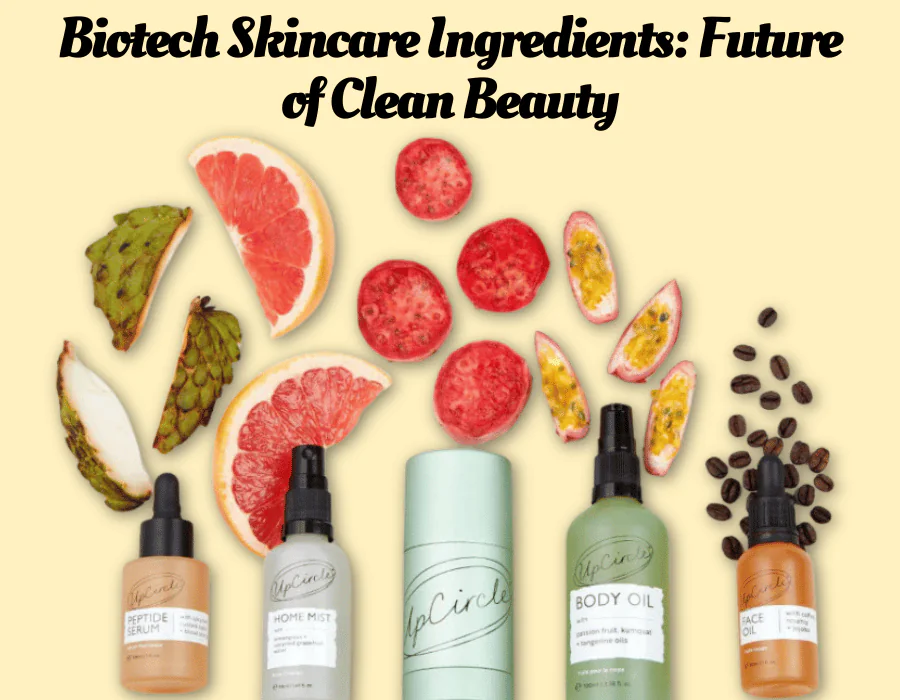
What does “biotech skincare” really mean?
At its core, biotech skincare refers to ingredients that are produced, modified, or grown using biological systems rather than simply extracted from traditional sources. As one cosmetic chemist explains, biotech ingredients are “created using living systems like yeast, algae, bacteria or plant cells to produce complex molecules that are identical, or even superior, to those found in nature.” Marie Claire UK+2WapoBeauty+2
Unlike conventional actives that may be harvested from plants at scale, subjected to seasonal variation or require animal-derived sources, biotech ingredients are lab-cultured or fermented. This means they can offer:
- Greater purity and consistency — fewer impurities, less batch variation. Marie Claire UK+1
- Enhanced performance — tailored molecules that mimic or improve upon nature’s own. Biotechblog
- Improved sustainability and ethics — reducing dependence on agricultural land, animal sources or vulnerable ecosystems. ITADI+1
In short: biotech is not simply a buzzword. It represents a paradigm shift in how ingredients are created and beauty is practiced.
Why clean beauty is converging with biotech
The term “clean beauty” originally referred to formulations free of controversial ingredients. Over time it has evolved to include transparency, ethical sourcing, low environmental impact, and demonstrable efficacy. But many older “natural” solutions struggle to deliver consistent results — due to variability in raw materials, supply chain issues, or limited potency. This is where biotech steps in.
Biotech formulation allows brands to address key tension points in clean beauty:
1. Purity & Safety
Ingredients grown in controlled lab environments avoid contaminants like pesticides, heavy metals, or agricultural run-off — common risks in traditional sourcing.
2. Sustainability
Rather than relying on large-scale harvesting of rare plants, deforestation or animal extraction, biotech uses fermentation, microbial culture or algal growth — often with far less land, water and energy usage. For example, squalane produced from sugarcane through precision fermentation avoids shark-liver or olive-derived alternatives. Marie Claire UK+1
3. Consistency & Efficacy
Natural raw materials can vary greatly in active content depending on climate, soil, harvest time. Lab-grown or fermented actives have predictable composition and optimized molecular structure for skin delivery.
4. Ethical & Innovative
Animal-derived ingredients, over-harvesting of wild botanicals and other practices are increasingly out of step with conscious consumers. Biotech offers new actives with fewer ethical compromises and opens doors to molecules that simply don’t exist in nature. Marie Claire UK
Thus, biotech brings together clean-beauty values and high-performance science. It promises formulations that are “clean, effective and future-oriented”.
Key biotech actives redefining skincare
Several biotech-derived or lab-cultured actives are already gaining traction. Here are some standouts:
Lab-grown Hyaluronic Acid (HA)
Traditionally, HA was sourced from animal tissues (e.g., rooster combs) but now it is predominantly produced via microbial fermentation. The result: purer HA, available in multiple molecular sizes, better quality control and fewer ethical issues. PBL Magazine+1
Biotech Squalane
Squalane is a lipid found in human skin and known for excellent barrier and moisturizing benefits. Some older forms derived from sharks or olives have sustainability concerns. Newer biotech squalane produced from sugarcane or other plant feedstocks replicates the molecule exactly — vegan, consistent and traceable. Marie Claire UK
Ectoin
This powerful molecule is produced by microorganisms living in extreme environments to protect themselves. In skincare, ectoin offers hydration and protection against environmental stressors. Produced via fermentation, it embodies biotech’s strength of turning nature’s survival mechanisms into skin benefits. Biossance
Bio-engineered Peptides & Growth Factors
Peptides are small chains of amino acids that signal skin cells to produce collagen, reduce inflammation, strengthen the skin barrier. Biotech allows production of peptides tailored for specific concerns, not just generic ones. Lab-derived growth factors (once restricted to medical treatments) are also being adapted for cosmetic use. Business Hub Academy
Algae and Microbial Derived Actives
Through biotech, algae or marine microbes can be harnessed to create antioxidants and polysaccharides not easily obtained via extraction. For instance, ingredients derived from micro-algae or marine bacteria bring novel chemical structures that deliver high potency. PBL Magazine
Microbiome-friendly Ingredients (Prebiotics/Probiotics/Postbiotics)
Biotech techniques enable the controlled production of microbes or metabolites beneficial for the skin’s microbiome ecosystem. These support barrier function, calm inflammation, and adapt to individual skin states. thehealthcarediary.com+1
How brands and consumers are responding
The beauty industry is proactively adopting biotech. Independent brands, being more agile, are harnessing biotech actives to differentiate themselves. Even legacy giants are investing heavily: acquisition of AI-biotech startup by major beauty group is one example of the push toward science-driven formulation. Vogue Business
From the consumer side, the demand is clear. People want products that are not just labeled “clean” but are backed by science, safe, ethical and high-performing. A biotech approach meets these expectations.
How to evaluate biotech claims (and what to look out for)
Not all “biotech” labelled skincare is created equal. Here are some considerations to apply when assessing products:
- Transparency: Does the brand clearly identify what biotech method or ingredient is used? Words like “lab-grown”, “fermented”, “precision-fermented”, “microbial-derived” can indicate biotech sourcing.
- Traceability & sourcing: Where does the feedstock come from? Is it renewable, is the process disclosed, is the supply chain sustainable?
- Efficacy evidence: Are there clinical trials, peer-reviewed data or at least supplier-data supporting the active’s function?
- Safety & purity: Biotech actives should be tested for stability, irritation potential, batch-consistency.
- Complementary formulation: A biotech active is only as good as its delivery system. The rest of the formula (vehicle, pH, supporting ingredients) matters.
- Ethics & sustainability credentials: Vegan, cruelty-free, land/water footprint, by-product usage, minimal waste — all alignment signals matter.
Challenges and limitations
While biotech offers big promise, it is not a quick fix or a panacea. Some of the current limitations include:
- Cost: Developing and scaling biotech actives can be expensive. That cost may still be passed to consumers.
- Industry adoption: Many brands operate legacy supply chains and may be slower to transition.
- Consumer understanding: “Biotech” can sound intimidating or “synthetic” to some consumers, despite the benefits. Education is needed.
- Regulation and claims: With novel actives come regulatory scrutiny. Verification, safety data and compliance are essential.
- Greenwashing risk: As with any trend, “biotech” might be used as a marketing buzzword without full backing. Consumers must remain discerning.
What the future looks like
Looking ahead, several key trends suggest how biotech skincare will evolve:
- Personalisation meets biotech: Combining biotech-derived actives with AI, genomics and microbiome analysis means skincare can move toward customised solutions. thehealthcarediary.com+1
- New actives beyond nature: Thanks to synthetic biology, we may see molecules that never existed in nature but are precisely engineered for skin benefit. Marie Claire UK
- Circular and regenerative sourcing: Biotech will continue to reduce dependence on extractive sourcing, enabling traceable, low-waste production. mwbioprocessing.com+1
- Delivery systems advancement: Biotech will synergise with nano-delivery, encapsulation, microbiome modulation to enhance efficacy and reduce irritation. thehealthcarediary.com
- Transparency and ingredient literacy: As consumers become more ingredient-savvy, brands using biotech will need to educate and demonstrate value beyond marketing.
A practical routine integrating biotech-powered skincare
To incorporate biotech ingredients into your routine, here’s a simple framework:
- Start with the serum: Choose a biotech-powered serum featuring an active like peptides, ectoin, or lab-grown HA. Serums concentrate actives and deliver deeper results.
- Follow with a biotech-rich moisturizer: Look for biotech squalane, fermented humectants, or microbiome-supporting postbiotics in your cream.
- Use targeted boosters: For concerns like aging, pigmentation or barrier weakness, select targeted formulations with biotech peptides or growth-factor derivatives.
- Support with clean base formulations: While active ingredients matter, the foundation still counts: gentle cleansers, broad-spectrum sunscreen, minimal irritants.
- Monitor results & adjust: Just like any skincare, results may take weeks. Record skin changes and check for tolerance (especially with novel actives).
- Be informed: Read labels, ask questions. If a product claims “lab-grown” or “precision-fermented”, check for supplier or brand disclosures. Not all are equal.
Why this matters for you
If you care about your skin and also about broader impacts — sustainability, ethics, animal welfare, environmental footprint — biotech skincare offers a compelling path forward. It bridges the gap between efficacy and conscience.
For someone in Pakistan (or anywhere outside major beauty-markets), this also points toward future formulations becoming more accessible globally. As biotech scales, we can expect wider distribution, more affordable pricing, and easier access to advanced actives.
Final thoughts
The intersection of biotechnology and clean beauty is not a fleeting trend — it’s the evolution of the industry. Brands are no longer simply extracting what nature offers; they are engineering what nature inspires. Whether it’s lab-grown hyaluronic acid, microbial peptides, or algae-derived antioxidants, biotech is providing ingredients that are cleaner, more consistent and more potent than ever before.
That said, consumer scepticism is healthy. Always look beyond labels, demand transparency, and prioritise formulations that deliver—not just promise. Armed with knowledge and curiosity, you can become part of this exciting frontier of skincare.
In short: if “clean” means ethical, sustainable and effective, then biotech is the next big chapter in clean beauty. Now is the time to pay attention, experiment smartly, and reap the benefits of science-meets-skin.