
INTRODUCTION
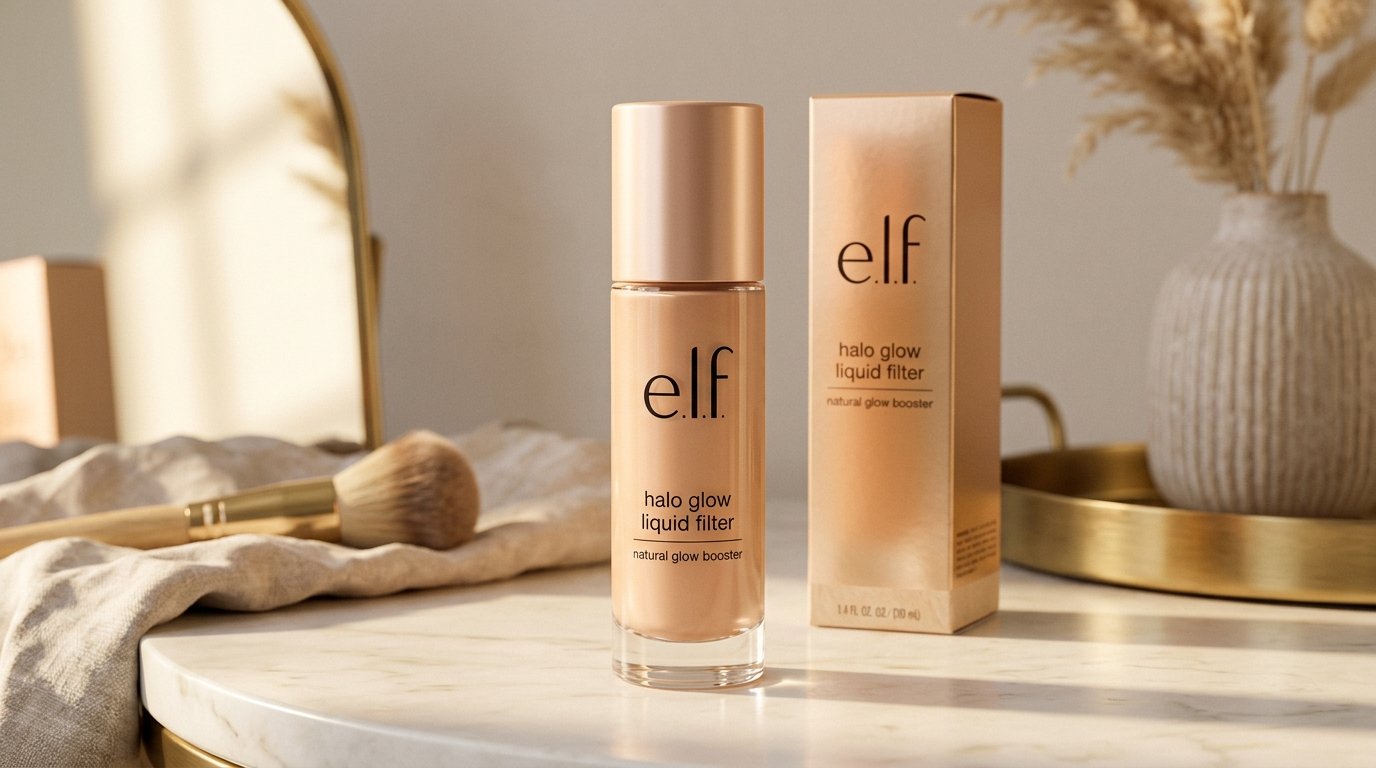
A radiant, fresh-looking complexion is one of the most popular makeup goals, but achieving that soft, luminous finish does not always require a heavy foundation or an expensive highlighter. Sometimes, the right complexion product can make your entire makeup routine look more polished with just a few drops. That is where the e.l.f. Halo Glow Liquid Filter comes in.
The e.l.f. Halo Glow Liquid Filter has attracted attention from beauty enthusiasts who want glowing skin, a softer-looking complexion, and versatile makeup at a more accessible price. Rather than functioning like a traditional full-coverage foundation, this liquid complexion booster is designed to enhance the appearance of skin with a radiant, soft-focus finish.
But is it worth adding to your makeup collection? Does it provide enough coverage to wear alone? Can you use it under foundation, and is it suitable for oily or dry skin?
In this detailed e.l.f. Halo Glow Liquid Filter review, we will explore the product’s intended uses, formula, key ingredients, finish, coverage, shade selection, application techniques, advantages, and potential drawbacks. We will also explain how to incorporate it into different makeup routines so you can decide whether it suits your preferences.
Quick verdict: If you enjoy dewy makeup, lightweight complexion products, and a luminous finish, the e.l.f. Halo Glow Liquid Filter is worth considering. However, if you prefer a matte complexion or need substantial coverage, you may want to use it alongside a foundation or concealer instead of relying on it as your main base.
Table of Contents
- Introduction
- What Is e.l.f. Halo Glow Liquid Filter?
- Product Overview
- Formula and Key Ingredients
- Texture, Finish, and Coverage
- Shade Range and How to Choose Your Shade
- How to Use e.l.f. Halo Glow Liquid Filter
- How It Looks on Different Skin Types
- e.l.f. Halo Glow Liquid Filter: Pros and Cons
- Who Should Buy This Product?
- Who Might Want to Skip It?
- Is e.l.f. Halo Glow Liquid Filter Worth the Money?
- Tips for Getting the Best Results
- Final Verdict: Should You Try e.l.f. Halo Glow Liquid Filter?
- Frequently Asked Questions About e.l.f. Halo Glow Liquid Filter
1. What Is e.l.f. Halo Glow Liquid Filter?
The e.l.f. Halo Glow Liquid Filter is a multipurpose liquid complexion booster from e.l.f. Cosmetics. It is designed to give skin a luminous appearance and a soft-focus effect while offering light, buildable coverage.
Unlike a conventional foundation that primarily focuses on evening out the complexion, this product puts radiance at the center of the makeup look. It can be used in several ways depending on how much glow and coverage you want.
According to the brand, the product can be worn alone, under or over foundation, mixed with foundation, or applied to selected areas as a liquid highlighter.
This flexibility makes it appealing to people who enjoy experimenting with their makeup. One day, you can wear a small amount for a fresh everyday look. On another occasion, you can mix it with foundation for a more luminous evening base.
The product is particularly relevant if you prefer makeup that looks fresh and reflective rather than flat or heavily powdered.
It is important to understand that the word “filter” describes the intended cosmetic effect. The product can help create a smoother-looking, light-reflective appearance, but it does not literally erase pores, lines, pigmentation, or other natural skin features.
What makes it different from foundation?
A foundation is generally selected according to its coverage, finish, and ability to even out visible differences in skin tone. A complexion booster like Halo Glow Liquid Filter focuses more strongly on luminosity and the overall appearance of the skin.
You may still notice some improvement in how even your complexion looks, but you should not expect it to cover every blemish or dark spot.
For many makeup lovers, this is precisely the appeal: it adds radiance without necessarily making the skin look heavily made up.
2. Product Overview
Before purchasing a complexion product, it helps to understand what it is designed to do and what you should realistically expect.
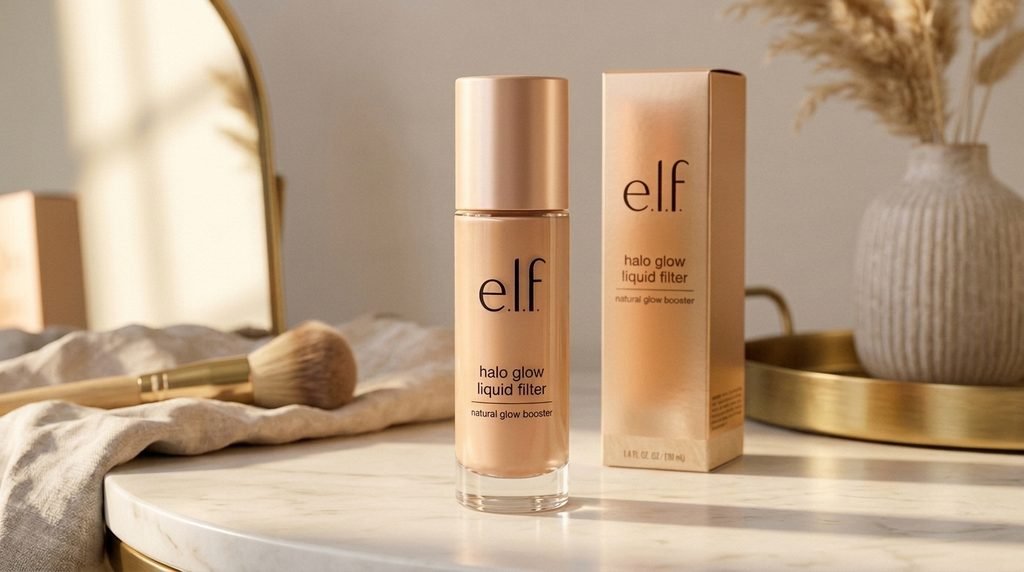
Here is a quick overview of the e.l.f. Halo Glow Liquid Filter.
| Feature | Details |
|---|---|
| Brand | e.l.f. Cosmetics |
| Product name | Halo Glow Liquid Filter |
| Product type | Liquid complexion booster |
| Main purpose | Enhance radiance and create a soft-focus appearance |
| Coverage | Light and buildable |
| Finish | Luminous and dewy |
| Available shades | 15 flexible shades listed by the brand |
| Main application options | Alone, under foundation, over foundation, mixed with foundation, or as a highlighter |
| Best suited to | People who enjoy radiant complexion makeup |
| Packaging | Glass container |
| Product size | Approximately 31.5 ml / 1.06 fl oz |
Product availability, packaging, shade options, and pricing can vary by market. Check the official e.l.f. Cosmetics website or your local retailer for current details.
One of the product’s biggest advantages is its versatility. You do not have to use it in exactly the same way every time, which can make it a useful addition to a minimal makeup routine.
Is it a skincare product or makeup?
The brand describes Halo Glow Liquid Filter as a makeup and skincare hybrid. However, it is best approached as a cosmetic complexion product rather than a replacement for your usual skincare routine.
You should still use an appropriate moisturizer and broad-spectrum sunscreen during the day. The product is not a substitute for either, and it should not be relied upon to provide sun protection.
3. Formula and Key Ingredients
The formula is an important part of any e.l.f. Halo Glow Liquid Filter review because the way a complexion product feels can be just as important as the finish it creates.
The official ingredient list includes moisturizing and emollient ingredients, such as squalane and glycerin, alongside ingredients that help the formula spread smoothly. The exact list may vary between product versions or shades, so check the packaging of the product you purchase.
Here are some ingredients worth understanding.
Squalane
Squalane is an emollient commonly used in skincare and cosmetics. It helps soften the skin’s surface and can contribute to a comfortable, conditioned feel.
In a complexion product, it can help create a smoother-looking base and make makeup feel less dry or rigid.
Squalane does not guarantee that a product will suit every skin type. Your overall skin condition, other products, and individual sensitivities still matter.
Glycerin
Glycerin is a humectant, meaning it helps attract and retain water in the outer layers of the skin.
It is widely used in moisturizers and makeup products because it can support a more comfortable, hydrated feel. This can be especially useful in complexion products worn over dry areas.
However, the presence of glycerin does not mean you can skip moisturizer if your skin needs one.
Hyaluronic acid derivatives
The product’s listed formula includes sodium hyaluronate and hydrolyzed sodium hyaluronate in relevant versions.
These ingredients are forms of hyaluronic acid or related derivatives commonly used for their water-binding properties. In cosmetic formulations, they can contribute to a hydrated-looking appearance.
They should not be confused with a guarantee of long-term hydration or a treatment for skin conditions.
Dimethicone
Dimethicone is a silicone-based ingredient used in many makeup and skincare formulations. It helps products spread smoothly and can create a silky, soft-feeling finish.
In complexion makeup, this type of ingredient can also contribute to the appearance of smoother skin by reducing the emphasis on some surface irregularities.
The effect is cosmetic rather than permanent. How much smoothing you notice depends on your skin texture, the amount applied, and the lighting.
Light-reflecting pigments
The formula also uses ingredients that contribute to its luminous appearance. Reflective components can help light bounce off the skin, creating the impression of greater radiance.
This is one reason a glow booster may look more flattering in natural light than a flat, heavily powdered base.
The trade-off is that reflective makeup may make texture more noticeable in certain lighting conditions, especially when too much product is applied.
What should you know about the ingredients?
Overall, the formula is designed to combine smooth application with a radiant finish. However, an ingredient list alone cannot establish whether a product will be suitable for your individual skin.
If you have sensitive skin or known ingredient allergies, review the current packaging and consider testing a small amount before using it across your face.
4. Texture, Finish, and Coverage
The three details that matter most when choosing a complexion booster are its texture, finish, and coverage.
Texture
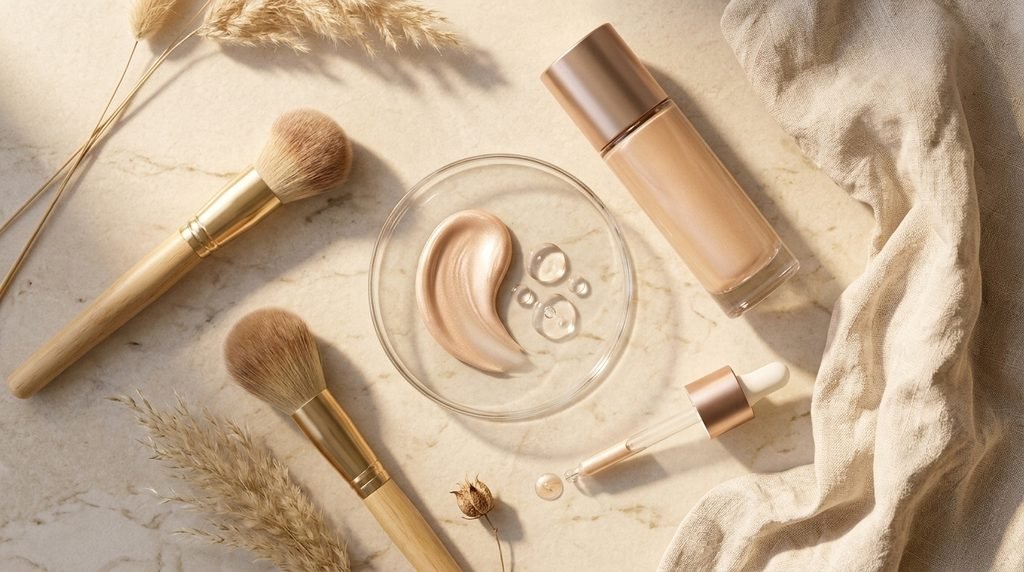
Halo Glow Liquid Filter is a liquid product intended to spread across the skin and blend with other complexion makeup.
For a more even application, start with a small amount and blend it before adding more. Applying too much at once can make the result look overly shiny or cause the complexion to feel heavier than intended.
A damp makeup sponge can help diffuse the product, while a soft foundation brush can be useful when you want more controlled coverage.
Finish
The main attraction is its luminous, dewy finish.
Instead of creating a matte or powdery appearance, the product is designed to make the complexion look more radiant. This can be appealing if you like fresh-looking makeup, especially for daytime wear, photographs, or occasions when you want a soft glow.
The level of shine you see will depend on your skin type, skincare underneath, application amount, and any foundation or powder layered on top.
Coverage
The product offers light, buildable coverage rather than the full coverage associated with traditional foundations.
It may help make the complexion look more even, but it is not intended to conceal every area of redness, discoloration, or acne.
For a natural look, use it alone. For more coverage, combine it with a foundation or spot concealer.
Does it create a filter-like effect?
It can create a soft-focus, luminous appearance, which is the effect the product is designed to provide.
However, the result depends on application and individual skin texture. It should not be expected to remove the appearance of pores or fine lines completely.
For the most flattering finish, apply a thin layer, blend carefully, and avoid building up excessive product around textured areas.
[IMAGE 3 PLACEMENT: Insert a close-up editorial complexion image showing a natural luminous finish here.]
5. Shade Range and How to Choose Your Shade
Choosing the correct shade is one of the most important steps when purchasing a complexion product.
The e.l.f. Halo Glow Liquid Filter range includes shades designed for different depths of skin tone and undertones. The brand lists 15 flexible shades, although exact availability can differ between retailers and markets.
The best shade depends on how you intend to use the product.
If you plan to wear it alone
Choose a shade that blends naturally with your complexion. Because the product has light coverage, the match may be more flexible than with a full-coverage foundation, but a noticeably incorrect shade can still create an uneven appearance.
If you plan to wear it under foundation
You can prioritize a shade that complements the overall look you want beneath your foundation. However, if the product is visible around the hairline or jawline, a close match remains important.
If you plan to mix it with foundation
Choose a shade that works with your foundation’s undertone and depth. Mixing products with very different undertones may change the final color.
Test the combination before applying it to your entire face.
If you want to use it as a highlighter
You may prefer a shade that is slightly lighter than your skin tone for a subtle highlight, or one that closely matches your complexion for a more natural-looking glow.
Avoid choosing an extremely light shade simply because you want more luminosity. A shade that is too pale can create an obvious stripe rather than a seamless highlight.
Understanding undertones
- Cool undertones: Skin may have pink, rosy, or bluish undertones.
- Warm undertones: Skin may have golden, yellow, or peachy undertones.
- Neutral undertones: Skin may have a balanced mixture of warm and cool characteristics.
These are general guidelines rather than strict rules. Your natural complexion, preferred makeup style, and the shades available locally will influence the best match.
Whenever possible, check swatches on skin in natural daylight and allow the product to settle before deciding. If shopping online, use the brand’s current shade guide and compare several swatches rather than relying on a single photograph.
6. How to Use e.l.f. Halo Glow Liquid Filter
One of the strongest reasons to consider this product is its versatility. Here are four practical ways to incorporate it into your routine.
Method 1: Wear it alone for everyday radiance
This is a good option when you want a fresh, lightweight makeup look.
Step 1: Cleanse your face and apply your regular skincare.
Step 2: During daytime wear, finish your skincare with broad-spectrum sunscreen and allow the layers to settle.
Step 3: Apply a small amount of Halo Glow Liquid Filter to the face.
Step 4: Blend with a makeup sponge, brush, or clean fingertips.
Step 5: Add concealer only where you want additional coverage.
Step 6: Finish with blush, mascara, brow products, or a lip color of your choice.
This routine is suitable for casual outings, quick errands, and minimal makeup days.
Method 2: Wear it under foundation
If you enjoy a luminous base, try applying a thin layer underneath your foundation.
Start with your usual skincare and sunscreen, then apply the complexion booster once the earlier layers have settled.
Blend the product evenly and follow with a foundation that works well with its finish. A thin layer of foundation can help even out skin tone while allowing some of the underlying luminosity to show through.
Avoid applying too much product beneath a heavy foundation, as excess layering can affect the way makeup sits on the skin.
Method 3: Mix it with foundation
Mixing a glow booster with foundation can soften the appearance of a matte base and create a more radiant finish.
Dispense a small amount of foundation and add a little Halo Glow Liquid Filter. Mix them together on a clean palette or the back of your hand, then apply the mixture.
Start with a small proportion of the glow product. Adding too much can reduce the coverage of your foundation or make the result shinier than you intended.
If the products separate, pill, or become patchy, use them in separate layers instead. Not every combination of formulas will perform equally well.
Method 4: Use it as a liquid highlighter
For a targeted glow, apply a small amount to selected high points of the face.
Suitable areas include:
- The tops of the cheekbones
- The bridge of the nose, if desired
- The brow bone
- The center of the forehead in small amounts
- The cupid’s bow
Blend the edges carefully so the product melts into your foundation or bare skin.
If you already wear a luminous foundation, use less product to avoid excessive shine.
7. How It Looks on Different Skin Types
Although the brand describes the product as suitable for dry, oily, and combination skin, the best way to use it can differ depending on your skin’s needs.
Dry skin
Dry skin often benefits from makeup that does not emphasize flaky areas or leave the complexion looking flat.
Halo Glow Liquid Filter may appeal to you because its luminous finish can make the skin appear fresher and more radiant.
For the best result, start with a suitable moisturizer and allow it to absorb. Apply a thin layer of the product and blend gently.
If you have visible dry patches, avoid rubbing repeatedly over them. Too much product can draw attention to uneven texture rather than conceal it.
Oily skin
If your skin naturally produces more oil, you do not necessarily have to avoid a glow booster. The key is controlling where and how much you apply.
Consider using Halo Glow Liquid Filter beneath a foundation or applying it only to the high points of your face.
A lightweight moisturizer, a suitable primer, and a small amount of setting powder on areas that become shiny may help balance the overall finish.
Keep in mind that a dewy product may look increasingly shiny as natural oil develops throughout the day. Your results will depend on your skin and the rest of your makeup routine.
Combination skin
Combination skin may be oily in the T-zone while feeling normal or dry elsewhere.
A targeted application can work particularly well for this skin type. Apply the glow booster more generously to areas where you want radiance, then use less on the forehead, nose, and chin if those areas become shiny.
You can also combine a luminous base with a more mattifying primer in selected areas.
Sensitive skin
If your skin is easily irritated, review the current ingredient list before purchasing.
Try a small amount on a limited area first and monitor your skin’s response. Stop using it if you develop irritation or discomfort.
The product’s makeup benefits do not establish that it is suitable for every sensitive skin type.
Mature skin
If you prefer luminous makeup, a thin layer of a glow booster may create a fresh-looking finish.
For best results, avoid applying too much around fine lines or textured areas. Use a comfortable skincare base and blend gently.
Radiant makeup can look beautiful on mature skin, but the ideal finish is personal. Some people prefer a subtle sheen, while others enjoy a more noticeable glow.

8. e.l.f. Halo Glow Liquid Filter: Pros and Cons
No complexion product suits every preference. Reviewing the benefits alongside the limitations can help you make a more informed decision.
Pros
1. Creates a luminous finish
The main advantage is its radiant appearance, which can make a complexion look fresh and glowy.
2. Offers multiple application options
You can use it alone, under foundation, mixed with foundation, or as a highlighter.
3. Provides light, buildable coverage
It is useful when you want a little cosmetic evening-out without a heavy foundation look.
4. Contains moisturizing ingredients
Ingredients such as glycerin and squalane can contribute to a comfortable feel, although individual results vary.
5. Works with different makeup styles
It can fit into minimal makeup, everyday looks, and more polished evening routines.
6. Offers a range of shades
The brand’s listed 15-shade range provides options across different skin tones and undertones, subject to local availability.
7. Has recyclable glass packaging
The brand identifies the glass container as recyclable. Actual recycling options depend on local facilities and any packaging components that need to be separated.
Cons
1. It is not a full-coverage foundation
If you want to conceal prominent blemishes, pigmentation, or redness, you may need additional products.
2. The luminous finish is not for everyone
People who strongly prefer a matte complexion may find the finish too dewy.
3. It may emphasize texture in certain lighting
Reflective products can draw attention to some uneven areas if applied heavily.
4. Shade selection still matters
A shade that is too light, too deep, or poorly matched to your undertone may look unnatural.
5. Wear time depends on your routine
Skincare, weather, natural oil production, application amount, and setting products can all affect how the makeup looks throughout the day.
6. Product compatibility varies
Some foundations, primers, or skincare products may not layer smoothly with it. Testing combinations before an important occasion is sensible.
Overall, the product’s biggest strengths are its versatility and radiant finish. Its main limitation is that glow, rather than substantial coverage or a matte effect, is its central purpose.
9. Who Should Buy This Product?
The e.l.f. Halo Glow Liquid Filter may be a good option if you:
- Prefer dewy or luminous makeup.
- Want a lightweight complexion product for everyday use.
- Enjoy experimenting with different base combinations.
- Like mixing complexion products to customize your finish.
- Want a liquid highlighter that can also work as a base.
- Prefer a natural-looking makeup style over full coverage.
- Want to add radiance to a foundation that looks too matte.
It may be especially appealing if you already have a foundation you like but want to adjust its finish for different occasions.
For example, you might wear your usual foundation alone for a more balanced everyday look, then mix in a small amount of Halo Glow Liquid Filter for an evening event.
This flexibility can make one product useful across several routines.
Who might want to skip it?
Consider another type of product if you:
- Prefer a consistently matte finish.
- Need full coverage from a single complexion product.
- Dislike reflective or luminous makeup.
- Have sensitivities to one or more listed ingredients.
- Want a complexion product with built-in sun protection.
- Prefer products that require minimal adjustment throughout the day.
If you are unsure whether the finish suits you, testing a sample or purchasing from a retailer with a suitable return policy may be more practical than committing immediately.
10. Is e.l.f. Halo Glow Liquid Filter Worth the Money?
Whether the product is worth buying depends on what you expect it to do.
If your main goal is a radiant complexion with a lightweight feel, its multipurpose design is appealing. You can use it as a standalone glow product, an illuminating base, a foundation mixer, or a targeted highlighter.
This means you may not need a separate product for every one of those uses.
However, value is not determined by versatility alone. Shade suitability, formula compatibility, local price, availability, and your preferred makeup finish also matter.
What about the price?
The price varies by country and retailer. For the most accurate figure, check the official e.l.f. Cosmetics website or an authorized local seller before purchasing.
When comparing the price with other illuminating complexion products, consider the amount of product, your frequency of use, and whether you will use it in more than one way.
A product is not automatically good value just because it costs less than a luxury alternative. It is good value when its performance and versatility suit your actual needs.
What about the popular luxury-product comparisons?
Halo Glow Liquid Filter is sometimes discussed alongside luxury illuminating complexion products because they share an emphasis on radiance and a soft-focus appearance.
That does not mean the formulas, coverage, shade ranges, textures, or wear characteristics are identical.
If you are considering it as a more affordable alternative to another product, compare the actual finish and intended use rather than expecting an exact match.
My overall assessment
For someone who enjoys glowing makeup, this product has a clear purpose and several practical uses. For someone seeking a matte, full-coverage base, its main strengths may not be particularly relevant.
The best buying decision comes from matching the product to your makeup preferences rather than purchasing it simply because it is popular.
11. Tips for Getting the Best Results
Small adjustments can make a noticeable difference when working with illuminating complexion products.
Start with less product
Begin with a small amount and build only where needed. This gives you more control over the finish and reduces the chance of excessive shine.
Allow skincare to settle
Applying makeup over skincare that has not settled can sometimes lead to pilling or uneven blending. Give your moisturizer and sunscreen time to settle before applying your complexion products.
Use a compatible base
If you plan to layer the product under foundation, test the combination in advance. Different formulas can interact in unpredictable ways.
Apply powder strategically
You do not have to powder your entire face. If you prefer a radiant finish, consider setting only the areas where makeup tends to crease or shine excessively.
Check the finish in natural light
Indoor lighting can make glow products look different from the way they appear outdoors. Whenever possible, check your makeup in natural daylight before leaving home.
Keep your tools clean
Wash makeup sponges and brushes regularly according to their material and care instructions. Clean tools help support more even application and good makeup hygiene.
12. Final Verdict: Should You Try e.l.f. Halo Glow Liquid Filter?
The e.l.f. Halo Glow Liquid Filter is worth considering if you want a complexion product that focuses on radiance, versatility, and a fresh-looking finish.
Its most appealing feature is that it can be used in several ways. Wear it alone when you want lightweight makeup, apply it beneath foundation for extra luminosity, mix it with your preferred base, or use a small amount as a liquid highlighter.
The formula includes ingredients such as glycerin and squalane that can contribute to a comfortable cosmetic finish, while its light coverage makes it more suitable for enhancing the complexion than concealing every imperfection.
There are also limitations to keep in mind. It is not designed to replace a full-coverage foundation, and its dewy finish may not appeal to people who prefer matte makeup. Skin texture, shade selection, product layering, and natural oil production can all affect the final result.
Final recommendation: Choose e.l.f. Halo Glow Liquid Filter if you love luminous makeup and want a flexible product for creating a fresh, radiant complexion. If you need substantial coverage or a shine-free finish, consider using it selectively or choosing a different type of base product.
Ultimately, the best complexion product is the one that complements your skin, works with your routine, and helps you achieve the finish you genuinely enjoy.