
Introduction
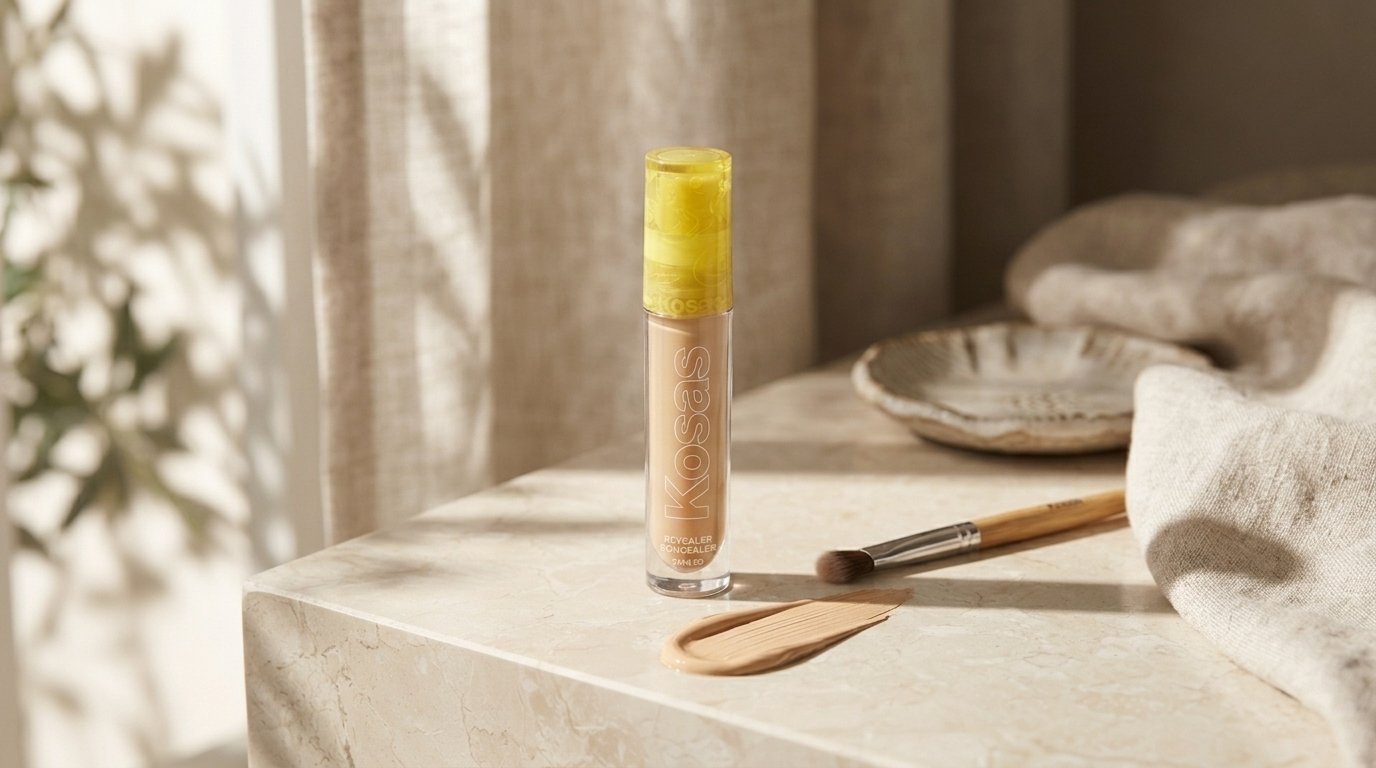
Finding a concealer that covers dark circles, softens the appearance of blemishes, and brightens the complexion without looking heavy can be surprisingly difficult. Some formulas offer impressive coverage but feel dry around the eyes, while others provide a beautiful glow but may not conceal enough discoloration. If you prefer makeup that looks fresh, natural, and skin-like, the Kosas Revealer Concealer deserves a closer look.
In this Kosas Revealer Concealer review, we explore the formula, coverage, finish, featured ingredients, shade selection, application techniques, and potential drawbacks to help you decide whether this popular complexion product fits your makeup routine.
Kosas positions its Revealer Concealer as a creamy, skincare-infused concealer designed to provide medium, buildable coverage with a radiant finish. The formula features ingredients such as hyaluronic acid, peptides, caffeine, panthenol, and arnica, combining complexion coverage with skincare-inspired benefits.
However, a concealer’s performance depends on more than its ingredient list. Your skin type, preparation routine, preferred finish, and shade match can all influence the final result.
Whether you’re shopping for an everyday under-eye concealer or a versatile product for redness and uneven skin tone, this guide will help you understand what to expect before purchasing.
Table of Contents
- Introduction
- What Is Kosas Revealer Concealer?
- Key Features at a Glance
- Formula and Texture
- Coverage and Finish
- Key Ingredients and Their Benefits
- Shade Range and How to Choose Your Shade
- How to Apply Kosas Revealer Concealer
- How It Performs on Different Skin Types
- Pros and Cons
- Who Should Buy Kosas Revealer Concealer?
- Who Might Want to Skip It?
- Is Kosas Revealer Concealer Worth the Price?
- Final Verdict
- Frequently Asked Questions
What Is Kosas Revealer Concealer?
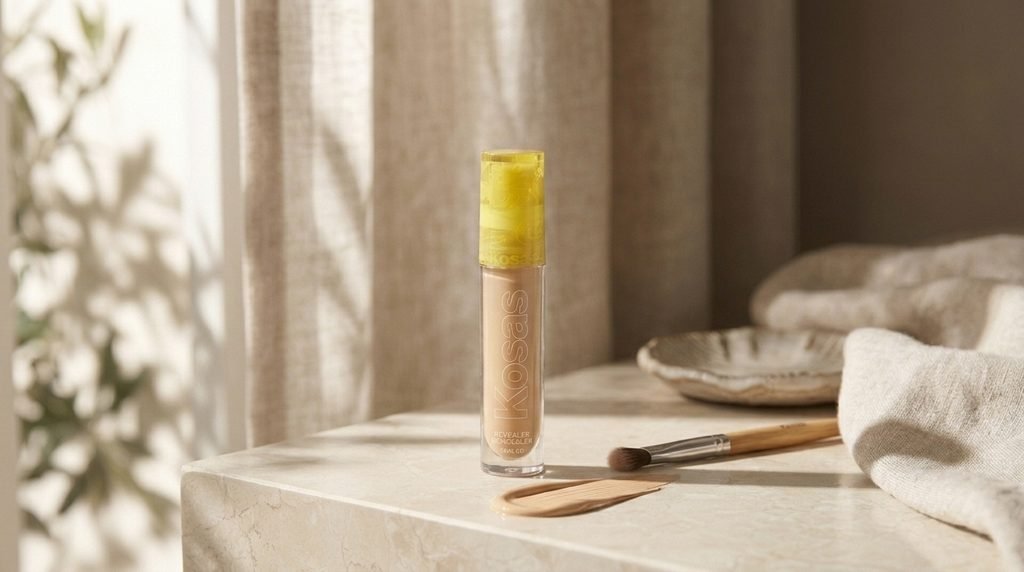
Kosas Revealer Concealer is a creamy complexion product designed to conceal and brighten selected areas of the face while maintaining a fresh, radiant appearance.
Unlike a very matte concealer designed to create a completely flat finish, Revealer focuses on a more hydrated-looking complexion. It is intended to cover common concerns such as dark circles, redness, blemishes, and visible discoloration without making the skin look excessively powdered.
The formula offers medium coverage that can be built up where additional concealment is needed. This makes it suitable for people who prefer a flexible makeup routine rather than applying a thick layer of product across the entire face.
The brand also emphasizes skincare-inspired ingredients, including hyaluronic acid, caffeine, and peptides. These ingredients support the product’s positioning as a concealer that does more than simply add pigment.
Another useful feature is its versatility. You can apply it under the eyes, around the nose, on individual blemishes, or anywhere you want extra coverage or brightness.
The key distinction is that Revealer Concealer remains a makeup product. Although its ingredients may support hydration and improve the appearance of the skin, it should not replace a dedicated skincare routine or be expected to eliminate dark circles, wrinkles, or blemishes permanently.
Key Features at a Glance
- Brand: Kosas
- Product: Revealer Concealer
- Coverage: Medium and buildable
- Finish: Radiant and skin-like
- Texture: Creamy
- Main uses: Under-eye brightening, redness, blemishes, and uneven skin tone
- Highlighted ingredients: Hyaluronic acid, peptides, caffeine, panthenol, and arnica
- Formula characteristics: Silicone-free, according to the brand
- Shade selection: Multiple depth levels and undertones
- Best for: Makeup lovers who prefer a fresh, luminous complexion
The exact shade availability, product size, and retail price may vary by market and retailer. Check the current product listing before purchasing.
Formula and Texture: What Should You Expect?
Texture is one of the most important factors when choosing a concealer, particularly for the under-eye area. A formula that is too thick can be difficult to blend, while one that is too thin may not provide enough coverage for noticeable discoloration.
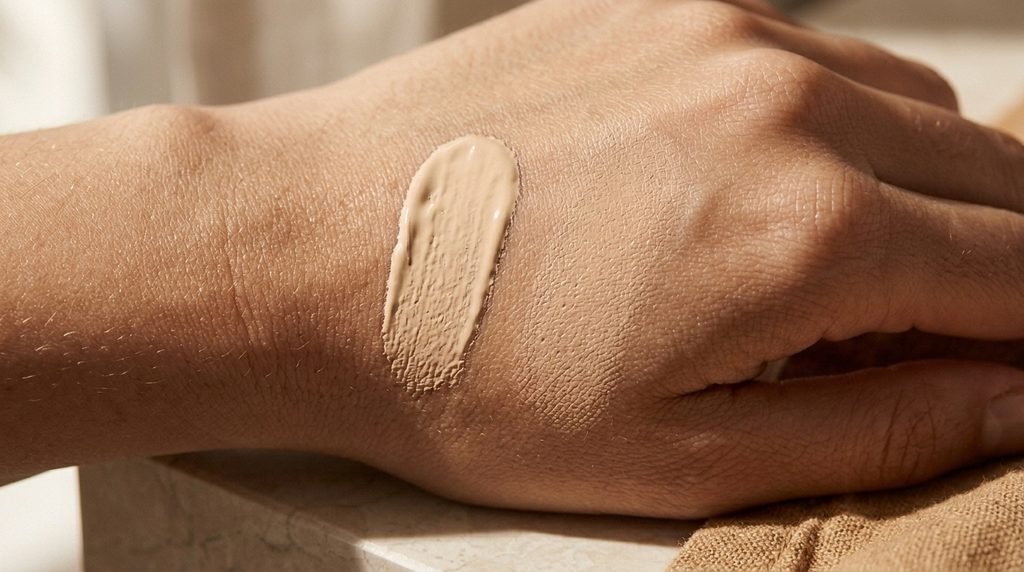
Kosas Revealer Concealer has a creamy consistency designed to spread and blend easily. Its formula is intended to sit comfortably on the skin and deliver a radiant finish instead of a strongly matte effect.
This type of texture can be appealing if you enjoy natural makeup, soft glam looks, or complexion products that retain some of the skin’s natural luminosity.
A creamy, blendable consistency
A creamy concealer can make application easier because you can start with a small amount and blend it into the surrounding skin. Rather than covering a large area immediately, apply the product only where you need it.
For under-eye application, concentrate a small amount near the inner corner and areas where darkness is most visible. Blend outward with gentle tapping motions.
For blemishes, place a little product directly over the discolored area and blend the edges without removing too much coverage from the center.
The goal is to create an even appearance without using unnecessary layers.
A radiant, skin-like finish
The radiant finish is an important part of the product’s appeal. It is designed to leave the complexion looking fresh rather than completely matte or powdery.
This can be particularly attractive for everyday makeup, when you want coverage without the appearance of a heavy base.
Keep in mind that radiant finishes can look different depending on your skincare, primer, foundation, and setting products. Skin that is naturally oily may appear shinier, while dry skin may benefit from the formula’s creamy texture.
Is the texture suitable for under-eye makeup?
The formula is designed to address under-eye darkness while providing a hydrated appearance. However, the amount you apply matters.
Using too much concealer can make fine lines more noticeable, regardless of the formula. Applying a thin layer and blending carefully is usually a better starting point than creating full coverage immediately.
If your under-eye area is very dry, prepare the skin with a lightweight moisturizer and allow it to absorb before applying makeup.
Coverage and Finish: Does It Conceal Effectively?
Coverage is one of the main reasons shoppers compare concealers. The right formula should reduce the appearance of discoloration while still matching the type of makeup look you want.
Kosas describes Revealer Concealer as a medium-coverage product that can be layered for additional concealment.
Under-eye dark circles
Dark circles can have several causes, including pigmentation, facial structure, genetics, and shadows. A concealer can improve their appearance, but the results depend on the depth and color of the discoloration and the shade you select.
For a natural finish, choose a concealer close to your skin tone. If you want a brighter under-eye effect, a slightly lighter shade may work, provided it does not create a noticeable contrast.
If dark circles have a strong blue, purple, or brown appearance, a color corrector may help neutralize the discoloration before concealer is applied.
Avoid placing a large amount of product across the entire under-eye area. Concentrating it where darkness is most visible can provide a more natural result.
Redness around the nose
The sides of the nose can be difficult areas to conceal because product may settle into creases or move with facial expressions.
A small brush can help apply concealer precisely around the nostrils and other areas of redness. Blend the edges into the surrounding skin to avoid creating a visible patch.
For everyday makeup, a thin layer is often sufficient. Add a second layer only if the discoloration remains visible.
Blemishes and dark spots
Revealer Concealer can also be used to cover individual blemishes and uneven pigmentation.
For these areas, a shade that closely matches your skin tone is generally more useful than a lighter brightening shade. A lighter color may draw attention to the spot rather than blending it into the complexion.
Apply the product directly to the area, let it settle briefly if needed, and gently blend only the edges. Avoid repeatedly sweeping a brush over the center, which can remove coverage.
Does it provide full coverage?
Revealer Concealer is positioned as a medium-coverage formula, not a dedicated full-coverage concealer.
You can build coverage by applying additional thin layers, but results will vary depending on the intensity of discoloration and the amount of product used. If you prefer a completely matte, highly opaque finish or need substantial coverage for pronounced pigmentation, you may prefer a different formula.
For those who want a more natural, luminous look, medium buildable coverage can be a useful balance.
Key Ingredients and Their Benefits
Kosas highlights several skincare-inspired ingredients in Revealer Concealer. Understanding their intended roles can help you decide whether the formula aligns with your preferences.
Hyaluronic acid
Hyaluronic acid is a humectant that attracts and helps retain water. In skincare and makeup, it is commonly used to support hydration and a smoother-looking surface.
In a concealer, it can contribute to a more comfortable, hydrated appearance, particularly when paired with appropriate skin preparation.
However, the final result depends on the complete formula and your skin’s condition. Hyaluronic acid does not guarantee that concealer will never crease or emphasize texture.
Peptides
Peptides are included in many skincare products designed to support the appearance of smoother-looking skin.
Kosas includes a peptide ingredient in the Revealer Concealer formula. The brand highlights peptides as part of its approach to visibly smoothing the appearance of fine lines.
It is important to keep expectations realistic: the presence of peptides in makeup does not mean that the concealer will permanently remove wrinkles or produce the same results as a dedicated treatment.
Caffeine
Caffeine is a familiar ingredient in products marketed for the under-eye area.
Kosas includes caffeine as part of the formula’s brightening and refreshing concept. The concealer is designed to help improve the appearance of dark circles and dullness.
Makeup coverage can make under-eye darkness less noticeable immediately, but it cannot guarantee that the underlying cause of dark circles will change.
Panthenol
Panthenol, also known as provitamin B5, is commonly used in cosmetic formulations for its conditioning and moisturizing properties.
It can help support a comfortable skin feel and complement a formula intended to create a hydrated-looking finish.
People with sensitive skin should still check the complete ingredient list, since sensitivity can occur with individual ingredients in any cosmetic product.
Arnica
Arnica is a botanical ingredient used in some cosmetic formulations.
Kosas includes arnica in its concealer and positions it alongside panthenol as part of the formula’s soothing approach.
Botanical ingredients are not automatically suitable for everyone. If you have a history of reacting to plant extracts, review the ingredient list and consider testing the product on a small area before regular use.
Pink algae extract
Kosas also highlights pink algae extract in its product information. It is associated with the brand’s brightening concept for the under-eye area.
The ingredient list identifies an algae extract, while product marketing describes the formula’s intended benefits. These claims should not be interpreted as a guarantee that the concealer will treat pigmentation or eliminate puffiness.
What do these ingredients mean for your routine?
The formula combines cosmetic coverage with ingredients commonly associated with hydration, conditioning, and a brighter-looking complexion.
That combination may appeal to people who want makeup that feels comfortable and looks fresh. Nevertheless, the finish and coverage remain the most important practical factors when deciding whether the concealer is right for you.
Shade Range and How to Choose Your Shade
A good shade match can make the difference between concealer that blends naturally and one that looks obvious against the rest of your face.
Kosas offers multiple shades across different depths and undertones. The range includes options described with neutral, warm, cool, and olive undertones, although individual availability can vary.
Understand your undertone
Before selecting a shade, consider whether your complexion has a warm, cool, neutral, or olive undertone.
- Warm undertones: Skin may have golden, yellow, or peachy qualities.
- Cool undertones: Skin may have pink or rosy qualities.
- Neutral undertones: Skin may appear balanced between warm and cool.
- Olive undertones: Skin may have a subtle green, muted golden, or olive cast.
These are general descriptions rather than strict rules. Undertones can be difficult to determine from photographs, especially under artificial lighting.
Choose a shade for your intended use
For blemishes and redness, a concealer that closely matches your complexion usually blends most naturally.
For under-eye brightening, you may prefer a shade slightly lighter than your skin tone. However, a shade that is too pale can create a grayish or ashy appearance, particularly over deeper pigmentation.
If you want to use one concealer across several areas of the face, prioritize a shade that matches your overall complexion. You can create a brighter under-eye effect through placement and blending.
Test shades in natural light
When possible, compare shades on your jawline or near the area where you plan to apply the product. Check the result in indirect natural light rather than relying entirely on store lighting.
If shopping online, use the brand’s current shade descriptions and compare them with complexion products that already match you. Product photographs can be helpful, but screen settings and lighting may distort color.
Do not assume that the same shade number across different brands will produce the same result.
How to Apply Kosas Revealer Concealer for a Natural Finish
The right application technique can make a creamy concealer look more seamless and help prevent unnecessary buildup.
Step 1: Prepare your skin
Begin with clean skin and your usual skincare routine. Apply a moisturizer suitable for your skin type and allow it to absorb before moving on to makeup.
If you use sunscreen during the day, let it settle according to the product directions before applying your base makeup.
Too many rich layers underneath concealer can contribute to slipping or uneven application, so keep the preparation comfortable rather than excessively heavy.
Step 2: Apply foundation first if you use it
If foundation is part of your routine, apply it before the concealer. This allows you to see which areas still need extra coverage.
You may discover that foundation already reduces the appearance of redness or uneven tone, meaning you need less concealer than expected.
If you prefer a minimal makeup look, you can skip foundation and apply concealer only where necessary.
Step 3: Use a small amount
Start with a small amount of product under the eyes or around the face.
Apply it to the areas where you need coverage instead of creating a thick layer everywhere. You can always add more if the first layer does not provide the desired result.
Starting with less product also gives you more control over the final finish.
Step 4: Blend gently
Use a clean fingertip, concealer brush, or makeup sponge to blend the product.
A small brush is useful for precise placement around the nose and on blemishes. A damp sponge can soften the edges and help distribute product under the eyes.
Use gentle tapping motions instead of rubbing. This helps maintain coverage where you need it.
Step 5: Build coverage selectively
If discoloration remains visible, add another thin layer to that specific area.
Allowing yourself to build coverage gradually can create a more natural result than applying a thick layer at the beginning.
For blemishes, focus on concealing the center while blending the edges. For under-eye darkness, concentrate the product on the darkest areas rather than spreading it across the entire cheek.
Step 6: Set only where necessary
If your skin is dry or you prefer a luminous finish, you may not need to set every area with powder.
If you have oily skin, notice creasing, or need longer wear, use a small amount of finely milled setting powder where required.
Press the powder lightly rather than applying a heavy layer. Excessive powder can reduce the radiant effect that makes this type of concealer appealing.
Step 7: Check the result in natural light
Before finishing your makeup, look at the complexion in natural light if possible.
Check that the shade blends into the surrounding skin, the under-eye area does not look excessively pale, and the product has not accumulated around creases.
If you notice buildup, gently tap the area with a clean fingertip or sponge before adding more product.
How It Performs on Different Skin Types
No concealer works exactly the same way for everyone. Your skin type, climate, skincare routine, and makeup preferences can influence the finish.
Dry skin
People with dry skin often prefer creamy concealers because they may feel more comfortable than very matte formulas.
Revealer Concealer’s radiant finish and hydration-focused ingredients may make it worth considering if your skin tends to look dull or makeup emphasizes dry patches.
For the best result, moisturize first and avoid applying the concealer over visibly flaky areas without preparation. Even a creamy formula can emphasize texture when the skin is very dry.
Oily skin
If your skin produces excess oil, a radiant finish may appear shinier as the day progresses.
This does not automatically mean the product will be unsuitable. You may prefer to use a small amount and set selected areas with powder.
If you strongly prefer a matte finish or experience substantial shine throughout the day, a more oil-controlling concealer may better match your needs.
Combination skin
Combination skin can benefit from a flexible application routine.
You might use Revealer Concealer sparingly on drier areas and set the T-zone or under-eye area if needed. Adjusting the amount of powder by zone can help preserve radiance without making the entire complexion look shiny.
Sensitive skin
Kosas describes the formula as tested for sensitive skin and non-comedogenic. These product claims can be useful when researching the formula, but they do not guarantee that every person will tolerate it.
Check the current ingredient list, especially if you know that certain botanical extracts or fragrance components irritate your skin.
Patch testing is a sensible precaution when introducing a new cosmetic product.
Mature skin
A radiant finish can be appealing for people who prefer makeup that looks less powdery around the eyes.
However, no concealer can completely eliminate the appearance of fine lines. Product quantity, skin hydration, placement, and setting technique all matter.
Use a thin layer and avoid heavily powdering areas where you want the skin to retain a natural appearance.
Pros and Cons of Kosas Revealer Concealer
Pros
- Creamy texture designed for easy blending.
- Medium, buildable coverage for everyday use.
- Radiant finish that suits natural and luminous makeup looks.
- Can be used under the eyes and on targeted areas of the face.
- Includes skincare-inspired ingredients such as hyaluronic acid, caffeine, and peptides.
- Offers shades with different depths and undertones.
- Can work with foundation or as a spot-concealing product without foundation.
- Silicone-free formula, according to the brand.
Cons
- Medium coverage may not satisfy people who prefer highly opaque concealers.
- A radiant finish may not suit those who want a completely matte complexion.
- Shade matching can be difficult when purchasing online.
- Application technique may affect how the product looks around fine lines.
- People who are sensitive to specific botanical ingredients should check the formula carefully.
- Price and availability may be less convenient depending on your country and retailer.
- Wear time and creasing can vary with skin type, climate, and preparation.
Who Should Buy Kosas Revealer Concealer?
Kosas Revealer Concealer may be a good option if you enjoy makeup that enhances your complexion without creating a heavily powdered effect.
Consider it if you:
- Prefer medium, buildable coverage over a full-coverage finish.
- Want to brighten the appearance of your under-eye area.
- Like creamy complexion products with a radiant finish.
- Need one concealer for under-eye darkness, redness, and occasional blemishes.
- Prefer makeup that looks natural in everyday settings.
- Are interested in skincare-inspired ingredients in complexion makeup.
It may be especially appealing if you already enjoy lightweight foundation, cream blush, luminous highlighter, and other products that create a fresh, skin-like finish.
Who Might Want to Skip It?
You may prefer another concealer if you:
- Need very high coverage for pronounced discoloration.
- Prefer a strongly matte or powder-like finish.
- Want a formula specifically designed to control oil.
- Dislike radiant complexion products.
- Have known sensitivities to one or more ingredients in the formula.
- Need a product that is easily available at a lower price in your local market.
A concealer does not have to be universally suitable to be worthwhile. The best choice is the one that fits your skin, coverage preferences, and daily routine.
Is Kosas Revealer Concealer Worth the Price?
Whether Kosas Revealer Concealer is worth the price depends on what you expect from a concealer.
Its main appeal is the combination of medium buildable coverage, a creamy texture, a radiant finish, and skincare-inspired ingredients. If these features match your preferred makeup style, it may offer useful versatility in your everyday routine.
The ability to use one product under the eyes, around the nose, and on selected blemishes can also make it a practical addition to a minimal makeup collection.
However, if you need only occasional spot coverage or prefer a completely matte, high-coverage finish, a less expensive alternative may suit you just as well.
Before purchasing, compare the current price, product size, available shades, and return policy at your preferred retailer. If you are uncertain about the shade, check whether samples or shade-matching assistance are available.
Value is not determined by price alone. It also depends on how often you use the product, how well it matches your complexion, and whether its finish meets your expectations.
Final Verdict: Should You Try Kosas Revealer Concealer?
The Kosas Revealer Concealer is worth considering if you want a creamy, medium-coverage concealer that aims to brighten the complexion while maintaining a radiant, natural-looking finish.
Its combination of hyaluronic acid, peptides, caffeine, panthenol, and arnica gives it a skincare-inspired identity, while its buildable coverage makes it versatile for under-eye application and targeted concealing.
Its most appealing qualities are the creamy texture, flexible application, and fresh finish. Potential drawbacks include its preference for a radiant rather than matte look, the need to choose the right shade, and the possibility that medium coverage will not be enough for everyone.
For people who love luminous everyday makeup, it may be a strong contender. For those who prioritize full coverage or oil control, a different formula could be a better match.
Our recommendation: Consider Kosas Revealer Concealer if your goal is a naturally radiant complexion with moderate, buildable coverage. Choose your shade carefully, begin with a small amount, and adjust your setting technique to suit your skin.
Frequently Asked Questions (FAQs)
1. What type of coverage does Kosas Revealer Concealer provide?
Kosas Revealer Concealer is designed to provide medium, buildable coverage. You can apply thin layers to conceal dark circles, redness, and blemishes. The final coverage depends on the amount applied and the type of discoloration.
2. Does Kosas Revealer Concealer have a matte or dewy finish?
It has a radiant, hydrated-looking finish rather than a strongly matte finish. The degree of shine may vary depending on your skin type, skincare products, and whether you set it with powder.
3. Is Kosas Revealer Concealer good for dry skin?
Its creamy texture and hydration-focused ingredients may appeal to people with dry skin. For the smoothest application, moisturize beforehand and avoid applying excessive product over dry patches.
4. Can you use Kosas Revealer Concealer on blemishes?
Yes. It can be applied to blemishes, redness, and uneven skin tone. Use a shade that closely matches your complexion and blend the edges carefully to avoid a visible patch.
5. Does Kosas Revealer Concealer crease under the eyes?
Creasing can depend on the amount of product, skin preparation, under-eye texture, and setting technique. Applying a thin layer, blending carefully, and using a small amount of powder if needed may help reduce visible buildup.
6. What ingredients are highlighted in Kosas Revealer Concealer?
The brand highlights hyaluronic acid, peptides, caffeine, arnica, panthenol, and pink algae extract. These ingredients contribute to the product’s skincare-inspired positioning, but individual results can vary.
7. Is Kosas Revealer Concealer suitable for oily skin?
It may work for some people with oily skin, but its radiant finish may appear shinier as the day progresses. Using a small amount and setting selected areas with powder can help manage excess shine.
8. How do you choose the right Kosas Revealer Concealer shade?
Consider both your skin depth and undertone. Choose a close complexion match for blemishes and general concealing. For a brighter under-eye effect, consider a slightly lighter shade that still looks natural against your skin.
9. Can Kosas Revealer Concealer replace foundation?
It can be used alone for targeted coverage if you prefer a minimal makeup look. However, it is a concealer rather than a full-face foundation, so the result will depend on how much coverage you want across your complexion.
10. Is Kosas Revealer Concealer worth buying?
It may be worth considering if you prefer medium, buildable coverage and a radiant finish. If you want very high coverage, a strongly matte appearance, or a lower-cost option, compare alternatives before deciding.
11. Is Kosas Revealer Concealer suitable for mature skin?
Its radiant finish may appeal to people who prefer a less powdery appearance. However, results depend on skin preparation, application, and the amount used. A thin layer is often a useful starting point.
12. Is Kosas Revealer Concealer non-comedogenic?
Kosas describes the product as non-comedogenic, meaning it has been formulated and tested with the aim of reducing the likelihood of clogged pores. Individual reactions can still occur, so check the current product information if you have acne-prone or sensitive skin.
1 thought on “Kosas Revealer Concealer Review: Coverage, Ingredients, Shade Guide & Is It Worth It?”