
INTRODUCTION
K18 Leave In Molecular Repair Hair Mask Review
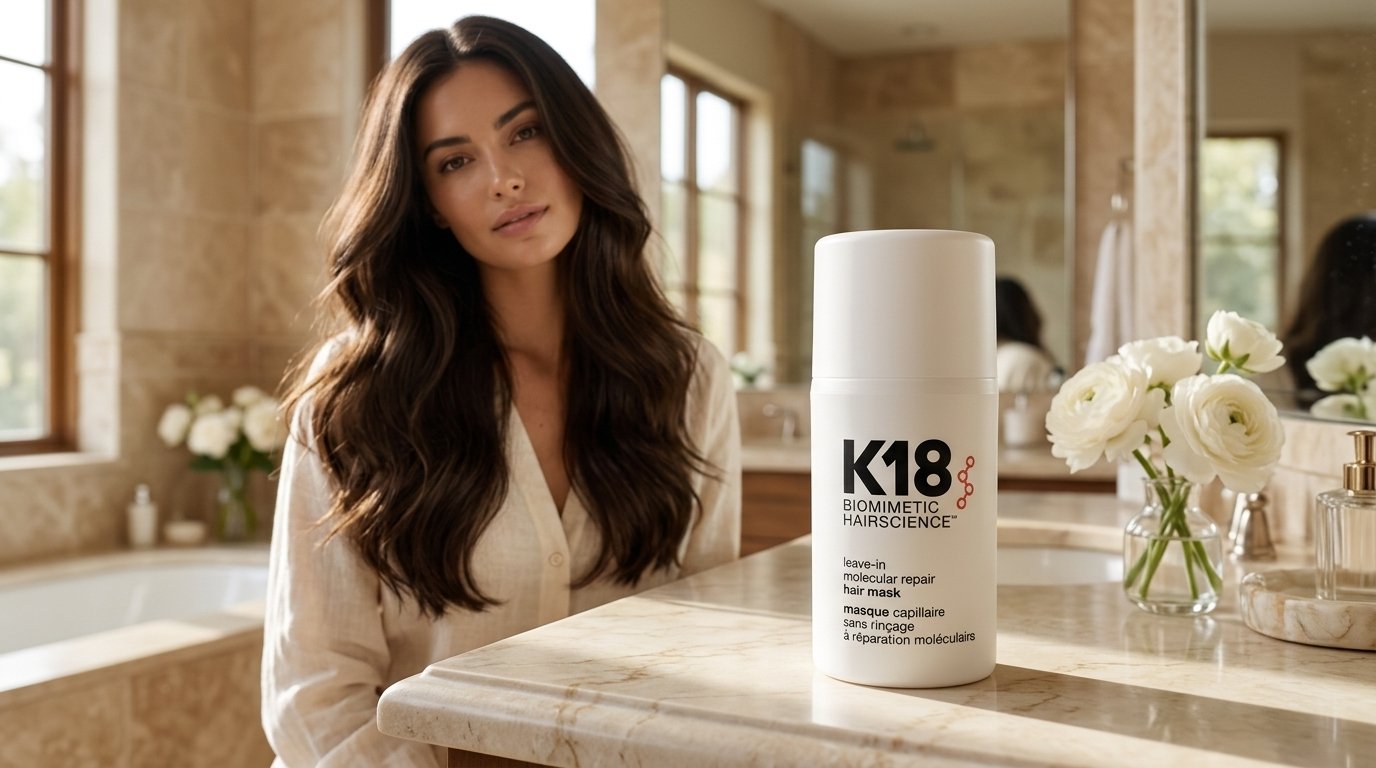
If your hair feels dry, looks dull, breaks easily, or has become difficult to manage after coloring and heat styling, you have probably come across products promising to repair damaged strands. One treatment that has attracted considerable attention in premium haircare is the K18 Leave-In Molecular Repair Hair Mask.
Unlike a traditional conditioning mask that focuses primarily on softness and detangling, K18 positions its leave-in treatment around molecular hair repair. It is designed for hair that has experienced damage from chemical services, heat styling, and other everyday stresses. Its short application process also makes it appealing to people who want a treatment without adding another lengthy step to their shower routine.
But is the K18 Leave-In Molecular Repair Hair Mask worth considering? Who is it best suited for, how should you use it, and what should you realistically expect from it?
In this K18 Leave-In Molecular Repair Hair Mask review, we will explore its purpose, technology, application instructions, potential benefits, limitations, hair-type suitability, and how it compares with conventional hair masks. We will also cover common mistakes and practical tips to help you decide whether it belongs in your haircare routine.
Table of Contents
- What Is the K18 Leave-In Molecular Repair Hair Mask?
- Why Is K18 So Popular?
- How Does K18’s Molecular Repair Technology Work?
- Key Features and Potential Benefits
- Texture, Application, and Hair Feel
- How to Use the K18 Hair Mask Correctly
- How Often Should You Use K18?
- Who Should Consider Using K18?
- Who Might Not Need This Treatment?
- K18 Hair Mask Before and After: What to Expect
- K18 vs. Traditional Hair Masks
- K18 vs. Olaplex
- Pros and Cons
- Common Mistakes to Avoid
- Tips for Getting the Most Out of K18
- Is K18 Worth the Money?
- Frequently Asked Questions
- Final Verdict
1. What Is the K18 Leave-In Molecular Repair Hair Mask?
The K18 Leave-In Molecular Repair Hair Mask is a leave-in hair treatment from K18 Hair, a brand focused on haircare products designed to address damage and improve the condition of hair.
The product is intended to help improve the appearance and feel of hair affected by chemical processing, heat styling, and other forms of damage. Instead of being rinsed out like a conventional deep-conditioning mask, it is applied to clean, towel-dried hair and left in.
This difference is important because the product is designed around a treatment-first approach rather than simply providing the immediate slip and softness associated with traditional conditioners.
What makes it different from an ordinary hair mask?
A traditional hair mask usually focuses on conditioning, hydration, softness, and manageability. Depending on its formulation, it may help smooth the hair surface, reduce tangling, and make strands feel more flexible.
K18 takes a different approach by emphasizing its patented K18PEPTIDE technology. The brand describes this technology as targeting damage associated with the hair’s keratin structure.
Hair is made largely of keratin proteins, and chemical treatments and repeated heat exposure can affect its structure. A specialized treatment may help improve the condition of damaged hair, although no cosmetic product can guarantee complete restoration of every damaged strand.
K18 is also different in its application. The leave-in format is intended to simplify the treatment process without requiring a lengthy rinse-out period.
2. Why Is K18 So Popular?
The growing interest in K18 reflects a wider shift in beauty routines. Consumers are increasingly looking beyond styling products and focusing on the condition of their hair.
A glossy finish is attractive, but hair that feels less brittle, tangles less, and remains manageable between salon visits can be equally important.
The rise of bond-building and molecular haircare
Haircare brands have introduced numerous products designed to address damage associated with bleaching, coloring, straightening, curling, and frequent blow-drying.
K18 is part of this broader repair-focused category. Its marketing emphasizes molecular repair rather than treating the product as simply another moisturizing mask.
Hair repair and bond-building treatments remain prominent in 2026 hair trend coverage, alongside scalp care and high-performance formulas. This makes K18 relevant to shoppers researching salon-inspired treatments for home use.
A short treatment routine
Another reason the product attracts attention is its relatively simple application.
Many traditional masks require several minutes of waiting before rinsing. K18 is designed to be applied to clean, towel-dried hair and left in for four minutes before styling products are added.
For people with busy schedules, a short, clearly defined treatment can be easier to maintain than a complicated weekly routine.
Popularity does not guarantee results
A product can be widely discussed without being the right choice for every person.
Hair condition, styling habits, the degree of damage, application technique, and expectations all influence whether a treatment feels worthwhile.
K18 may be worth investigating if your hair has been chemically processed or frequently heat-styled. If your hair is already healthy and your primary concern is occasional dryness, a less expensive conditioning mask may be sufficient.
3. How Does K18’s Molecular Repair Technology Work?
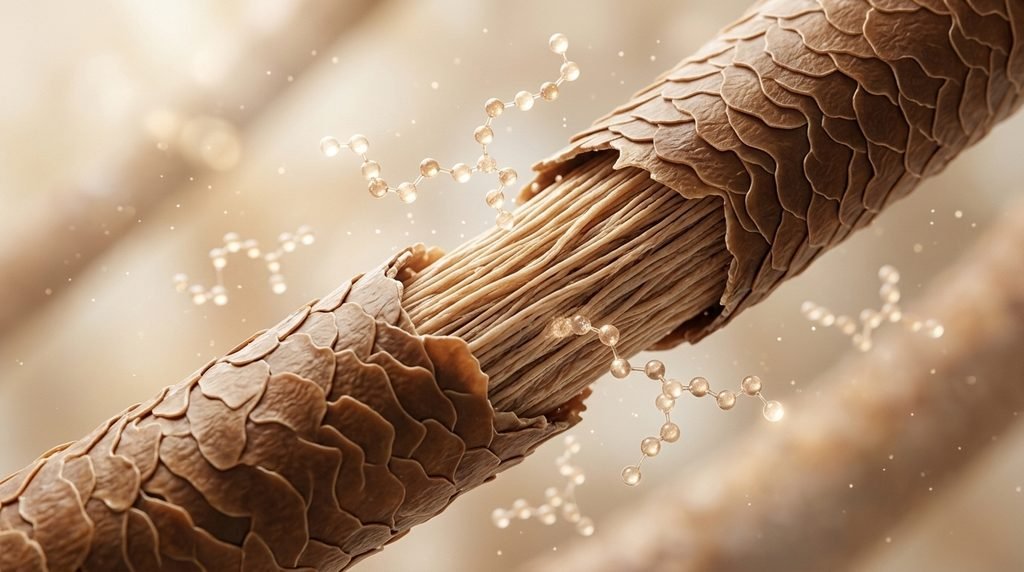
K18’s central selling point is its patented K18PEPTIDE technology. The brand describes its peptide as designed to reconnect certain disrupted polypeptide chains and disulfide bonds associated with damaged hair.
To understand the idea, it helps to know a little about hair structure.
Understanding hair damage
Each strand has several structural layers. The cuticle forms the outer protective layer, while the cortex contains much of the hair’s keratin structure and contributes to its strength and elasticity.
Hair can become damaged through repeated exposure to:
- Bleaching and permanent coloring
- Chemical straightening and relaxing
- High temperatures from flat irons and curling tools
- Frequent blow-drying without adequate heat protection
- Friction from brushing, rough towel-drying, and tight hairstyles
- Environmental exposure and everyday wear
Damage can make hair more prone to tangling, roughness, split ends, and breakage.
The severity varies. Mild dryness is not the same as extensive chemical damage, and the appropriate treatment depends on the actual problem.
What is the K18PEPTIDE?
K18’s patented peptide is central to the product’s molecular-repair positioning. The brand presents it as a technology intended to address structural damage rather than relying solely on surface conditioning.
It is important to interpret this carefully. A cosmetic treatment may improve hair’s strength-related properties, softness, or manageability under appropriate conditions, but results are not identical for every user.
The product should not be understood as a permanent cure for every form of damage or a way to restore split ends completely. Once a strand has split, trimming is generally the most reliable way to remove that split.
Molecular repair versus conditioning
Conditioning ingredients can improve slip, reduce friction, and make hair easier to comb. These effects can make damaged hair feel significantly better.
K18’s approach focuses on a different aspect of haircare by emphasizing its peptide technology.
The two approaches are not necessarily competitors. Some people benefit from a repair-focused treatment alongside a conditioner or mask used on other wash days.
The key is choosing a combination that does not leave your hair weighed down or coated.
4. Key Features and Potential Benefits
Before buying K18, it helps to understand what the treatment is intended to offer and which benefits are reasonable to expect.
1. A leave-in treatment format
The product is designed to stay in the hair rather than being rinsed away.
This makes it different from a traditional rinse-out mask and may appeal to people who prefer a shorter wash-day routine.
The leave-in format does not mean you should apply an unlimited amount. Following the product’s directions and using an amount appropriate for your hair length and density can help prevent unnecessary buildup.
2. A focus on chemically damaged hair
Hair that has been bleached, highlighted, or repeatedly colored may become more fragile.
K18 is designed to address damage associated with chemical services. People who frequently change their hair color may therefore find it more relevant than shoppers whose hair is already in good condition.
However, it should not replace careful salon practices, appropriate conditioning, or sensible spacing between chemical services.
3. Potential improvements in manageability
Damaged hair can feel rough and become difficult to detangle. A suitable treatment may help improve how hair feels and behaves during styling.
The degree of improvement depends on the person’s hair condition and the overall routine.
A treatment should not be expected to eliminate all frizz, prevent every future breakage event, or make severely damaged hair behave exactly like untreated hair.
4. No lengthy rinse-out step
The product’s four-minute leave-in treatment process is a practical feature for people who want a targeted step without an extended waiting period.
The four minutes refer to the treatment’s specified application period, not a guarantee of dramatic visible transformation.
5. A treatment that can fit into different routines
K18 can be incorporated into a routine built around gentle shampoo, appropriate conditioning, heat protection, and styling products.
It is not necessary to replace every product you already own to try a specialized treatment.
Start with the product directions, assess how your hair responds, and adjust the rest of your routine only if needed.
5. Texture, Application, and Hair Feel
K18 is a leave-in treatment rather than a rich, conventional rinse-out hair mask. The application experience is therefore different from spreading a thick conditioning cream through the hair before rinsing.
The precise amount needed depends on hair length, thickness, density, and condition. Rather than applying a large amount automatically, start with the manufacturer’s recommended amount and follow the packaging instructions.
Does K18 make hair feel soft?
Some users may notice improvements in softness and manageability when using a suitable treatment on damaged hair. However, softness is influenced by several factors, including the shampoo used, water quality, hair texture, styling methods, and any additional conditioners.
It is also important to distinguish immediate cosmetic softness from longer-term improvements in the condition of damaged strands.
A leave-in repair treatment is not guaranteed to produce the same silky finish as a rich conditioning mask.
Does it feel heavy?
How a product feels depends on the amount applied and the hair itself.
Fine hair may become weighed down more easily than thick or coarse hair, especially when multiple leave-in products are layered together.
If your hair is fine, begin conservatively and avoid adding several heavy styling products at the same time.
If your hair is thick, curly, or very dry, you may still need a separate conditioner or moisturizing product when appropriate.
What about the scent?
Scent preference is subjective, and fragrance perception varies from person to person. If you are sensitive to fragranced hair products, check the current ingredient list and packaging information before purchasing.
Do not assume that a premium price automatically means a fragrance-free formula or that every person will find the scent pleasant.
6. How to Use the K18 Hair Mask Correctly
Correct application matters because using a leave-in treatment in the wrong order may affect how it distributes through the hair and how subsequent products perform.
Follow the directions on your specific product packaging, as instructions may change. The following outlines the brand’s commonly published application method.
Step 1: Shampoo your hair
Wash your hair with shampoo and rinse thoroughly.
The treatment is designed to be used on clean hair. Product residue, oils, and styling buildup can affect how evenly a treatment distributes.
The shampoo you choose should suit your scalp and hair. You do not need an unusually harsh shampoo simply because you are using K18.
Step 2: Skip conditioner before applying the treatment
The brand’s standard directions specify shampooing without applying conditioner before K18.
This is intended to prepare the hair for the treatment according to its application system.
If your hair becomes extremely tangled or uncomfortable without conditioner, review the manufacturer’s current instructions and consider whether the treatment is suitable for your needs.
Step 3: Towel-dry thoroughly
Gently squeeze out excess water with a towel.
The hair should be damp rather than dripping wet. Excess water can dilute the product and make even distribution more difficult.
Avoid rough rubbing, particularly if your hair is bleached, fragile, curly, or prone to breakage.
Step 4: Apply a small amount
Dispense the recommended amount into your hands and distribute it through the hair, concentrating on the lengths and damaged areas.
The amount needed will vary with hair length and density. Work in sections if necessary rather than applying everything to one spot.
Avoid assuming that doubling the amount will double the benefits.
Step 5: Wait four minutes
Allow the treatment to remain in the hair for four minutes before applying additional styling products.
Follow the packaging directions and avoid rinsing it out during this period.
This waiting time is part of the product’s prescribed application process; it should not be interpreted as a promise that all visible damage will disappear in four minutes.
Step 6: Style your hair
After the waiting period, style as usual.
If you use a blow-dryer, straightener, or curling iron, choose an appropriate heat-protection product and use sensible temperature settings.
K18 is a treatment, not a substitute for heat protection or careful styling practices.
Step 7: Assess your results over time
Pay attention to how your hair feels after several uses rather than judging the product from a single application.
Notice whether your hair is easier to detangle, feels less rough, looks more manageable, or responds better to styling.
If your hair feels coated, heavy, or uncomfortable, review how much product you are using and whether other leave-in products are contributing to buildup.
7. How Often Should You Use K18?
Frequency depends on your hair condition and the instructions for your particular product.
The brand’s commonly published guidance recommends using the treatment for the first four to six consecutive washes, then using it as needed to maintain the desired condition.
Check the current packaging before following this schedule, as directions may differ between products or change over time.
If your hair is heavily processed
If you regularly bleach or color your hair, you may be more interested in a repair-focused treatment.
Use it according to the instructions and coordinate your routine with the advice of your colorist, particularly if your hair is fragile.
If your hair is mildly damaged
If you use heat styling occasionally and experience only mild dryness, you may not need to use a specialized treatment at every wash.
A gentle shampoo, conditioner, occasional mask, and heat protection may address your main concerns.
If your hair is healthy
You can still evaluate whether the product offers something useful for your routine, but there is no need to assume you must use it simply because it is popular.
Healthy-looking hair does not require every trending treatment.
8. Who Should Consider Using K18?
K18 may be worth considering for people whose main concern is damage rather than ordinary dryness alone.
Color-treated and highlighted hair
Bleaching and some color services can affect the structure and feel of hair.
If your hair has become brittle, rough, or more prone to breakage after chemical processing, a specialized treatment may be worth investigating.
It should be used alongside professional color care and sensible maintenance rather than as a replacement for them.
Hair frequently exposed to heat
People who regularly blow-dry, straighten, or curl their hair may experience cumulative damage over time.
A repair-focused treatment can be one part of a broader routine that also includes heat protection, gentle detangling, and avoiding unnecessarily high temperatures.
Long hair with fragile ends
Long hair has often experienced more cumulative wear than newly grown hair near the roots.
If the lengths tangle easily or feel rough, a suitable treatment may improve manageability. Trimming split ends and minimizing friction are still important.
People who prefer a shorter wash-day routine
The leave-in format may appeal to people who want a treatment without waiting through a long rinse-out process.
This convenience can be particularly attractive when a routine already includes shampooing, conditioning on appropriate wash days, and styling.
People investing in premium haircare
K18 is positioned as a premium treatment. It may appeal to shoppers who prioritize specialized formulas and are comfortable paying more for a targeted product.
However, a premium price is not proof of superior results for every individual.

9. Who Might Not Need This Treatment?
Not everyone needs a molecular-repair product.
People whose main concern is simple dryness
If your hair feels dry but is not significantly damaged, a moisturizing conditioner or hair mask may provide the softness and slip you want at a lower cost.
Dryness and structural damage can overlap, but they are not identical.
People with very fine hair who prefer minimal products
Some people with fine hair find that multiple leave-in products reduce volume or make the hair feel coated.
If you are in this group, compare the effect of K18 with your existing routine and avoid unnecessary layering.
People expecting permanent repair
No cosmetic treatment can guarantee that severely damaged hair will return completely to its original condition.
Hair that has already split or broken cannot be permanently restored to an undamaged state simply by applying a mask.
A realistic goal is improved appearance, manageability, and hair-care support—not a guarantee of perfect strands.
People working with a limited budget
If your budget is tight, prioritize the basics first.
A suitable shampoo, conditioner, heat protection, and gentle handling may provide more practical value than adding a premium treatment before the fundamentals are in place.
You can always reconsider a specialized treatment later.
10. K18 Hair Mask Before and After: What to Expect
Before-and-after photos can be appealing, but they can also create unrealistic expectations.
Lighting, styling technique, hair preparation, camera angles, and the condition of the hair before treatment can all affect how dramatic a comparison looks.
What may improve?
Depending on the condition of your hair and how it responds to the product, you may notice:
- Improved manageability
- A smoother-looking finish
- Less difficulty detangling
- Hair that feels more resilient
- A more polished appearance after styling
These outcomes are not guaranteed, and individual results can vary.
What should you not expect?
Do not assume K18 will:
- Eliminate every split end
- Prevent all future breakage
- Restore hair that has broken off
- Replace a haircut when the ends are severely damaged
- Guarantee rapid hair growth
- Produce identical results for every hair type
How to evaluate your own results
Take a simple approach. Before using the treatment, notice how your hair feels when wet, how easily it tangles, and how it looks after drying.
After following the recommended routine, evaluate those same features under similar conditions.
This is more useful than comparing your hair with an unrelated social media transformation.
11. K18 vs. Traditional Hair Masks
Both products can have a place in a well-designed haircare routine, but their purposes are not identical.
| Feature | K18 leave-in treatment | Traditional hair mask |
|---|---|---|
| Main focus | Molecular-repair technology and damaged-hair care | Conditioning, softness, and manageability |
| Application | Applied to clean, towel-dried hair and left in | Usually applied and rinsed out |
| Waiting time | Four minutes before styling products, according to standard directions | Depends on the product |
| Best reason to consider it | Damage-focused care | Dryness, tangling, or a need for richer conditioning |
| Price consideration | Premium treatment | Wide range of budget options |
Which is better for dry hair?
The answer depends on why your hair feels dry.
If your hair is primarily lacking softness and slip, a moisturizing mask may be enough.
If your hair has also been heavily processed or weakened, a specialized treatment may be worth considering alongside an appropriate conditioning routine.
Can you use both?
Potentially, yes, but follow the K18 instructions and consider how your hair responds.
The brand’s standard directions specify applying K18 after shampooing without conditioner immediately beforehand. A rinse-out conditioner or mask may fit better on another wash day or at a point in the routine consistent with the current instructions.
You do not need to use every available treatment in one wash.
12. K18 vs. Olaplex
K18 and Olaplex are both well-known names in damage-focused haircare, but their products use different technologies and have different application instructions.
Olaplex offers a range of products, including the No. 3 Hair Perfector, which is used as a pre-shampoo treatment. K18’s Leave-In Molecular Repair Hair Mask is designed to be applied after shampooing and left in the hair.
Key differences
K18: Its signature mask focuses on K18PEPTIDE technology and a leave-in application method.
Olaplex No. 3: This treatment is part of Olaplex’s bond-building system and has its own pre-shampoo directions.
Neither brand should automatically be considered better for everyone.
The right option depends on the product you are comparing, your hair’s condition, your preferred routine, the manufacturer’s directions, and your budget.
Which should you choose?
Consider K18 if you prefer a short leave-in treatment and are interested in the brand’s molecular-repair approach.
Consider an Olaplex product if its particular application method and overall system fit your routine better.
Compare current product instructions and prices in your country before purchasing. Do not combine products indiscriminately or assume that similar marketing language means their technologies are identical.]
13. Pros and Cons of K18 Leave-In Molecular Repair Hair Mask
Pros
- Convenient application: The leave-in format avoids a lengthy rinse-out step.
- Damage-focused positioning: The product is designed for hair affected by chemical processing and other damage.
- Short waiting period: The standard four-minute treatment period is easy to incorporate into a wash routine.
- Suitable for targeted routines: It can complement appropriate shampooing, conditioning, and heat protection.
- Premium haircare appeal: It offers an option for shoppers interested in specialized salon-inspired treatments.
Cons
- Premium price: It may be expensive compared with ordinary conditioning masks.
- Not essential for everyone: People with healthy hair or simple conditioning needs may not benefit enough to justify the cost.
- Results vary: Hair condition and application technique influence the outcome.
- Does not eliminate split ends: Severely damaged lengths may still need trimming.
- Requires correct application: Using it in the wrong order or applying too much can make it harder to evaluate the product fairly.
14. Common Mistakes to Avoid
Applying it over conditioner
The standard K18 mask directions call for shampooing without conditioner immediately before treatment.
Follow the current instructions rather than assuming it should be applied like an ordinary mask.
Using too much product
More product does not automatically produce better results.
Start with the recommended amount and adjust only according to the instructions and your hair’s needs.
Expecting instant transformation
The product’s four-minute application period is not a guarantee of complete repair.
Give yourself time to assess manageability and appearance without expecting damaged hair to become perfect after one use.
Ignoring heat protection
K18 should not replace a dedicated heat protectant when using hot styling tools.
Continue using appropriate protection and avoid excessive heat.
Forgetting basic conditioning
A repair-focused treatment does not mean your hair never needs conditioner.
Depending on your texture and routine, you may still need conditioning for softness, slip, and detangling.
Buying it because it is trending
A product’s popularity is not enough reason to purchase it.
Identify your main hair concern first and choose products according to that concern.
15. Tips for Getting the Most Out of K18
A few practical habits can make it easier to evaluate a treatment.
Keep your routine simple initially
Avoid introducing several new products at once. If your hair changes noticeably, you will have a better chance of understanding which product contributed.
Use gentle hair-handling techniques
Wet hair can be vulnerable to stretching and breakage, especially when damaged.
Gently squeeze out water, avoid aggressive towel rubbing, and detangle carefully.
Adjust your heat-styling habits
Use a heat protectant, select a sensible temperature, and avoid repeatedly passing a hot tool over the same section.
A treatment cannot compensate fully for repeated avoidable damage.
Pay attention to your scalp
The mask is designed for the hair rather than as a scalp treatment. Follow its directions and avoid deliberately applying it to the scalp unless the product instructions say otherwise.
If you experience persistent scalp irritation or unusual hair loss, seek appropriate professional advice rather than relying on a cosmetic mask.
Evaluate value, not just appearance
Consider whether the product improves the aspects of haircare that matter to you, such as manageability, ease of styling, and the feel of your lengths.
If you do not notice a meaningful difference after appropriate use, you may prefer to spend your budget elsewhere.
16. Is K18 Leave-In Molecular Repair Hair Mask Worth the Money?
Whether K18 is worth the money depends on your hair’s condition, your current routine, and what you want from a treatment.
It may be worth considering if:
- Your hair has been bleached, highlighted, or repeatedly chemically treated.
- You frequently use heat-styling tools.
- Your lengths feel fragile or are difficult to manage.
- You want a specialized leave-in treatment.
- You are comfortable paying a premium for a targeted haircare product.
It may not be worth the expense if:
- Your hair is already in good condition.
- Your primary concern is uncomplicated dryness.
- A regular conditioner or mask already meets your needs.
- You expect a product to eliminate split ends permanently.
- You would need to sacrifice essential haircare basics to afford it.
How to decide before buying
Check the current price and size available in your region, because pricing and availability differ between the US, UK, Europe, the Middle East, and other markets.
Compare the cost per use rather than looking only at the bottle price. Your hair length, density, and the amount needed per application will influence how long a bottle lasts.
Purchase from an authorized retailer where possible, and verify that the product and packaging match the current manufacturer’s information.
A premium treatment is most worthwhile when it addresses a genuine need rather than simply adding another fashionable product to your shelf.
Frequently Asked Questions
What is the K18 Leave-In Molecular Repair Hair Mask used for?
It is a leave-in treatment designed to address damage associated with chemical processing, heat styling, and other stresses. The brand emphasizes its patented K18PEPTIDE technology.
Do you rinse out the K18 hair mask?
The Leave-In Molecular Repair Hair Mask is designed to remain in the hair. The brand’s standard directions specify waiting four minutes before applying other styling products. Always check the current product packaging.
How long should K18 stay in your hair?
The standard application instructions specify four minutes before styling products are applied. Follow the directions for your particular product rather than leaving it in longer in the hope of getting better results.
Can you use K18 on fine hair?
It may be suitable for fine hair, depending on its condition and your preferences. Start with the recommended amount and avoid unnecessary product layering if your hair loses volume easily.
Can you use K18 on curly hair?
It may be considered for curly hair that has experienced chemical or heat damage. Curly hair may also need conditioning and moisture, so assess whether your routine provides enough slip and softness.
Is K18 good for bleached hair?
It is designed to address damage associated with chemical services, making it relevant to people with bleached hair. Results vary, and it cannot guarantee complete restoration of severely damaged strands.
Can K18 make your hair grow faster?
It is a hair treatment intended to improve the condition of damaged hair, not a proven hair-growth treatment. It should not be relied on to treat hair loss or accelerate growth.
Can you use K18 every day?
Follow the manufacturer’s directions for the product and use it in the context of your wash routine. The standard mask instructions are based on wash-day application, not unrestricted daily use.
Can you use conditioner with K18?
The standard directions specify applying the mask after shampooing without conditioner immediately beforehand. You may still need conditioner as part of your broader routine, depending on your hair’s needs and the manufacturer’s current guidance.
Is K18 better than Olaplex?
Neither is universally better. They use different technologies and application methods. Compare the specific products, directions, price, and suitability for your hair rather than choosing based on brand popularity alone.
Does K18 repair split ends?
It may help improve the appearance and manageability of damaged hair, but it cannot permanently rejoin split ends. Trimming is generally the most reliable way to remove split ends.
Is K18 suitable for color-treated hair?
It is designed to address damage associated with chemical processing and may be relevant to color-treated hair. Follow the directions and consult your stylist if your hair is severely compromised.
Final Verdict: Should You Try K18 Leave-In Molecular Repair Hair Mask?
The K18 Leave-In Molecular Repair Hair Mask is a compelling option for shoppers who want a specialized, leave-in treatment focused on damaged hair. Its main appeal is the combination of K18PEPTIDE technology and a relatively short application process.
It is particularly relevant to people researching care for bleached, highlighted, chemically treated, or frequently heat-styled hair. For these shoppers, a damage-focused treatment may be a useful addition to a routine built around gentle cleansing, suitable conditioning, and sensible styling practices.
However, it is not an essential purchase for everyone. If your hair mainly needs moisture and softness, a conventional conditioning mask may provide better value. If your ends are severely split or your hair is breaking extensively, trimming, reducing damage, and consulting a qualified hair professional may be more useful than expecting a cosmetic treatment to solve everything.
My overall recommendation is to evaluate K18 according to your actual hair needs, follow its application instructions, and set realistic expectations. The best haircare routine is not necessarily the most expensive one. It is the routine that helps you care for your hair consistently and comfortably.
Before purchasing, verify the current product directions, ingredient information, and regional pricing from the manufacturer or an authorized retailer. That will help you make a more informed decision about whether K18 deserves a place in your haircare routine.