
Introduction
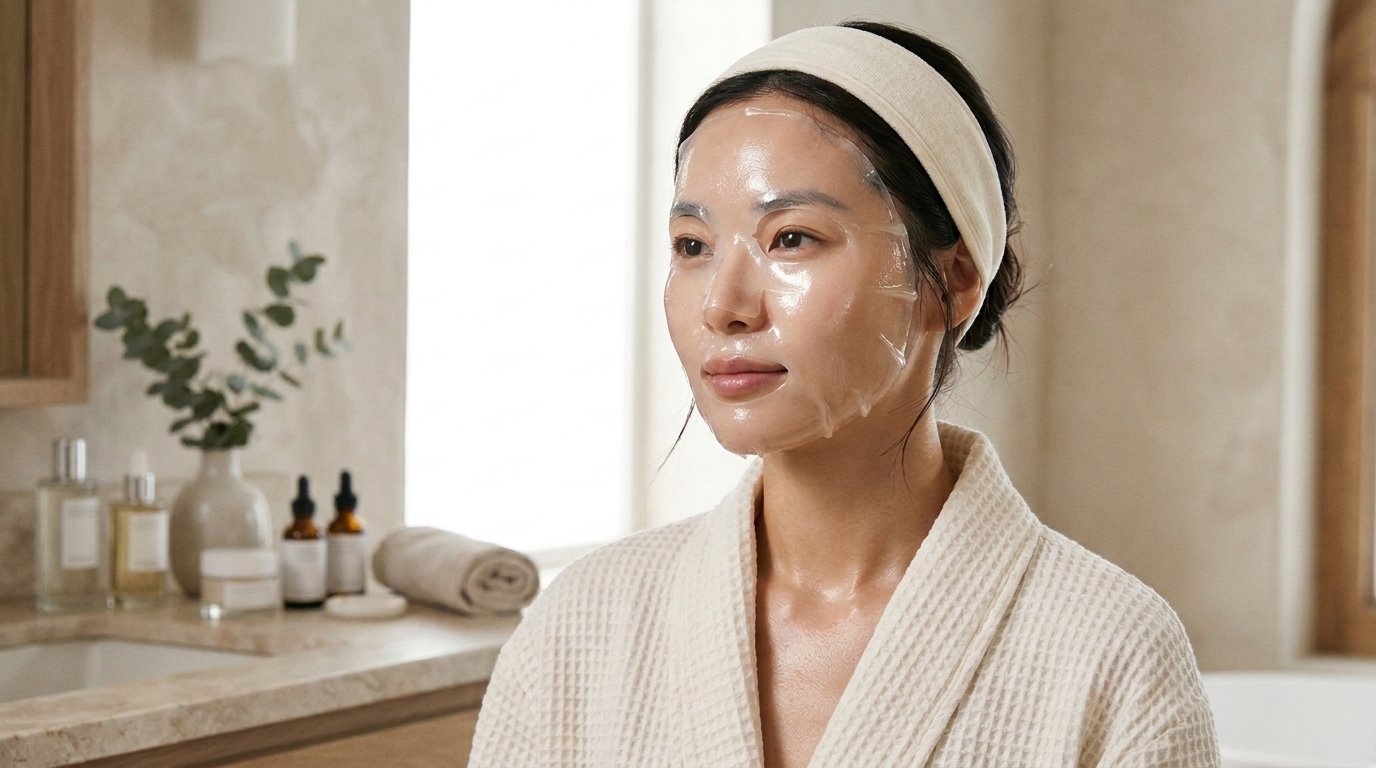
Collagen face masks have become one of the most talked-about skincare products in modern beauty routines. From Korean hydrogel masks to overnight collagen treatments, these products are attracting attention from people who want smoother, softer, more hydrated, and healthier-looking skin.
If you have recently explored skincare trends on TikTok, Pinterest, Instagram, or beauty websites, you have probably noticed collagen masks appearing everywhere. Their popularity comes from their convenient application, luxurious textures, and promises of a refreshed, plumper-looking complexion.
But are collagen face masks genuinely beneficial? Can they improve the appearance of fine lines? Do they help dry skin? And are overnight collagen masks better than traditional sheet masks?
The answers depend on the formula, ingredients, application method, and your individual skin needs.
Collagen is a naturally occurring protein that helps provide structure and support to the skin. As skin changes with age and environmental exposure, its natural collagen levels and structure can change too. This has encouraged the beauty industry to develop skincare products designed to support hydration, improve the appearance of skin texture, and create a smoother-looking complexion.
However, applying collagen to the skin is not the same as rebuilding the collagen naturally present in deeper skin layers. Most topical collagen masks primarily work as hydrating and conditioning treatments, helping skin look temporarily smoother and more refreshed.
In this guide, we will explore what collagen face masks are, their potential benefits, different mask types, how to use them correctly, and what to consider before choosing one. Whether you have dry, oily, combination, or mature-looking skin, this article will help you understand whether a collagen mask deserves a place in your skincare routine.
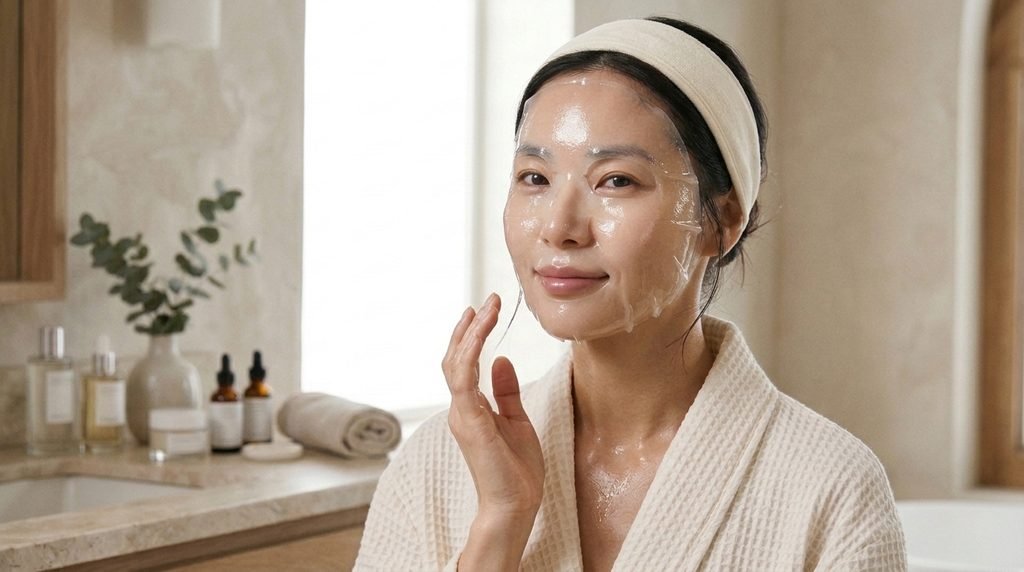
Table of Contents
- What Are Collagen Face Masks?
- How Do Collagen Face Masks Work?
- Benefits of Collagen Face Masks
- Different Types of Collagen Face Masks
- Collagen Face Masks for Different Skin Types
- How to Use a Collagen Face Mask Correctly
- When Is the Best Time to Use a Collagen Mask?
- Collagen Face Masks vs. Regular Sheet Masks
- Popular Ingredients to Look For
- How to Choose the Right Collagen Face Mask
- Common Mistakes to Avoid
- Are Collagen Face Masks Safe?
- Do Collagen Face Masks Really Work?
- Frequently Asked Questions
- Final Thoughts
1. What Are Collagen Face Masks?
Collagen face masks are skincare treatments formulated with collagen or collagen-related ingredients to improve the appearance and feel of the skin.
They are available in different formats, including sheet masks, hydrogel masks, cream masks, and overnight treatments.
Unlike ordinary moisturizers, which are designed for regular daily use, face masks are generally intended to provide a more concentrated or intensive skincare experience.
Many collagen masks contain additional ingredients such as glycerin, hyaluronic acid, peptides, niacinamide, and botanical extracts. These ingredients can contribute to hydration, skin conditioning, and a smoother-looking complexion.
Why Is Collagen Important for Skin?
Collagen is an important structural protein naturally found in the body. In the skin, it contributes to firmness, structure, and support.
Natural collagen production changes with age. Sun exposure, smoking, environmental factors, and other lifestyle influences can also contribute to visible changes in skin texture and firmness.
This is one reason collagen has become such an important ingredient in the beauty industry.
However, there is an important difference between natural collagen inside the skin and collagen applied through a cosmetic product.
Topical collagen molecules are generally too large to penetrate deeply into the skin. They mainly function as surface-conditioning and moisture-supporting ingredients.
Therefore, collagen masks should be viewed as cosmetic skincare treatments rather than guaranteed collagen-rebuilding solutions.
Why Are Korean Collagen Masks So Popular?
Korean beauty has helped make innovative facial masks a major part of international skincare culture.
Korean skincare brands frequently experiment with hydrogel textures, overnight treatments, concentrated serums, and convenient sheet-mask formats.
Collagen masks have become especially popular because they combine an enjoyable skincare experience with ingredients designed to support a hydrated, plump-looking complexion.
Some masks become more transparent as they sit on the skin. Others are designed to be worn for a specified period or overnight.
The exact application time depends on the manufacturer’s instructions.
2. How Do Collagen Face Masks Work?
Collagen face masks work primarily through hydration, moisture retention, and skin conditioning.
When a mask is applied to the face, its formula creates contact between the skincare ingredients and the outer skin surface.
The mask material can also help reduce moisture evaporation during application, depending on its construction.
This helps explain why skin may look temporarily smoother and feel softer after using a facial mask.
The Role of Hydrolyzed Collagen
Some skincare products contain hydrolyzed collagen.
Hydrolyzed collagen is collagen that has been broken down into smaller components called peptides.
In cosmetic formulations, these ingredients are generally used for their skin-conditioning and moisturizing properties.
They can help improve the feel of dry or rough skin, although results depend on the formulation.
The Role of Moisturizing Ingredients
Collagen masks frequently include ingredients that support hydration.
For example:
- Glycerin attracts and helps retain water in the outer skin.
- Hyaluronic acid helps the skin maintain moisture.
- Panthenol is used as a conditioning and moisturizing ingredient.
- Ceramides help support the skin barrier.
- Peptides are included in some formulas for targeted cosmetic skincare benefits.
The combination of these ingredients can make a mask more useful than a formula that relies on collagen alone.
3. Benefits of Collagen Face Masks
Collagen face masks can be a convenient addition to a skincare routine, particularly when your skin needs extra hydration.
Here are some potential benefits.
1. Helps Improve Skin Hydration
One of the main reasons people use collagen face masks is to improve skin hydration.
Dry skin can feel uncomfortable, rough, tight, or flaky.
A moisturizing mask containing collagen, glycerin, and hyaluronic acid can help replenish moisture at the skin’s surface.
After application, the complexion may look fresher and feel softer.
This can be especially useful before an event or when your skin feels temporarily dehydrated.
2. Creates a Plumper-Looking Complexion
Well-hydrated skin often appears smoother and more supple.
Collagen masks containing humectants can help improve the appearance of temporary dehydration lines by supporting moisture levels.
This does not mean that a mask permanently removes wrinkles.
Instead, the skin may look more refreshed because hydration helps improve its surface appearance.
3. Helps Improve the Appearance of Fine Lines
Fine lines can become more noticeable when skin is dry.
A moisturizing collagen mask may temporarily soften their appearance by increasing hydration.
Ingredients such as glycerin, hyaluronic acid, and peptides may contribute to the overall cosmetic benefits of a formula.
However, a topical collagen mask should not be considered a replacement for dermatologist-recommended treatments or daily sun protection.
4. Makes Skin Feel Softer
Another benefit is improved skin softness.
When the outer skin becomes dehydrated, it can feel rough and uncomfortable.
Conditioning ingredients in collagen masks can help improve the skin’s texture and leave it feeling smoother.
The effect is generally cosmetic and may vary according to the product.
5. Supports a More Refreshed Appearance
A facial mask can be useful when your complexion looks tired or dull.
Hydration helps improve the appearance of the skin surface, making it look more comfortable and refreshed.
Some collagen masks also contain additional ingredients that help improve the appearance of uneven or dull-looking skin.
6. Provides an Enjoyable Self-Care Experience
Skincare is not only about products and ingredients.
Many people enjoy facial masks because they create a relaxing opportunity to slow down and spend time on personal care.
A collagen mask can easily become part of a weekly beauty routine.
You can apply it while relaxing at home, preparing for an occasion, or completing your evening skincare routine.
7. Can Complement an Existing Skincare Routine
A collagen mask can complement a basic routine that already includes cleansing, moisturizing, and sunscreen.
It does not need to replace your regular skincare products.
Instead, it can provide an additional hydration-focused step when your skin needs it.
4. Different Types of Collagen Face Masks
Not all collagen masks are the same. Understanding the different formats can help you choose a product that suits your preferences.
Collagen Sheet Masks
Collagen sheet masks are among the most familiar facial mask formats.
They usually consist of a fabric or cellulose sheet soaked in a skincare essence.
The sheet is placed over the face to keep the formula in contact with the skin.
Best for:
- Convenient skincare treatments.
- Temporary hydration.
- People who enjoy simple beauty routines.
- Occasional pre-event skincare.
They are generally easy to use and do not require complicated preparation.
Collagen Hydrogel Masks
Hydrogel masks have a gel-like texture that feels cool and flexible.
They are often divided into sections to make application easier.
Some Korean hydrogel masks are designed to remain on the skin for longer than traditional sheet masks.
Certain formulas become increasingly transparent during wear.
Always follow the instructions provided with the specific product.
Best for:
- People who enjoy cooling skincare textures.
- Hydration-focused treatments.
- Those interested in Korean beauty products.
- Special skincare occasions.
Overnight Collagen Masks
Overnight masks are designed to be applied before bedtime and removed or rinsed off according to the product instructions.
Some are formulated as sleeping packs, while others use a film-forming hydrogel format.
They are designed to remain on the skin longer than conventional sheet masks.
However, not every overnight mask should be worn for an entire night. Follow the manufacturer’s recommended application time.
Best for:
- People who prefer nighttime skincare.
- Dry-feeling skin.
- Those who enjoy intensive moisturizing treatments.
Collagen Cream Masks
Cream masks have a thicker texture and are applied directly to the face.
Depending on the formula, they may be rinsed off after a specified period or left on as instructed.
They can be particularly appealing to people who prefer traditional cream-based skincare products.
Best for:
- Dry skin.
- People who prefer rich textures.
- A relaxing at-home facial routine.
5. Collagen Face Masks for Different Skin Types
Choosing a mask according to your skin type is more important than choosing one simply because it is trending.
Collagen Masks for Dry Skin
Dry skin often benefits from products that help reduce moisture loss and improve softness.
Look for collagen masks containing:
- Glycerin.
- Hyaluronic acid.
- Ceramides.
- Panthenol.
- Squalane.
Cream-based or hydrogel masks may be suitable depending on your preferences.
After removing the mask, apply a moisturizer to help maintain hydration.
Collagen Masks for Oily Skin
Oily skin can still become dehydrated.
However, very rich or heavy formulas may feel uncomfortable.
Look for lightweight hydrogel or sheet masks with ingredients such as glycerin and hyaluronic acid.
Choose products labeled non-comedogenic when possible, particularly if you are prone to clogged pores.
Collagen Masks for Combination Skin
Combination skin has different needs across different areas of the face.
For example, the forehead and nose may become oily while the cheeks feel dry.
A lightweight hydrating mask can be a practical option.
You can follow it with a lighter moisturizer on oily areas and a slightly richer moisturizer on dry areas if needed.
Collagen Masks for Sensitive Skin
Sensitive skin requires extra attention when introducing new skincare products.
Choose a simple formula without unnecessary fragrance or potentially irritating ingredients.
Consider testing the product on a small area before applying it to the entire face.
If a mask causes burning, itching, or persistent redness, remove it and discontinue use.
Collagen Masks for Mature-Looking Skin
Mature-looking skin may benefit from skincare that supports hydration and improves the appearance of surface dryness.
A collagen mask with moisturizing ingredients can temporarily make the complexion look smoother and more supple.
For a more complete routine, combine appropriate moisturizers with broad-spectrum sunscreen and other suitable skincare products.
6. How to Use a Collagen Face Mask Correctly
Using a collagen mask correctly can help you get the best experience from the product.
Follow these steps.
Step 1: Cleanse Your Face
Start with a gentle facial cleanser.
Remove makeup, sunscreen, excess oil, and surface impurities.
Clean skin allows the mask to sit comfortably against the face.
Avoid aggressive scrubbing before applying a mask.
Step 2: Prepare the Mask
Remove the mask from its packaging and unfold it carefully.
For a sheet mask, align the openings with your eyes, nose, and mouth.
For a hydrogel mask, follow the product’s specific placement instructions.
Step 3: Apply the Mask Evenly
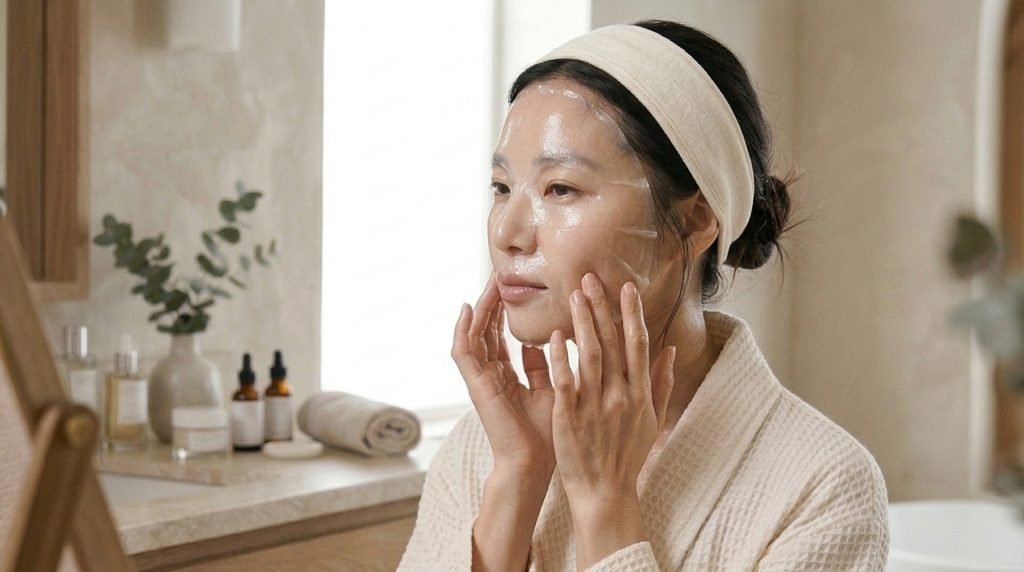
Smooth the mask gently across the face.
Make sure it sits comfortably without excessive stretching or pulling.
Avoid placing the product directly inside the eyes or mouth.
Step 4: Follow the Recommended Application Time
This step is especially important.
Some masks are designed for 10–20 minutes, while certain hydrogel products have different application instructions.
Do not assume that leaving a mask on longer will produce better results.
Overusing a mask or allowing a sheet mask to dry completely against the skin may cause discomfort.
Step 5: Remove the Mask Gently
Carefully remove the mask without pulling or rubbing the skin.
If the product instructions recommend massaging in the remaining essence, do so gently.
If rinsing is required, follow the manufacturer’s directions.
Step 6: Apply Moisturizer
Finish with a moisturizer that suits your skin type.
This helps maintain the hydrated feeling after the treatment.
During the daytime, finish your skincare routine with broad-spectrum sunscreen of SPF 30 or higher.
7. When Is the Best Time to Use a Collagen Mask?
There is no single perfect time for everyone.
The best time depends on your skincare routine and the product’s instructions.
Using a Collagen Mask in the Morning
A morning mask can be useful when your skin feels dry or looks tired.
A lightweight formula may help create a smoother-looking base before makeup.
Allow the skincare to settle before applying foundation or other complexion products.
Using a Collagen Mask at Night
Evening is a convenient time for many people because they have more opportunity to complete their skincare routine without rushing.
After cleansing, apply the mask as directed and follow with moisturizer when appropriate.
Using a Collagen Mask Before an Event
A hydrating mask can be useful before a special occasion.
It may help temporarily improve skin softness and create a more comfortable base for makeup.
However, avoid trying a completely new product immediately before an important event.
A reaction or irritation is the last thing you want before a celebration.
How Often Should You Use One?
The appropriate frequency depends on the product formulation and your skin’s tolerance.
Some masks are designed for occasional use, while others may be suitable for more frequent application.
Read the packaging and avoid excessive use, particularly if the formula contains exfoliating acids, retinoids, or other active ingredients.
8. Collagen Face Masks vs. Regular Sheet Masks
Collagen masks and regular sheet masks can look very similar, but their formulas may differ.
A regular sheet mask can contain a variety of ingredients, including hyaluronic acid, aloe vera, niacinamide, green tea, and botanical extracts.
A collagen mask specifically includes collagen or collagen-related ingredients as part of its formulation.
Here is a simple comparison.
| Feature | Collagen Mask | Regular Sheet Mask |
|---|---|---|
| Main focus | Hydration and conditioning | Depends on formula |
| Common ingredients | Collagen, peptides, glycerin | Hyaluronic acid, aloe, niacinamide |
| Formats | Sheet, hydrogel, cream | Mainly sheet and gel |
| Skin feel | Depends on formula | Depends on formula |
| Best use | Hydration-focused skincare | Targeted skincare needs |
Neither type is automatically better.
A well-formulated regular sheet mask may provide more suitable ingredients for a particular skin concern than a collagen mask.
The ingredient list matters more than the marketing label.
9. Popular Ingredients to Look For in Collagen Face Masks
A collagen mask can contain several additional ingredients that influence its performance.
Here are some worth understanding.
Hyaluronic Acid
Hyaluronic acid is a humectant that helps attract and retain water.
It is commonly included in hydrating skincare products.
It can help improve the appearance of temporarily dehydrated skin.
Glycerin
Glycerin is another widely used humectant.
It supports hydration and helps improve skin softness.
It is suitable for many skincare formulations and skin types.
Peptides
Peptides are short chains of amino acids.
Different peptides have different cosmetic functions, and their effectiveness depends on their structure, formulation, and concentration.
Some skincare products include peptides to support the appearance of smoother and firmer-looking skin.
Niacinamide
Niacinamide is a form of vitamin B3.
It is used in skincare products to help improve the appearance of uneven skin tone, support the skin barrier, and manage excess oil.
It can be a useful addition to a broader skincare routine.
Ceramides
Ceramides are important components of the skin barrier.
Topical ceramides are commonly included in moisturizing products to support barrier function and reduce moisture loss.
They can be particularly useful in formulas intended for dry or sensitive skin.
Panthenol
Panthenol, also known as provitamin B5, is a moisturizing and conditioning ingredient.
It is commonly used in products designed for dry or uncomfortable skin.
10. How to Choose the Right Collagen Face Mask
With so many products available, selecting the right one can feel confusing.
Instead of choosing a mask based only on packaging or social media popularity, consider these factors.
Check the Ingredient List
Look beyond the word collagen.
Consider the complete formula and identify ingredients that match your skincare needs.
If hydration is your priority, look for glycerin, hyaluronic acid, and other moisturizing ingredients.
Consider Your Skin Type
A mask that feels comfortable on dry skin may feel too rich on oily skin.
Choose a formula that suits your skin’s natural characteristics.
Understand the Mask Format
Decide whether you prefer:
- Traditional sheet masks.
- Hydrogel masks.
- Overnight masks.
- Cream-based masks.
The best format is one that fits comfortably into your routine.
Choose Reputable Brands
Purchase skincare products from reputable retailers or official brand websites.
Check the packaging, expiry information, ingredient list, and product instructions.
Avoid products with unclear ingredient information or questionable claims.
Avoid Unrealistic Promises
Be cautious of products claiming to permanently remove wrinkles, reverse aging, or rebuild deep skin collagen through a single facial application.
Skincare results vary, and topical collagen masks mainly provide cosmetic hydration and conditioning benefits.
11. Common Mistakes to Avoid When Using Collagen Masks
Even a good skincare product may become uncomfortable when used incorrectly.
Here are some common mistakes to avoid.
Leaving the Mask on Too Long
More application time does not automatically mean better results.
Follow the recommended duration.
Applying It to Unclean Skin
Using a mask over heavy makeup, sunscreen, or accumulated dirt can make the experience less effective.
Cleanse first.
Using Too Many Active Ingredients Together
Combining multiple strong skincare treatments can increase the risk of irritation.
If your mask contains active ingredients, consider what else you are applying that evening.
Skipping Moisturizer
Some people assume a mask provides all the hydration their skin needs.
However, a suitable moisturizer can help maintain the results of a hydrating treatment.
Ignoring Skin Sensitivity
A product marketed as gentle may still cause irritation in certain individuals.
Introduce new products gradually and stop using anything that causes an adverse reaction.
Expecting Permanent Results
Collagen masks are not permanent anti-aging treatments.
Their visible moisturizing effects may be temporary.
A consistent skincare routine is more important than relying on occasional intensive treatments.
12. Are Collagen Face Masks Safe?
Most properly formulated cosmetic collagen masks are intended for external skincare use.
However, no skincare product is suitable for absolutely everyone.
Some people may experience irritation or sensitivity to particular ingredients.
If you have sensitive skin, consider choosing a fragrance-free product and testing it on a small area before full application.
Additional precautions include:
- Avoid applying masks to broken or severely irritated skin.
- Follow the recommended application time.
- Keep products away from the eyes unless specifically designed for that area.
- Do not use products past their expiry date.
- Stop using a product if you experience persistent irritation.
If you have a diagnosed skin condition or experience recurring reactions, seek advice from a qualified dermatologist before introducing unfamiliar treatments.
13. Do Collagen Face Masks Really Work?
The answer depends on what you expect from them.
If your goal is better hydration, softer skin, and a temporarily plumper-looking complexion, a well-formulated collagen mask may be a useful skincare addition.
If your expectation is that applying collagen directly to the face will rebuild the deeper collagen structure of your skin, the evidence does not support that assumption.
Topical collagen generally functions as a moisturizing and conditioning ingredient.
Other ingredients in the mask may also contribute to the overall result.
The American Academy of Dermatology explains that facial masks can help moisturize skin and support the skin barrier, but they should complement rather than replace a regular skincare routine.
For people concerned about visible aging, a routine built around sunscreen, moisturizer, and appropriate treatments is a more sensible foundation.
In short, collagen masks can be worthwhile for hydration and the overall skincare experience, but they should not be treated as miracle anti-aging products.
14. Frequently Asked Questions About Collagen Face Masks
Are collagen face masks good for dry skin?
They can be useful for dry skin when formulated with moisturizing ingredients such as glycerin, hyaluronic acid, and ceramides. Follow with a suitable moisturizer.
Can I use a collagen mask every day?
It depends on the product. Some formulas are designed for frequent use, while others are intended for occasional treatments. Always follow the manufacturer’s directions.
Do collagen masks remove wrinkles?
Collagen masks do not permanently remove wrinkles. They may temporarily soften the appearance of fine lines caused by dehydration by improving skin hydration.
Are Korean collagen masks better?
Not necessarily. Korean brands offer innovative mask formats, but product quality depends on the individual formulation rather than the country of origin.
Can oily skin use collagen masks?
Yes. Oily skin can also become dehydrated. Lightweight sheet or hydrogel masks may be comfortable choices.
Should I wash my face after a collagen mask?
Follow the product instructions. Some masks are designed to leave the remaining essence on the skin, while others require rinsing.
Can I apply makeup after using a collagen mask?
Yes, provided the product has settled and your skin feels comfortable. Allow excess essence to absorb before applying makeup.
Are overnight collagen masks worth trying?
They may be useful if you enjoy nighttime hydration treatments. However, only leave a mask on overnight when the manufacturer specifically instructs you to do so.
Do collagen masks stimulate natural collagen production?
Topical collagen itself is not generally considered a reliable way to rebuild deeper skin collagen. Some other ingredients, such as certain peptides or retinoids in appropriate formulations, may have different effects.
What should I apply after a collagen mask?
A suitable moisturizer is generally a good next step. In the morning, complete your routine with broad-spectrum sunscreen.
15. Final Thoughts
Collagen face masks have earned their place in the modern skincare conversation because they offer a convenient way to enjoy a hydration-focused beauty treatment.
From traditional sheet masks to Korean hydrogel and overnight formulas, there are plenty of options for people who want softer, smoother, and more refreshed-looking skin.
The most important thing is to understand what these products can realistically do.
A collagen mask may help improve hydration, temporarily soften the appearance of fine lines, and make the skin feel more comfortable. However, it cannot guarantee permanent wrinkle removal or reverse natural skin aging.
Choose a formula according to your skin type, pay attention to the complete ingredient list, and follow the manufacturer’s instructions.
Most importantly, remember that a good skincare routine does not need to be complicated. Gentle cleansing, appropriate moisturizing, daily sun protection, and carefully selected treatments provide a much stronger foundation than relying on one trending product.
If you enjoy trying new skincare products, a well-formulated collagen face mask can be a lovely addition to your beauty routine—as long as your expectations remain realistic.