

Introduction
Beautiful hair is not always about having the most expensive shampoo, following an elaborate salon routine, or spending hours styling your lengths. Sometimes, the difference between ordinary-looking hair and a beautifully polished hairstyle comes down to one thing: shine.
If your hair looks dull, feels rough, appears slightly frizzy, or has lost some of its natural-looking brightness, you may have noticed the growing interest in hair gloss treatments. These products have become an interesting part of modern hair care because they offer a convenient way to improve the appearance of hair without necessarily committing to a permanent colour change.
A hair gloss treatment at home can be particularly useful when your hair needs a little extra shine between salon appointments. Depending on the formula, it can help smooth the appearance of the hair, refresh faded-looking colour, improve manageability, and create a softer, more reflective finish.
The trend is also connected to the popularity of glass hair: a sleek, luminous hairstyle that reflects light beautifully and looks polished without appearing excessively stiff or heavily styled.
However, not every hair gloss works in the same way. Some formulas are completely clear and focus primarily on shine and conditioning, while others contain pigments that can subtly refresh or adjust your existing hair colour. Choosing the wrong type may produce a result that is different from what you expected.
In this comprehensive guide, we will explore what a hair gloss treatment is, how it works, the difference between clear and tinted gloss, how to use it at home, and how to choose the right formula for blonde, brunette, black, red, coloured, and natural hair.
Whether you live in the USA, UK, Saudi Arabia, UAE, or another region where maintaining healthy-looking hair in different weather conditions can be challenging, this guide will help you understand how to incorporate hair gloss into a practical routine.
- Introduction
- What Is a Hair Gloss Treatment?
- How Does a Hair Gloss Treatment Work?
- Clear Hair Gloss vs Tinted Hair Gloss
- Benefits of Using Hair Gloss at Home
- How to Choose the Best Hair Gloss for Your Hair Type
- How to Use a Hair Gloss Treatment at Home
- Hair Gloss for Different Hair Colours
- How Often Should You Use Hair Gloss?
- Hair Gloss vs Hair Glaze vs Hair Toner
- How to Maintain Glass Hair After a Gloss Treatment
- Hair Gloss in Hot and Humid Climates
- Common Hair Gloss Mistakes to Avoid
- Is Hair Gloss Worth Trying at Home?
- Frequently Asked Questions
- Final Thoughts
What Is a Hair Gloss Treatment?
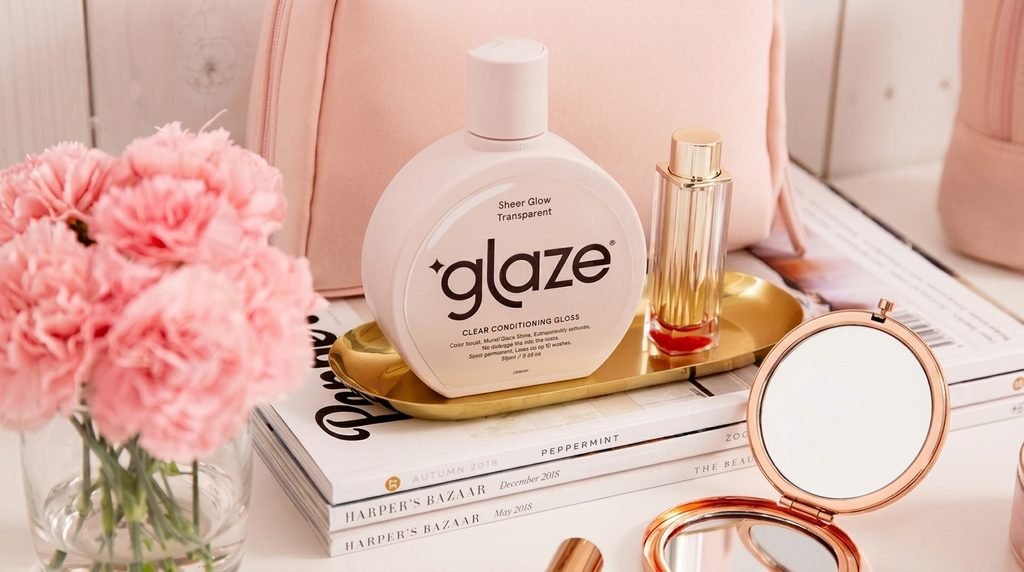
A hair gloss treatment is a cosmetic hair treatment designed to improve the appearance of hair by enhancing shine, smoothing the feel of the strands, and, in some formulas, refreshing existing colour.
Think of it as a finishing treatment for your hair.
Just as a carefully selected skincare product can make the complexion look smoother and more hydrated, a suitable hair gloss can help lengths look more polished and reflective.
Hair gloss products are available in different formats, including:
- Clear gloss treatments.
- Colour-depositing gloss treatments.
- Conditioning gloss masks.
- Rinse-out gloss treatments.
- Salon-applied gloss services.
The exact purpose depends on the formulation.
Some products are designed mainly to improve shine and softness. Others contain temporary or demi-permanent pigments intended to refresh the appearance of coloured hair.
A hair gloss should not automatically be considered a permanent hair dye, a deep repair treatment, or a replacement for conditioner.
Its main purpose is cosmetic: helping hair look smoother, shinier, and more vibrant.
Why Is Hair Gloss Becoming Popular?
The interest in glossy hair reflects a wider shift towards polished, healthy-looking hairstyles.
For several years, beauty inspiration has included sleek buns, smooth blowouts, soft waves, and minimalist hairstyles. More recently, the glass-hair aesthetic has brought additional attention to reflective lengths and carefully maintained hair.
People are increasingly interested in treatments that help their hair look professionally finished without requiring frequent salon appointments.
At-home gloss treatments fit into this approach because they offer a convenient maintenance option.
They can be especially appealing if:
- Your coloured hair looks faded between appointments.
- Your brunette hair appears dull.
- Your blonde hair needs a colour refresh.
- Your natural hair lacks visible shine.
- Your lengths feel rough or difficult to manage.
- You want a polished finish without changing your hairstyle.
The important thing is to choose a treatment that addresses your actual concern rather than purchasing a product simply because it is popular.
How Does a Hair Gloss Treatment Work?
Hair gloss products work differently depending on their ingredients and formulation.
Many conditioning gloss treatments work primarily on the outer surface of the hair. They deposit conditioning agents that help improve smoothness and reduce the appearance of roughness.
When the hair surface looks smoother, light may reflect more evenly across the strands. This can create the impression of shinier, healthier-looking hair.
Colour-depositing glosses have an additional purpose.
They contain pigments that can subtly adjust or refresh the appearance of existing colour. Depending on the shade, these products may help reduce unwanted warmth, refresh brunette tones, or enhance certain red and copper shades.
However, the result depends on several factors:
- Your original hair colour.
- Whether your hair has been chemically coloured.
- Hair porosity.
- The condition of your lengths.
- The pigment concentration.
- The product’s application instructions.
A gloss does not permanently repair damaged hair or reverse split ends.
It may improve the cosmetic appearance and feel of your lengths, but ongoing care is still necessary.
Clear Hair Gloss vs Tinted Hair Gloss
One of the most important decisions is choosing between clear and tinted hair gloss.
Although both products are designed to improve the appearance of hair, they serve slightly different purposes.
1. Clear Hair Gloss
Clear hair gloss is designed to add shine without intentionally depositing a visible colour.
It may be a useful option if you love your current hair colour and simply want a more polished finish.
Potential advantages include:
- No intended colour change.
- A glossy-looking finish.
- Improved softness, depending on the formula.
- Easier maintenance between salon appointments.
- Suitability for many natural and coloured hair shades, subject to product instructions.
Clear gloss is often a sensible starting point for someone who has never tried a gloss treatment.
However, always check the product label. Not every clear gloss is suitable for every hair type or chemical treatment history.
2. Tinted Hair Gloss
Tinted hair gloss contains pigments designed to refresh or subtly adjust the appearance of existing hair colour.
It can be useful when your colour looks faded or when you want to maintain a particular tone between appointments.
For example:
- Violet-toned glosses may help neutralise unwanted yellow tones in suitable blonde hair.
- Blue-based products may help address certain orange-looking tones in brunette hair.
- Brown glosses may refresh the appearance of brunette lengths.
- Copper glosses may enhance the appearance of suitable copper-coloured hair.
- Red glosses may refresh some red hair shades.
The results are not identical for everyone.
Highly porous or previously lightened hair may absorb pigment differently from untreated hair. This is why following the instructions and performing the recommended strand test is important.
Which Type Should You Choose?
If you simply want more shine, begin by exploring clear gloss.
If your main concern is faded colour or unwanted warmth, a suitable tinted formula may be more appropriate.
If you have recently received professional colour treatment, ask your colourist which products are compatible with your hair colour.
Benefits of Using Hair Gloss at Home
Hair gloss treatments offer several potential cosmetic benefits when the formula suits your hair.
1. Enhances Hair Shine
The most obvious attraction is shine.
A suitable gloss treatment can help create a smoother-looking surface that reflects light more evenly.
This is particularly appealing if your hair looks dull after frequent washing, heat styling, or exposure to environmental conditions.
2. Helps Hair Look Smoother
Some gloss formulas contain conditioning ingredients that improve the feel of the hair.
This can make lengths easier to comb and style.
However, the level of smoothness varies between products.
3. Refreshes Existing Hair Colour
Tinted gloss treatments can help refresh the appearance of faded colour.
This can be convenient between salon visits, especially if your hair colour gradually loses its vibrancy.
4. Helps Reduce the Appearance of Frizz
A conditioning gloss may help hair look more controlled and polished.
It does not permanently eliminate frizz, particularly in humid weather, but it may improve the cosmetic finish.
5. Supports a More Polished Hairstyle
Glossy hair works beautifully with different styling choices.
You can wear it straight, in loose waves, in a low bun, or in a sleek ponytail.
The reflective finish can make even a relatively simple hairstyle look more intentional.
6. Convenient Home Application
Many at-home gloss products are designed for straightforward application.
Depending on the formula, treatment may take only a few minutes.
Always follow the manufacturer’s recommended processing time rather than assuming every gloss should be left on for the same duration.
How to Choose the Best Hair Gloss for Your Hair Type
Choosing the right hair gloss is more important than selecting the most expensive product.
Your hair texture, colour, porosity, and styling habits should influence your decision.
Hair Gloss for Dry Hair
If your hair feels dry, rough, or difficult to manage, look for a gloss treatment with conditioning ingredients.
Depending on the formula, ingredients such as:
- Glycerin.
- Panthenol.
- Fatty alcohols.
- Conditioning agents.
- Selected plant oils.
may contribute to a softer feel.
Remember that a shine treatment is not necessarily a complete solution for severely dry or damaged hair.
A suitable conditioner, occasional hair mask, and careful heat styling remain important.
Hair Gloss for Fine Hair
Fine hair can become weighed down by heavy formulas.
If your strands are delicate or easily lose volume, look for lightweight gloss treatments.
Avoid applying excessive product, particularly around the roots.
Concentrating the treatment on the mid-lengths and ends may be more comfortable if the manufacturer’s instructions permit it.
Hair Gloss for Thick Hair
Thicker hair may require more product to achieve even coverage.
Choose a formula suitable for your hair density and follow the recommended quantity.
Divide your hair into manageable sections to avoid missing areas.
Hair Gloss for Curly Hair
Curly hair can benefit from conditioning products that improve softness and manageability.
Look for formulas designed to work with textured hair.
Avoid unnecessary brushing after application if your curls are prone to frizz or disruption.
After rinsing, use a suitable leave-in conditioner or styling product if it is part of your normal routine.
Hair Gloss for Colour-Treated Hair
Colour-treated hair may benefit from gloss products specifically designed to maintain coloured lengths.
Clear gloss may help improve shine without intentionally changing the shade.
Tinted gloss may help refresh an existing colour.
However, always check compatibility with your previous salon treatments, particularly if your hair has been bleached, highlighted, relaxed, or chemically processed.
How to Use a Hair Gloss Treatment at Home: Step-by-Step Guide
Using hair gloss at home can be straightforward when you follow the correct instructions.
The process varies between products, so the manufacturer’s directions should always take priority.
Step 1: Choose the Right Formula
Begin by deciding what you want to achieve.
Do you want more shine?
Do you want to refresh your brunette colour?
Are you trying to reduce unwanted yellow tones?
Or are you simply looking for softer, more manageable lengths?
Your answer will help you choose between a clear gloss and a tinted treatment.
Step 2: Read the Product Instructions
Before opening the product, check the packaging carefully.
Look for:
- Suitable hair types.
- Colour compatibility.
- Application instructions.
- Recommended processing time.
- Rinsing instructions.
- Safety warnings.
- Whether a patch test or strand test is required.
Never assume that two gloss treatments should be used in exactly the same way.
Step 3: Prepare Your Hair
Some glosses should be applied to clean, damp hair, while others have different application requirements.
Follow the specific product directions.
If the instructions recommend shampooing first, cleanse your hair gently.
Remove excess water with a towel if required.
Avoid applying a product to dripping-wet hair when the instructions call for towel-dried lengths.
Step 4: Divide Your Hair Into Sections
Sectioning makes application easier and helps distribute the treatment more evenly.
You can divide your hair into four main sections:
- Front left.
- Front right.
- Back left.
- Back right.
Use clips to keep the sections separate.
If you have thick or long hair, smaller sections may be more practical.
Step 5: Apply the Gloss Evenly
Apply the recommended amount to the sections specified by the manufacturer.
Some products are intended for roots to ends, while others should be applied mainly to the mid-lengths and ends.
Distribute the product carefully.
Avoid using more than the recommended quantity in an attempt to create additional shine.
More product does not automatically mean a better result.
Step 6: Follow the Recommended Processing Time
This step is particularly important.
Leave the treatment on for the exact duration stated on the packaging.
Do not extend the processing time because you believe it will produce a stronger result.
This is especially important with tinted formulas, as excessive or inappropriate application may produce an uneven colour result.
Step 7: Rinse Thoroughly
Rinse the treatment according to the instructions.
Some products require extensive rinsing, while others have different finishing steps.
Do not improvise by leaving a rinse-out treatment in your hair.
Step 8: Finish Your Hair Carefully
Depending on the product, you may need to follow with conditioner or a leave-in treatment.
Use a suitable heat protectant if you plan to blow-dry or heat-style your hair.
For a smooth finish, use a moderate temperature and avoid repeatedly passing hot tools over the same section.
The aim is to maintain a polished appearance without creating unnecessary heat stress.
Hair Gloss for Different Hair Colours
Different hair colours may require different gloss formulations.
Understanding the basic differences can help you choose a more suitable product.
Hair Gloss for Blonde Hair
Blonde hair can sometimes develop unwanted yellow or brassy-looking tones.
A suitable violet-based gloss may help neutralise certain yellow tones.
However, not every blonde shade requires a purple product.
If your hair is very light, porous, or previously bleached, pigments may appear stronger than expected.
Start with a formula specifically designed for your blonde shade and follow its strand-testing instructions.
Hair Gloss for Brunette Hair
Brunette hair can look especially beautiful with a reflective, polished finish.
A clear gloss may enhance shine without changing the colour.
A brunette-tinted gloss may help refresh faded brown tones.
Popular shade directions include:
- Espresso brown.
- Chocolate brown.
- Chestnut brown.
- Cool mocha.
- Warm caramel brown.
Choose a shade close to your existing colour unless the product specifically recommends otherwise.
Hair Gloss for Black Hair
Black hair can create a dramatic glossy appearance when light reflects evenly across its surface.
A clear gloss may be a suitable option if you want to enhance shine without altering your colour.
Avoid assuming that every black-tinted gloss will suit natural black hair.
Check the product’s intended colour range before applying it.
Hair Gloss for Red and Copper Hair
Red and copper hair colours can gradually lose their visual intensity through regular washing and environmental exposure.
A compatible colour-depositing gloss may help refresh the appearance of these shades.
Choose a tone that complements your current colour rather than selecting a dramatically different shade.
Hair Gloss for Natural Hair
You do not need coloured hair to enjoy a gloss treatment.
Natural hair may also benefit from a suitable clear conditioning gloss.
If you have virgin hair and want shine without colour change, check that the product is genuinely colourless and intended for your hair type.
How Often Should You Use Hair Gloss?
There is no universal schedule for every hair gloss.
The appropriate frequency depends on:
- Product formulation.
- Whether it contains pigments.
- Hair condition.
- Washing frequency.
- Previous colour treatments.
- Manufacturer recommendations.
Some products are designed for occasional use, while others may be suitable for more frequent application.
A useful starting point is to follow the recommended schedule on the packaging and monitor how your hair responds.
Avoid repeatedly applying colour-depositing treatments simply because your hair looks slightly dull.
Too much pigment can affect the appearance of the shade, particularly on porous lengths.
If you regularly visit a salon for colour services, ask your stylist how frequently an at-home gloss can be incorporated into your maintenance routine.
Hair Gloss vs Hair Glaze vs Hair Toner
These terms are sometimes used interchangeably in beauty marketing, but they do not always describe identical products.
Hair Gloss
Hair gloss generally refers to a treatment intended to improve shine and, depending on the formula, refresh or adjust hair colour.
It may be available in clear and tinted versions.
Hair Glaze
A hair glaze is often marketed as a conditioning or shine-enhancing treatment.
Some formulas are clear, while others contain pigments.
The exact meaning can vary between brands.
Hair Toner
Hair toner is primarily used to adjust unwanted tones in coloured or lightened hair.
Professional toners may require specific formulation knowledge and should not automatically be treated like ordinary conditioning glosses.
Which One Is Best?
Choose according to your objective.
- For shine: Explore a clear gloss or suitable glaze.
- For a subtle colour refresh: Consider a compatible tinted gloss.
- For more specific colour correction: Ask a professional colourist whether a toner is appropriate.
Understanding these differences can prevent unnecessary colour changes and help you purchase the right treatment.
How to Maintain Glass Hair After a Gloss Treatment
Getting a glossy finish is only part of the process.
Your regular hair care routine also influences how your hair looks between treatments.
1. Use a Suitable Shampoo
Choose a shampoo according to your scalp and hair needs.
If you have colour-treated hair, consider a shampoo designed for coloured hair.
Avoid using an overly harsh cleansing product if it leaves your lengths feeling uncomfortable or excessively dry.
2. Condition Your Lengths
Conditioner helps improve softness and manageability.
Apply it according to the product instructions, paying attention to the mid-lengths and ends.
3. Avoid Excessive Heat Styling
Frequent high-temperature styling can contribute to dryness and breakage.
Use a heat protectant and choose the lowest practical temperature for your styling needs.
4. Use a Lightweight Finishing Serum
A suitable hair serum can help improve the appearance of frizz and add cosmetic shine.
Use a small amount and distribute it evenly.
Fine hair may need less product than thick hair.
5. Protect Your Hair From Environmental Exposure
Sun exposure, swimming, wind, and environmental conditions can affect the appearance and feel of hair.
Wear suitable protection when necessary and rinse your hair after swimming.
In hot and humid climates, choose lightweight conditioning and anti-frizz products that suit your hair type.
6. Be Gentle With Wet Hair
Wet hair can be more vulnerable to mechanical damage.
Use a suitable wide-tooth comb or detangling brush and avoid aggressive pulling.
Start at the ends and work gradually upwards.
Hair Gloss in Hot and Humid Climates
Hair care needs can change depending on the environment.
People living in regions such as Saudi Arabia, the UAE, Qatar, Kuwait, Bahrain, Oman, and parts of Egypt and Türkiye may experience combinations of heat, humidity, strong sunlight, air conditioning, and dry indoor environments.
These conditions can make maintaining a consistent hair routine challenging.
Managing Humidity-Related Frizz
Humidity can affect how hair behaves, particularly if your hair is naturally curly, wavy, porous, or chemically processed.
A gloss treatment may improve the appearance of the hair surface, but it should not be considered a permanent humidity-proofing solution.
Combine it with:
- Suitable conditioning products.
- Lightweight anti-frizz products.
- Gentle drying techniques.
- Heat protection.
- Regular trimming when needed.
Caring for Hair in Dry Indoor Environments
Air conditioning can make some people’s hair feel drier or less manageable.
If your lengths feel rough, consider using a suitable conditioner or occasional hair mask.
Do not rely on gloss alone to address dryness.
Hair Care During Summer
Strong sunlight and frequent swimming can affect the appearance of coloured hair.
Consider protective hairstyles, suitable hair products, and rinsing after swimming.
If you spend considerable time outdoors, use hair protection recommended for UV exposure.
Common Hair Gloss Mistakes to Avoid
Even a good product may disappoint if it is used incorrectly.
Here are some mistakes worth avoiding.
1. Choosing the Wrong Shade
A tinted gloss should complement your existing colour.
A shade that is too dark or too warm may produce an unexpected result.
2. Skipping the Strand Test
A strand test is particularly useful when using a tinted treatment or applying gloss to previously coloured hair.
It allows you to assess how the product interacts with your hair before applying it everywhere.
3. Leaving the Treatment On Too Long
Longer processing does not necessarily create a better finish.
Always follow the recommended duration.
4. Applying Too Much Product
Using excessive product can make application difficult and may create uneven results.
Follow the recommended amount.
5. Expecting Permanent Hair Repair
A gloss may improve the cosmetic appearance of hair, but it cannot permanently repair split ends or reverse all forms of structural damage.
6. Ignoring Hair Porosity
Highly porous hair may respond differently to pigments and conditioning ingredients.
This is why testing is important, especially if your hair has been bleached or chemically treated.
7. Repeating Treatments Too Frequently
Applying gloss too often may lead to unnecessary product buildup or unwanted pigment accumulation.
Follow the product’s recommended schedule.
Is Hair Gloss Worth Trying at Home?
For many people, an at-home hair gloss can be a practical addition to a hair maintenance routine.
It is especially worth considering if you:
- Enjoy glossy, polished hairstyles.
- Want to refresh coloured hair between salon visits.
- Prefer low-commitment colour maintenance.
- Want to improve the appearance of dull lengths.
- Enjoy simple at-home beauty treatments.
However, it may not be the right solution if your main concern is severe breakage, significant hair loss, scalp irritation, or extensive chemical damage.
Those concerns require a more targeted approach.
If your hair is heavily bleached, recently chemically treated, or has an unpredictable colour history, professional advice is a sensible choice before experimenting with tinted gloss.
Frequently Asked Questions
1. What does a hair gloss treatment do?
A hair gloss treatment is designed to improve the appearance of hair by enhancing shine, smoothing the feel of the strands, and, depending on the formula, refreshing existing colour.
2. Can I use hair gloss at home?
Yes. Many products are specifically formulated for home application. Follow the instructions, check compatibility with your hair, and perform any recommended patch or strand tests.
3. Is clear hair gloss better than tinted hair gloss?
Neither is universally better. Clear gloss is generally more suitable when your goal is shine without intentional colour change. Tinted gloss is more appropriate when you want to refresh or adjust an existing shade.
4. Does hair gloss damage hair?
The effects depend on the product formulation and how it is used. A conditioning gloss is different from a chemical colour service. Always read the ingredients and safety instructions, particularly if your hair has been previously treated.
5. Can hair gloss be used on natural hair?
Yes. Suitable clear gloss treatments can be used on natural hair. Check that the formula is designed for your hair type and does not contain pigments that could change its appearance.
6. Can I use hair gloss on curly hair?
Yes, provided the product is suitable for your hair texture. A conditioning gloss may improve softness and manageability. Follow the instructions and maintain your normal curl-care routine.
7. Does hair gloss cover grey hair?
Most ordinary shine-focused gloss treatments are not designed to provide permanent grey coverage. Some colour-depositing products may subtly affect the appearance of grey strands, but the result varies. Check the manufacturer’s claims and shade guidance.
8. How long does a hair gloss treatment last?
There is no fixed duration. Results depend on the formulation, washing frequency, hair porosity, and whether the product deposits pigment. Follow the manufacturer’s information rather than expecting every treatment to last the same number of washes.
9. Can I use hair gloss after colouring my hair?
Some gloss products are designed specifically for colour-treated hair. However, timing and compatibility matter. Ask your colourist when it is appropriate to use an additional treatment after a professional colour service.
10. Should I shampoo after applying hair gloss?
It depends on the product. Some glosses are applied after shampooing and then rinsed, while others have different instructions. Follow the directions on your specific product.
11. Can hair gloss help with frizz?
Some conditioning gloss formulas may make hair feel smoother and improve the appearance of frizz. However, they do not permanently prevent frizz, particularly in humid conditions.
12. Is hair gloss the same as a hair mask?
No. A hair mask is generally designed to condition the hair, while a gloss treatment focuses on shine and may also refresh colour. Some products combine both purposes.
13. Can I use hair gloss on black hair?
Yes, if the product is suitable for black hair. A clear formula may be a useful option when you want shine without changing your natural colour.
14. Is hair gloss suitable for fine hair?
Many lightweight gloss products can work for fine hair. Choose a formula that does not leave your strands feeling heavy and use the recommended amount.
15. Can I use hair gloss before a special occasion?
You can plan a gloss treatment before an event if you already know how your hair responds to that product. Avoid experimenting with an unfamiliar tinted treatment immediately before a wedding, celebration, or important occasion.
Final Thoughts
A hair gloss treatment at home can be an enjoyable and practical way to maintain shiny, smooth-looking hair between salon appointments.
Whether you prefer naturally glossy brunette lengths, luminous blonde hair, rich black hair, or refreshed copper tones, the right formula can help create a more polished appearance.
The most important step is understanding the difference between clear and tinted gloss treatments. Choose a formula that suits your existing hair colour, texture, porosity, and overall condition.
Remember that shine is only one part of a good hair care routine. Gentle cleansing, regular conditioning, heat protection, careful styling, and appropriate maintenance all contribute to beautiful-looking hair.
You do not need to change your entire routine to enjoy the glass-hair aesthetic. Sometimes, a thoughtful treatment and consistent everyday care are enough to make your hair look more refined.
At FashionEliteOne, we believe that beautiful hair care should be practical, enjoyable, and suited to your individual needs. Start with the right gloss, follow its instructions, and let your natural hair texture remain part of your personal style.