

INTRODUCTION
Starting a new skincare ingredient can feel exciting until you discover how many questions come with it. What percentage should you choose? Should you apply it every night? Can you use it with moisturizer? And what should you do if your skin becomes dry or flaky?
If you have been researching a retinol serum for beginners, you are not alone. Retinol is a popular skincare ingredient used to improve the appearance of uneven texture, fine lines, and certain forms of discoloration. It belongs to the retinoid family, which includes several vitamin A derivatives used in skincare.
However, the best way to introduce retinol is not to choose the strongest formula or apply it every evening from day one. A gradual approach, a gentle moisturizer, and consistent sun protection can make your routine easier to manage.
This guide explains how retinol works, how to select a beginner-friendly formula, how to apply it correctly, and which mistakes to avoid. Whether you have dry, oily, combination, or normal skin, you will learn how to build a simple routine that prioritizes comfort and consistency.
The goal is not to overwhelm your skin with multiple active ingredients. It is to introduce one useful product thoughtfully and give your skin time to adjust.

What Is Retinol?
Retinol is a form of vitamin A commonly found in over-the-counter skincare products. It belongs to a broader group of ingredients called retinoids.
After application, retinol undergoes conversion in the skin into forms that can influence normal skin-cell activity. Depending on the formula and how consistently it is used, it may help improve the appearance of fine lines, uneven skin tone, rough texture, and some acne-related concerns.
Retinol is available in serums, creams, lotions, and other skincare formulations. Serums are popular because they are easy to layer into a routine, although a cream may be equally suitable for someone who prefers a richer texture.
The product format matters less than choosing a formula appropriate for your skin and using it correctly.
Retinol is not an overnight treatment. Visible changes can take several weeks or months, and results vary according to the formulation, frequency of use, skin concern, and individual tolerance.
Why Consider a Retinol Serum for Beginners?
A well-chosen retinol serum can be a useful addition to a skincare routine when your skin is ready for an active ingredient.
1. Helps Improve the Appearance of Fine Lines
Retinol is widely used in skincare formulated for visible signs of aging. With consistent use, appropriate formulations may soften the appearance of fine lines and improve the look of skin texture.
It does not eliminate every wrinkle, and the extent of improvement differs from person to person. Daily sunscreen remains essential for protecting skin from further sun-related damage.
2. Supports Smoother-Looking Skin
Uneven texture can make the skin appear rough or less refined. Retinol influences skin-cell activity, which is one reason it is used in products designed to improve the appearance of texture.
The process takes time. Applying more product will not necessarily produce faster results and may instead increase irritation.
3. Helps Address Uneven Skin Tone
Some retinoid products can help improve the appearance of certain types of pigmentation and uneven tone. However, not every dark spot has the same cause, so results depend on the underlying concern.
Persistent pigmentation, melasma, or marks that are changing should be assessed by a qualified healthcare professional rather than treated with increasingly strong products at home.
4. Can Be Useful for Certain Acne Concerns
Retinoids are also used in acne care. Different retinoids have different evidence, strengths, and uses, so a cosmetic retinol serum is not interchangeable with every acne treatment.
If you have persistent or inflammatory acne, ask a dermatologist whether retinol or another treatment would be more appropriate.
5. Encourages a More Consistent Skincare Routine
One of the biggest advantages of a beginner-friendly formula is that it can fit into a simple evening routine.
You do not need ten different serums to care for your skin. A gentle cleanser, one carefully selected retinol product, moisturizer, and daily sunscreen can be a more practical foundation than a complicated routine with several potentially irritating ingredients.
How to Choose the Best Retinol Serum for Beginners
Choosing a beginner product involves more than looking for a high percentage on the label. The complete formula, packaging, supporting ingredients, and your skin’s current condition all matter.
1. Look for a Formula Designed for Beginners
If you have never used retinol, consider a lower-strength product or a formula specifically designed for gradual introduction.
There is no single percentage that is best for everyone. Concentrations are not always directly comparable between products, and formulation technology can influence how an ingredient is delivered.
Read the manufacturer’s directions and avoid starting with multiple retinoid products at once.
2. Consider Encapsulated Retinol
Some products use encapsulation technology to protect an ingredient and influence how it is released. These formulas may be marketed for improved stability or tolerability.
However, encapsulation does not guarantee that a product will be irritation-free. Your skin may still react, especially if you use it too frequently or combine it with other strong active ingredients.
3. Look for Supportive Moisturizing Ingredients
A beginner-friendly retinol serum may include ingredients such as:
- Glycerin: Helps attract and retain moisture in the skin.
- Hyaluronic acid: Helps hydrate the skin by attracting water.
- Ceramides: Support the skin barrier and help reduce moisture loss.
- Squalane: An emollient that helps soften the skin.
- Niacinamide: Can support the skin barrier and improve the appearance of uneven tone.
These ingredients do not remove all the risks associated with retinol, but they can complement a well-balanced skincare routine.
4. Check the Packaging
Retinol can be sensitive to light, oxygen, and storage conditions, depending on the formulation. Packaging designed to limit unnecessary exposure can help protect product quality.
An opaque, well-sealed pump or suitable air-restrictive container may be practical. Store the product according to the manufacturer’s directions and pay attention to its expiry date.
5. Choose According to Your Skin’s Needs
Consider how your skin feels before selecting a serum.
- Dry skin: A formula paired with moisturizing ingredients may be more comfortable.
- Oily skin: A lightweight serum may suit your preferences, but oily skin can still become irritated or dehydrated.
- Combination skin: Begin with a simple routine and observe how different areas respond.
- Sensitive skin: Consider professional advice before introducing retinol, particularly if you experience frequent redness, burning, eczema, or rosacea.
- Normal skin: A straightforward, lower-strength formula may be a reasonable starting point if your skin barrier is healthy.
No skin type is completely protected from irritation. The best product is one you can tolerate and use according to its instructions.
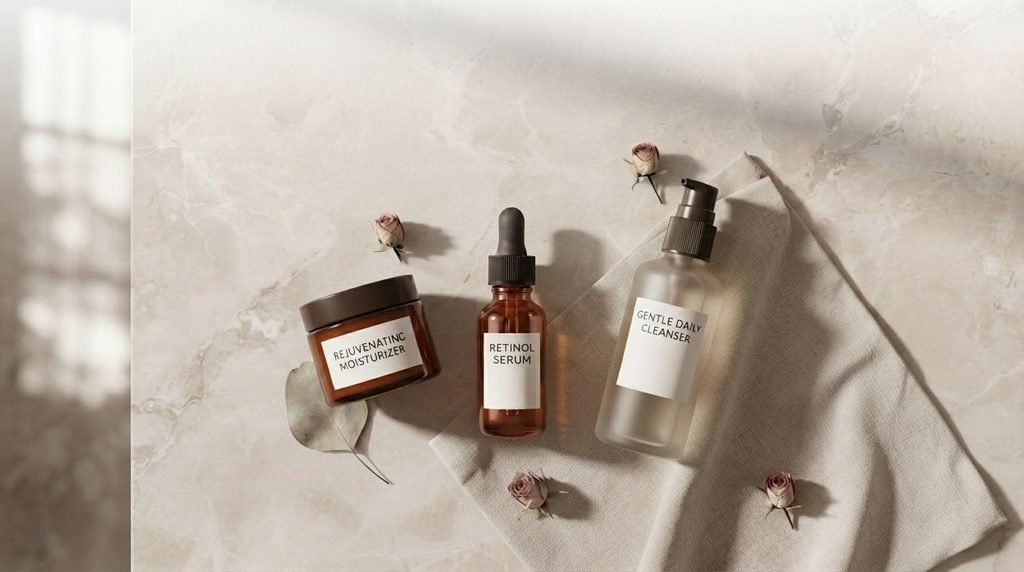
How to Use Retinol Serum for Beginners Step by Step
Correct application is one of the most important parts of introducing retinol. A simple routine helps you monitor your skin’s response without adding unnecessary variables.
Step 1: Begin With Clean Skin
In the evening, wash your face with a gentle cleanser. Avoid harsh scrubs or cleansers that leave your skin feeling tight.
Pat your face dry with a clean towel. If the product instructions recommend applying it to dry skin, wait until the skin is fully dry before proceeding. Applying certain retinoid products to damp skin may increase irritation.
Step 2: Apply a Small Amount
Follow the product label. Many facial retinol products are used in a small, pea-sized amount for the entire face, although the exact quantity depends on the product.
Spread a thin, even layer. Applying extra serum does not make it work faster.
Avoid the eyelids, the corners of the eyes, the creases beside the nostrils, and the corners of the mouth unless your specific product instructions or clinician advise otherwise. Keep the product away from your eyes and lips.
Do not apply retinol to broken, sunburned, freshly waxed, or already irritated skin.
Step 3: Follow With Moisturizer
Finish with a gentle moisturizer that suits your skin.
A product containing ceramides, glycerin, or other moisturizing ingredients can help support the skin barrier. You do not need to choose an expensive moisturizer; comfort, compatibility, and consistent use are more important.
Step 4: Start Infrequently
Rather than using retinol every night immediately, begin with a low frequency based on the product instructions. For many beginners, one or two evenings per week may be a cautious starting point.
Observe how your skin responds over the following days. If irritation develops, reduce use or pause the product until the skin has recovered.
Only increase frequency gradually if your skin remains comfortable. There is no requirement to reach nightly use if a lower frequency is sufficient for your needs.
Step 5: Use Sunscreen Every Morning
Daily broad-spectrum sunscreen is essential when building a routine around retinol.
Choose SPF 30 or higher, apply it as directed, and reapply when necessary, particularly during prolonged outdoor exposure. Hats, shade, and protective clothing provide additional support.
Sunscreen is important even when your primary goal is to improve uneven tone or the appearance of fine lines.
Applying Retinol Correctly
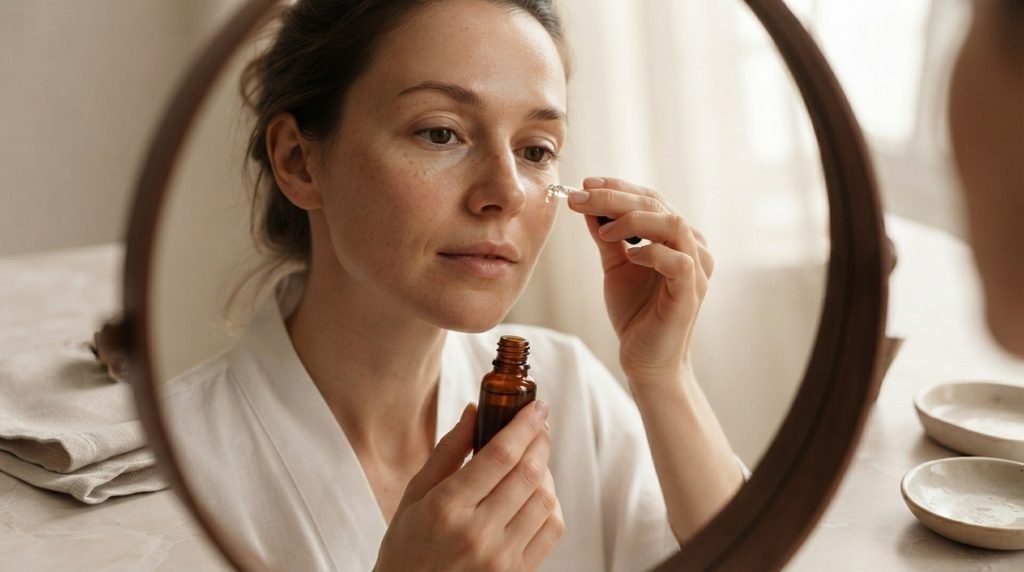
The Moisturizer Sandwich Method
If your skin tends to become dry or sensitive, you may find the moisturizer sandwich method helpful.
This technique places moisturizer before and after the retinol product to reduce the feeling of dryness and help support the skin barrier.
How to Use the Method
- Cleanse your face gently.
- Allow the skin to dry fully if required by your product instructions.
- Apply a thin layer of moisturizer.
- Apply a small amount of retinol according to the label.
- Finish with another layer of moisturizer if needed.
Some people find this approach more comfortable than applying retinol directly to bare skin. However, individual results vary, and moisturizing does not eliminate the possibility of a reaction.
If your skin is already inflamed, persistently itchy, or painful, do not rely on layering techniques to push through the irritation. Pause retinol and seek professional guidance when appropriate.
How Often Should Beginners Use Retinol?
There is no universal schedule that suits every formulation and skin type. The right frequency depends on the product’s instructions, its strength, and your tolerance.
A gradual introduction is generally more sensible than daily application from the beginning.
A Cautious Introduction Plan
First two weeks: If the product is appropriate for you, start with one evening per week or another low frequency consistent with its directions. Monitor your skin for dryness, redness, itching, or burning.
Weeks three and four: If your skin remains comfortable, consider increasing to two non-consecutive evenings per week, provided the product instructions permit it.
Following weeks: Maintain the frequency that your skin tolerates. Consider increasing gradually only if there is a clear reason to do so and your skin remains calm.
This is an illustrative approach, not a medical prescription. Some people need a slower introduction, and others should avoid retinol altogether.
If you experience persistent irritation, stop increasing the frequency. You do not need to tolerate peeling or burning to obtain benefits.
A Simple Evening Skincare Routine
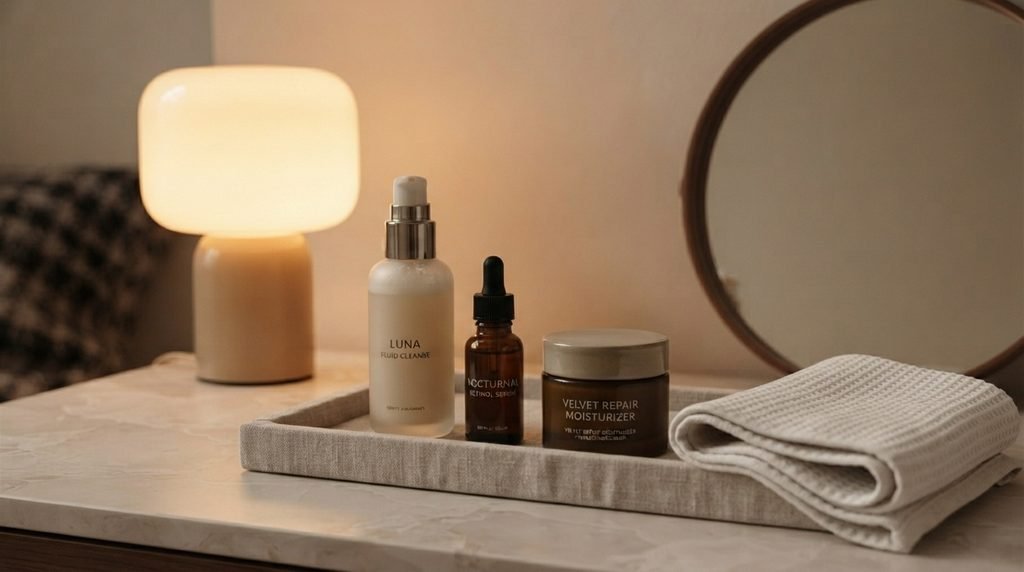
What Can You Use With Retinol?
A beginner routine should prioritize hydration and simplicity. Introducing several active ingredients simultaneously can make it difficult to identify the cause of irritation.
Retinol and Hyaluronic Acid
Hyaluronic acid is a moisturizing ingredient that helps attract water. It can be used in a routine with retinol if the products are compatible with your skin.
You can use a separate hydrating serum according to its instructions or choose a moisturizer that already contains it.
Retinol and Niacinamide
Niacinamide is often used to support the skin barrier and improve the appearance of uneven tone. It may complement a retinol routine, particularly when included in a well-formulated moisturizer.
If your skin is sensitive, introduce one new product at a time instead of adding several serums in the same week.
Retinol and Ceramides
Ceramides help support the skin barrier. A ceramide-containing moisturizer is a practical companion to retinol because it can help reduce moisture loss and support skin comfort.
Retinol and Vitamin C
Vitamin C is an antioxidant commonly used in morning skincare routines. It may be possible to use vitamin C and retinol within the same overall routine, but combining multiple active products can increase irritation for some people.
A simpler approach is to use vitamin C in the morning if tolerated and retinol in the evening. Introduce each ingredient separately and maintain sunscreen use.
Retinol and Exfoliating Acids
Alpha hydroxy acids, beta hydroxy acids, and other exfoliating products can cause irritation, particularly when combined with retinol.
As a beginner, avoid layering strong exfoliants and retinol on the same evening unless a qualified professional has advised you to do so. Alternating evenings may be more appropriate for some established routines.
Retinol and Benzoyl Peroxide
Benzoyl peroxide is commonly used in acne treatments, but its compatibility with a retinol product depends on the specific ingredients and formulation. Some combinations may increase dryness or irritation, and certain formulations can affect retinoid stability.
If you are treating acne, ask a pharmacist or dermatologist how to coordinate the products rather than experimenting with several treatments at once.
Hydration and Skin Barrier Support
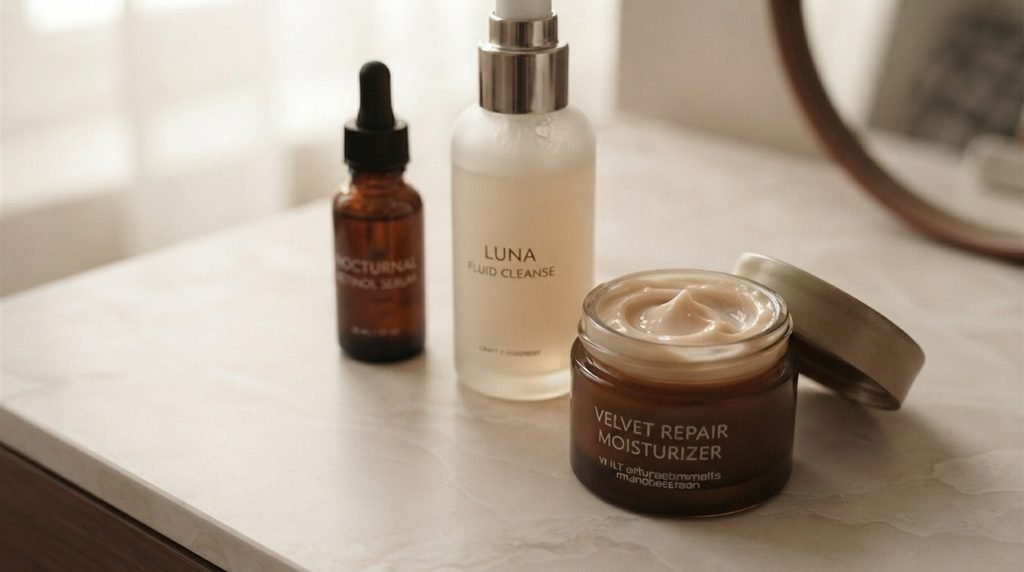
Common Retinol Mistakes Beginners Should Avoid
Many problems associated with starting retinol arise from using too much, introducing it too quickly, or neglecting the skin barrier.
1. Applying Retinol Every Night From Day One
Frequent application may be too much for skin that has not adjusted to the ingredient.
Begin gradually and increase use only when your skin remains comfortable. More frequent application is not automatically better.
2. Using Too Much Product
A thick layer does not guarantee improved results. It may increase the likelihood of dryness and irritation.
Use the amount specified by the manufacturer.
3. Combining Too Many Active Ingredients
Using retinol, exfoliating acids, strong acne treatments, and several concentrated serums at once can make a routine unnecessarily harsh.
Keep retinol evenings simple while your skin adjusts.
4. Skipping Moisturizer
Retinol can cause dryness and flaking. Leaving out moisturizer may make discomfort more noticeable.
Choose a moisturizer that feels comfortable and does not aggravate your skin.
5. Forgetting Sunscreen
Sun protection is a core part of a daytime skincare routine. Neglecting it can undermine efforts to improve the appearance of sun-related pigmentation and fine lines.
Use broad-spectrum sunscreen consistently.
6. Applying Retinol to Irritated Skin
Do not apply retinol over a sunburn, damaged skin, or an active irritation flare. Allow the skin to recover first and seek advice if the problem persists.
7. Expecting Immediate Results
Retinol requires patience. Texture and pigmentation concerns may take weeks or months to improve, and not every concern will respond to the same ingredient.
Take progress photos in consistent lighting if you want to compare changes, rather than evaluating your skin differently every morning.
8. Ignoring Persistent Symptoms
Mild dryness can occur, but severe burning, swelling, blistering, or persistent redness should not be treated as a necessary adjustment phase.
Stop using the product and seek medical advice when symptoms are significant or do not settle.
Retinol Mistakes to Avoid
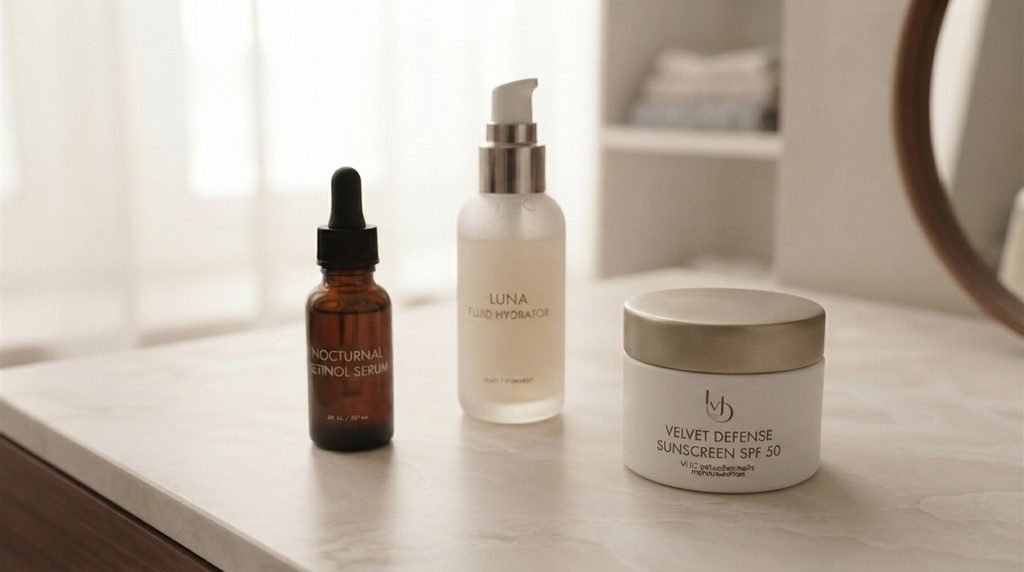
What to Expect When You Start Retinol
Understanding the adjustment process can help you make more informed decisions about whether to continue.
The First Few Applications
Your skin may feel normal, or you may notice mild dryness, tightness, or sensitivity. Some people experience irritation even when they follow the directions.
Monitor your skin rather than assuming every reaction is harmless.
The First Few Weeks
With some retinol products, dryness, flaking, redness, or itching may appear during the early weeks. These symptoms can indicate irritation, so do not automatically assume they mean the product is working.
If symptoms persist, worsen, or cause discomfort, stop using the product and reassess your routine.
After Several Weeks
Some users begin to notice changes in texture or overall appearance after several weeks, but the timeline varies. More substantial changes can take months of consistent, tolerated use.
The results depend on the product, the concern being treated, and the individual’s skin. No particular result or timeline is guaranteed.
After Several Months
If your skin tolerates the product and the routine is appropriate, continued use may help maintain improvements in certain signs of photoaging or uneven texture.
Reassess your routine periodically. If you experience ongoing irritation or see no meaningful improvement, a dermatologist can help determine whether another approach would better address your concerns.
Healthy-Looking Skin and Consistent Care

Is Retinol Suitable for Every Skin Type?
Retinol is not automatically suitable for everyone. Your current skin condition, medical history, medications, and the product’s formulation can affect whether it is an appropriate choice.
Dry Skin
Dry skin may need additional moisturizing support. Choose a routine that emphasizes gentle cleansing and a comfortable moisturizer.
If dryness becomes pronounced or your skin starts to crack or burn, stop using retinol and allow your skin to recover.
Oily Skin
Oily skin may benefit from certain retinoid products, particularly when treating appropriate acne-related concerns. However, oiliness does not make skin immune to irritation.
Avoid assuming that stronger concentrations are necessary simply because your skin produces more oil.
Combination Skin
Combination skin can respond differently across the face. Apply products carefully and monitor areas that tend to become dry, such as the cheeks and corners of the mouth.
Keep the routine simple while you learn how your skin responds.
Sensitive Skin
If your skin frequently stings, becomes red, or reacts to common skincare products, consult a dermatologist before starting retinol.
People with active eczema, rosacea, significant skin-barrier damage, or ongoing inflammation may need a different approach.
Mature Skin
Retinol is frequently included in routines for visible signs of aging. Mature skin may also benefit from gentle cleansing, moisturization, and sun protection.
The goal should be a comfortable, sustainable routine rather than maximizing the number of active ingredients.
Retinol Safety: Pregnancy, Breastfeeding, and Medical Advice
Retinoids are generally avoided during pregnancy as a precaution, including topical retinol products. If you are pregnant, trying to conceive, or planning a pregnancy, discuss appropriate skincare alternatives with your healthcare professional.
If you are breastfeeding, ask your clinician about whether a particular topical product is appropriate, where it would be applied, and how to prevent infant contact with treated skin.
Also consult a qualified professional if you use prescription acne treatments, have a history of significant skin reactions, or are unsure whether your current medication is compatible with retinol.
If you develop severe swelling, blistering, intense burning, or other concerning symptoms, stop using the product and seek appropriate medical care.
Sunscreen and Morning Skin Protection
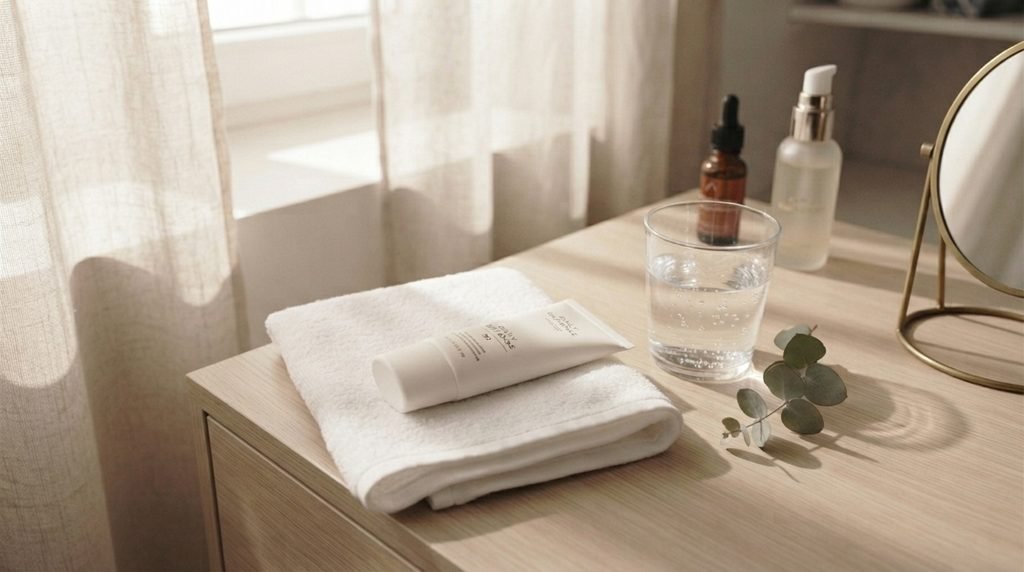
Frequently Asked Questions
Is retinol serum good for beginners?
It can be suitable for some beginners, provided they select an appropriate formula, follow the product directions, introduce it gradually, and use moisturizer and sunscreen. People with very sensitive or inflamed skin should seek professional guidance before starting.
What percentage of retinol should a beginner use?
There is no single ideal percentage for everyone. Look for a product intended for new users and follow its instructions. Concentration alone does not determine how irritating a formula will be.
Should I use retinol every night?
Not necessarily. Many beginners do better with less frequent application initially. Increase frequency only when the product instructions permit it and your skin remains comfortable.
Can I use retinol with moisturizer?
Yes. Moisturizer can support skin comfort and reduce moisture loss. You can apply it after retinol or use a moisturizer-first approach if that suits your skin and product instructions.
Can retinol remove dark spots?
Some retinoid products can improve the appearance of certain forms of discoloration over time. However, results vary according to the cause of the pigmentation, and persistent or unexplained dark spots should be evaluated professionally.
Does retinol cause purging?
Some retinoid treatments can temporarily change acne activity, but not every breakout is purging. Irritation, an unsuitable formula, or another skin condition can also cause breakouts. Stop and seek advice if symptoms are severe, painful, or persistent.
Can I use retinol around my eyes?
The eye area is delicate. Do not apply a facial retinol serum to your eyelids or close to your eyes unless the product is specifically intended for that area and its directions permit it. An eye-specific product may be more appropriate for some users.
Should I stop retinol if my skin peels?
Peeling can indicate irritation. If it occurs, pause use, simplify your routine, and focus on gentle cleansing and moisturizing. Do not restart until your skin has recovered, and seek professional advice if peeling is significant or persistent.
Conclusion
A retinol serum for beginners can be a useful part of a thoughtful skincare routine, but choosing the right formula and introducing it carefully matter more than using the strongest product available.
Start with a suitable beginner-friendly formula, follow the manufacturer’s directions, apply a small amount, moisturize consistently, and wear broad-spectrum sunscreen every morning. Introduce new active ingredients one at a time, and do not push through significant irritation in pursuit of faster results.
Most importantly, give your skin time. A practical routine is one you can follow consistently without compromising comfort. If retinol is not appropriate for your skin, there are other skincare options worth discussing with a qualified professional.
Healthy-looking skin does not require a complicated shelf full of products. Thoughtful choices, patience, and consistent care can make your routine simpler and more sustainable.
1 thought on “Retinol Serum for Beginners: How to Start, Build a Routine, and Avoid Irritation”