
INTRODUCTION
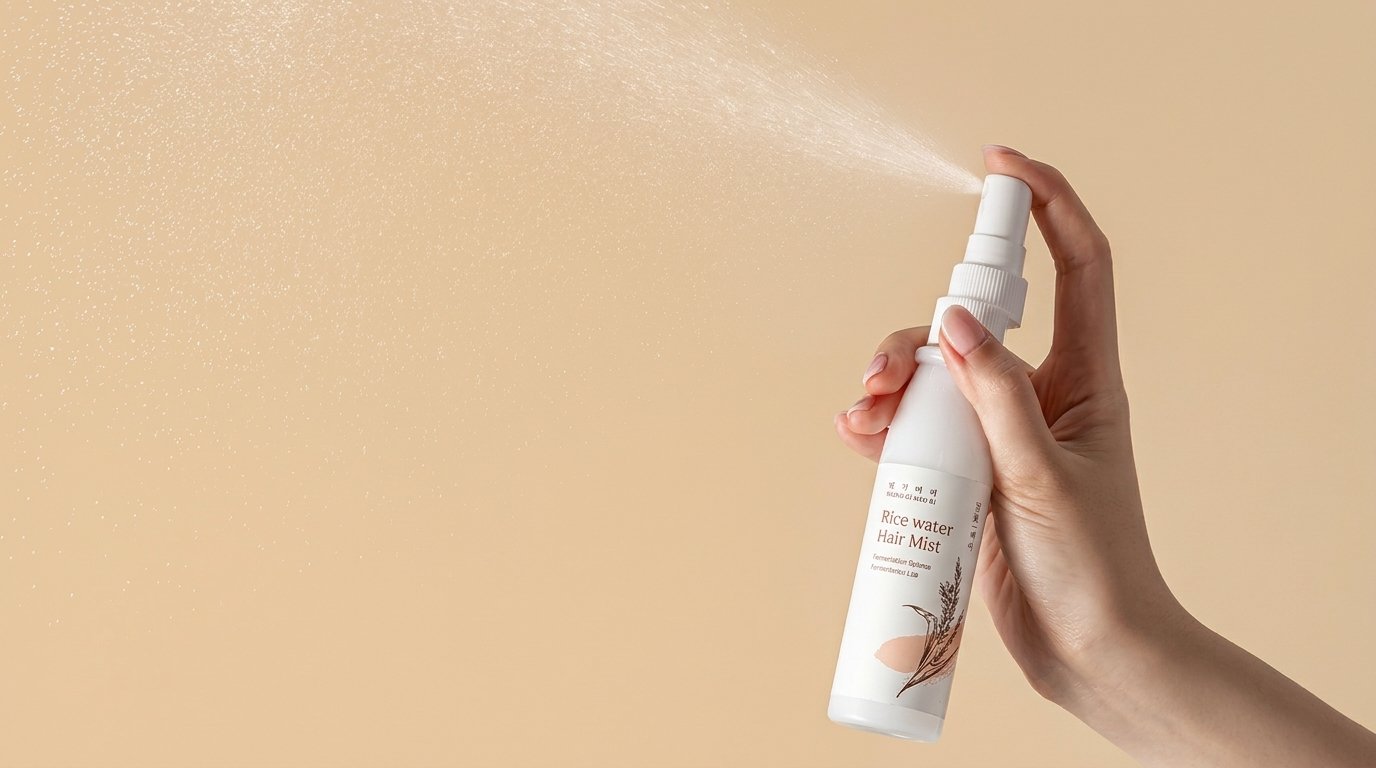
Rice water hair spray is becoming a popular topic in modern haircare, especially among people who enjoy lightweight hair products and simple beauty routines. From traditional rice-water rinses to ready-to-use hair mists, rice-based haircare has attracted attention for its potential to improve the appearance and manageability of hair.
You may have seen beauty creators discussing rice water as a natural way to achieve shinier, smoother, and stronger-looking hair. Some even claim that it can help hair grow faster. But is rice water hair spray really worth trying, or is it simply another beauty trend?
Rice water contains starch and other naturally occurring components that may create a coating effect on the hair. This can influence how strands feel and look. However, scientific evidence supporting claims about faster hair growth or permanent hair repair remains limited.
A well-formulated rice water hair spray may be a convenient addition to your routine if you enjoy experimenting with ingredient-focused haircare. The key is understanding what it can realistically do, how to use it correctly, and whether its formulation suits your hair type.
In this guide, we will explore the potential benefits of rice water hair spray, how to apply it, which hair types may enjoy it, possible disadvantages, and what to consider before purchasing one.
What Is Rice Water Hair Spray?
Rice water hair spray is a liquid haircare product containing rice water, rice extract, or other rice-derived ingredients. It is generally packaged in a spray bottle so that it can be distributed through the hair as a fine mist.
Traditional rice water is prepared by soaking or cooking rice and collecting the cloudy liquid. Commercial rice water sprays offer a more convenient alternative because they are already prepared and packaged.
Depending on the manufacturer, a rice water hair spray may contain:
- Rice water or rice extract
- Water
- Glycerin or other humectants
- Conditioning ingredients
- Lightweight emollients
- Botanical extracts
- Preservatives
- Fragrance or fragrance-free ingredients
Not every rice water spray has the same formulation. Some products focus on rice-derived ingredients, while others combine them with conditioning ingredients to improve softness and manageability.
Before purchasing one, always read the ingredient list and product instructions.
Rice Water vs. Rice Extract
Rice water and rice extract are related but are not necessarily identical.
Rice water is the liquid collected after rice has been soaked or cooked. Rice extract is a processed ingredient derived from rice and used in cosmetic formulations.
Commercial haircare products may use different rice-derived ingredients depending on their formulation.
This distinction is important because a product’s performance depends on its complete ingredient list, not simply the presence of the word rice on its packaging.
Why Is Rice Water Haircare Trending?
Rice water has a long history in traditional beauty practices, particularly in parts of Asia. Today, social media and modern beauty brands have helped bring renewed attention to rice-based haircare.
People are increasingly interested in recognizable ingredients, convenient hair treatments, and simple routines that do not require complicated preparation.
Rice water hair spray fits this interest because it combines a familiar ingredient with an easy-to-use product format.
Potential Benefits of Rice Water Hair Spray
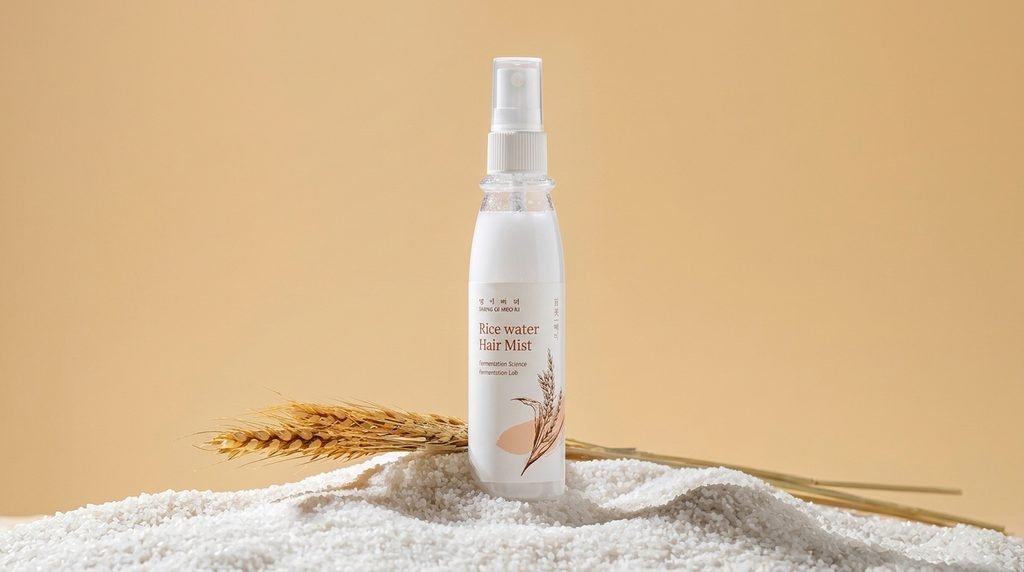
Rice water hair spray is often promoted for smoother hair, improved shine, easier detangling, and faster growth. However, these claims should be considered separately because the available evidence is not equally strong.
Here are some potential cosmetic benefits worth understanding.
1. May Help Hair Feel Smoother
Rice water contains starch, which may leave a light coating on the surface of the hair.
This coating may reduce friction between individual strands and make the hair feel smoother. Some people therefore enjoy rice-water treatments as part of their conditioning routine.
However, results depend on the formula and the amount applied. Too much product may leave the hair feeling stiff or coated instead of soft.
2. May Improve the Appearance of Shine
Hair that looks smooth and well-conditioned often reflects light more evenly.
A rice water hair spray may help improve the appearance of shine if its formulation leaves the hair surface feeling smoother.
This is a cosmetic benefit rather than proof that the product has permanently repaired the hair.
For people who want a polished-looking hairstyle, a lightweight conditioning mist may be a useful finishing step.
3. May Help With Detangling
Tangled hair can become difficult to manage, especially when it is dry, curly, damaged, or prone to friction.
A conditioning spray may help improve slip between strands, making detangling easier.
Rice-derived ingredients may contribute to a coating effect, although the overall formula determines how well the product performs.
If detangling is your main concern, look for a spray specifically formulated for conditioning rather than relying only on its rice-water label.
4. Offers a Convenient Haircare Step
One of the biggest advantages of a ready-made rice water hair spray is convenience.
You do not need to soak rice, prepare a homemade mixture, or spend extra time rinsing your hair.
A spray bottle makes it easier to distribute a small amount of product through the intended areas.
This can be useful for people who prefer simple routines and lightweight haircare products.
5. May Support Better Hair Manageability
Hair that is easier to comb, style, and detangle can make everyday haircare more comfortable.
Depending on its conditioning ingredients, rice water spray may help improve manageability.
However, it should not replace a suitable conditioner or moisturizing treatment if your hair is particularly dry or damaged.
Does Rice Water Hair Spray Make Hair Grow Faster?
This is one of the most popular questions about rice water.
At present, there is not enough reliable scientific evidence to prove that applying rice water to the hair makes it grow faster.
Hair growth is influenced by several factors, including genetics, age, nutrition, hormones, and overall health.
Although rice water is frequently promoted as a natural hair-growth solution, it should not be considered a proven treatment for hair loss or thinning.
If you are experiencing persistent shedding or noticeable thinning, consider speaking with a qualified healthcare professional to understand the possible cause.
Rice Water Hair Spray vs. Homemade Rice Water Rinse
Rice water hair spray and homemade rice-water rinses are inspired by the same ingredient, but they differ in preparation, convenience, and formulation.
A homemade rinse is usually prepared by soaking rice in water and collecting the cloudy liquid. A commercial spray is manufactured and packaged for cosmetic use.
| Feature | Rice Water Hair Spray | Homemade Rice Water |
|---|---|---|
| Preparation | Ready to use | Requires preparation |
| Convenience | Easy spray application | Requires soaking and straining |
| Formula | Depends on manufacturer | Varies with preparation |
| Storage | Follow product instructions | Needs careful handling |
| Application | Often designed as a mist | Usually applied as a rinse |
| Consistency | Commercially formulated | May vary between batches |
Which Option Is More Convenient?
A ready-made rice water spray is generally more convenient because it does not require preparation.
You can simply follow the product instructions and apply the mist when needed.
Homemade rice water requires additional preparation and careful storage. It may also have a different consistency each time.
Which One Should You Choose?
There is no universal answer.
If convenience is your priority, a commercial spray may be easier to incorporate into your routine.
If you prefer traditional DIY beauty treatments, you may be interested in preparing a simple rice-water rinse.
However, neither option has been proven to guarantee faster hair growth or permanent hair repair.
How to Use Rice Water Hair Spray Correctly
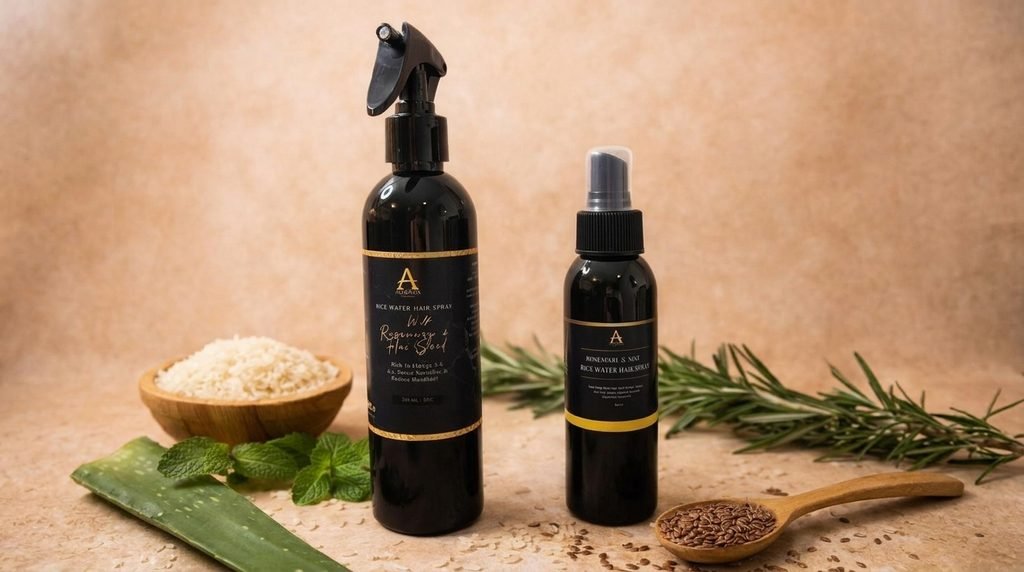
The correct application method depends on the product you purchase. Some sprays are designed to remain in the hair, while others may have specific rinsing instructions.
Always read the label before using a new product.
If you have a leave-in rice water hair spray, the following routine may help you apply it properly.
Step 1: Start With Clean Hair
You can apply a leave-in spray after washing your hair or when refreshing dry hair, provided the manufacturer allows both methods.
If your hair has heavy product buildup, cleanse it with an appropriate shampoo first.
Step 2: Remove Excess Water
If you are applying the spray after washing, gently squeeze excess water from your hair.
Use a soft towel rather than rubbing the strands aggressively.
Step 3: Divide Your Hair Into Sections
If you have thick, long, or curly hair, divide it into manageable sections.
This helps distribute the spray more evenly.
People with short or fine hair may not need to section their hair.
Step 4: Apply a Light Mist
Hold the bottle at the distance recommended on its label.
Spray a small amount onto the areas specified by the manufacturer.
For many conditioning sprays, the mid-lengths and ends are a practical starting point. Only apply the product directly to your scalp if it is specifically designed for scalp use.
Step 5: Distribute the Product
Use your fingers or a wide-tooth comb to distribute the spray gently.
Avoid aggressive brushing, particularly when your hair is wet.
If your strands begin to feel sticky or coated, you may have applied too much.
Step 6: Style Your Hair
Follow the product instructions to decide whether to air-dry or continue with your usual styling routine.
Remember that rice water hair spray should not automatically be treated as a heat protectant.
If you use heated styling tools, apply a separate product specifically designed for heat protection.
Step 7: Observe How Your Hair Responds
Pay attention to the way your hair feels after application.
Does it feel smoother? Is it easier to detangle? Does it look shinier?
If it feels stiff, dry, or heavy, consider reducing the amount or stopping use.
How Often Should You Use Rice Water Hair Spray?
There is no universal application schedule for every rice water hair spray.
The recommended frequency depends on the product formulation, its instructions, and your hair’s response.
Some leave-in products are designed for regular use, while others may be intended for occasional application.
Start by following the manufacturer’s directions instead of applying extra product in the hope of achieving faster results.
For Fine Hair
Fine hair may become weighed down by excessive product.
Begin with a light mist and focus on the areas that need extra manageability.
If your roots become flat or your hair feels coated, reduce the amount or frequency.
For Thick Hair
Thick hair may require more careful sectioning to distribute the product evenly.
However, using a large quantity is not automatically better.
Start with a moderate amount and adjust according to the product instructions.
For Curly Hair
Curly hair often benefits from a routine that focuses on conditioning and gentle detangling.
A rice water spray may be useful as an additional styling or refreshing step if the formula suits your curls.
It should not automatically replace a moisturizing leave-in conditioner.
For Coily Hair
Coily hair can be particularly sensitive to dryness and friction.
Some people may find rice-water treatments helpful for manageability, while others may experience stiffness or dryness.
If your hair is already fragile, a moisturizing conditioner may be a better starting point.
Is Rice Water Hair Spray Suitable for Different Hair Types?
Hair texture, porosity, and condition can influence how a product performs.
A spray that feels lightweight on one person’s hair may feel heavy or drying on another person’s hair.
1. Fine Hair
Fine hair usually benefits from lightweight products that do not create excessive buildup.
Choose a spray with a light texture and avoid layering it with several other leave-in products.
A small amount is often a sensible starting point.
2. Thick Hair
Thick hair may tolerate richer conditioning products, depending on the individual strand texture and condition.
A rice water spray may be useful as an additional styling step if it improves manageability.
However, very dry or coarse hair may need a richer conditioner for noticeable softness.
3. Curly Hair
Curly hair often requires careful conditioning and detangling.
A rice water spray may help refresh the appearance of curls, but it should not replace products that provide the moisture and definition your routine requires.
Choose a formula that does not leave curls stiff or difficult to manage.
4. Coily Hair
Coily hair can require additional attention to moisture retention and gentle handling.
Some people may find starch-heavy treatments difficult to remove or less comfortable on fragile strands.
If you experience increased dryness or breakage, discontinue use and choose a conditioning routine better suited to your hair.
5. Color-Treated Hair
Color-treated hair may need products that improve softness and manageability.
Rice water spray is not automatically a color-protection treatment.
If protecting your hair color is your main concern, choose products specifically formulated for color-treated hair.
6. Dry or Damaged Hair
Dry and damaged hair often benefits from conditioning ingredients that help reduce friction and improve manageability.
A rice water spray may provide a cosmetic conditioning effect depending on its formulation.
However, it should not replace a suitable conditioner, deep conditioning mask, or other repair-focused haircare product.
What to Look for When Buying Rice Water Hair Spray
Choosing a suitable rice water hair spray requires more than looking at the product packaging.
The ingredient list, formulation, directions, and your hair type are all important.
1. Check the Rice-Derived Ingredients
Look for information about whether the product contains rice water, rice extract, or another rice-derived ingredient.
Different products may use different ingredients and preparation methods.
Do not assume that every product contains the same concentration of rice-derived components.
2. Consider the Conditioning Formula
If your goal is smoother and more manageable hair, check the other conditioning ingredients.
Depending on the formula, you may find ingredients such as:
- Glycerin
- Panthenol
- Conditioning agents
- Lightweight emollients
- Botanical extracts
- Humectants
These ingredients can influence the feel and performance of the product.
3. Choose According to Your Hair Type
Fine hair may prefer a lightweight mist, while dry or thick hair may benefit from a more conditioning formula.
If your hair becomes greasy easily, avoid products that feel too heavy.
If your hair is dry, look for a product that includes suitable conditioning ingredients.
4. Check Whether It Is a Leave-In Formula
This is particularly important.
Some products are designed to remain in the hair, while others must be rinsed out.
Always follow the manufacturer’s directions.
5. Look for Clear Product Instructions
A good product listing should explain:
- Where to apply the product
- Whether to use it on wet or dry hair
- Whether rinsing is required
- How frequently to apply it
- Storage instructions
- Full ingredient information
Avoid products that rely entirely on exaggerated promises such as guaranteed growth or permanent repair.
6. Consider Fragrance and Sensitivity
Some hair sprays contain added fragrance.
If you are sensitive to scented products, consider a fragrance-free option when available.
Discontinue use if the product causes itching, burning, redness, or other discomfort.
7. Check the Packaging
A fine-mist nozzle can help distribute the product evenly.
Choose packaging that closes securely and clearly identifies the manufacturer and product.
When shopping online, use a reputable retailer and check the full product details.
Homemade Rice Water Hair Spray: What You Should Know
Homemade rice water is popular in DIY beauty routines because it can be prepared using basic household ingredients.
However, homemade rice water is not the same as a professionally formulated haircare product.
Its concentration, cleanliness, and storage stability can vary.
How to Prepare Basic Rice Water
For a simple preparation:
- Measure a small amount of uncooked rice.
- Rinse it with clean water.
- Place the rice in a clean container.
- Add fresh water.
- Allow it to soak briefly.
- Strain the cloudy liquid into a clean container.
- Use it promptly rather than treating it as a shelf-stable product.
The cloudy appearance comes partly from starch released by the rice.
Should You Ferment Rice Water?
Fermented rice water is frequently discussed in traditional beauty routines.
However, fermentation introduces additional variables, including time, temperature, cleanliness, and microbial activity.
A homemade fermented mixture is not a standardized cosmetic formulation.
People with sensitive or irritated scalps should be particularly cautious about experimenting with unpredictable DIY treatments.
Can You Store Homemade Rice Water?
A spray bottle does not automatically make homemade rice water safe for long-term storage.
Homemade mixtures do not have the same validated preservation systems as professionally manufactured cosmetic products.
Avoid keeping old mixtures for extended periods. Do not use a mixture that develops an unusual smell, visible changes, or signs of contamination.
Should You Use Homemade Rice Water Every Day?
Daily application is not necessary, and there is no established schedule that guarantees better results.
Repeated use may leave residue or make the hair feel stiff.
If you choose to experiment with a homemade rinse, use caution, rinse thoroughly, and stop if your scalp or hair becomes uncomfortable.
[IMAGE 5 PLACEMENT – Fresh Homemade Rice Water Preparation in a Clean Glass Bowl]
Possible Side Effects and Mistakes to Avoid
Natural ingredients are not automatically suitable for everyone.
Rice water may feel comfortable for some people, while others may notice residue, dryness, or irritation.
Understanding the possible disadvantages can help you use it more carefully.
1. Applying Too Much Product
Using too much spray may leave the hair feeling stiff, sticky, or coated.
Start with a light application and follow the product instructions.
2. Ignoring Product Buildup
Repeated application of a product that leaves a coating may contribute to buildup.
If your hair becomes dull, heavy, or difficult to manage, review your application frequency.
Use a suitable shampoo routine to remove ordinary styling residue.
3. Expecting Faster Hair Growth
Rice water hair spray should not be purchased with the expectation that it will make hair grow faster.
There is insufficient scientific evidence to support that promise.
Persistent hair thinning or shedding deserves appropriate professional assessment.
4. Applying It to an Irritated Scalp
Avoid experimenting with a new product on an inflamed, broken, or particularly sensitive scalp.
If you have an existing scalp condition, seek suitable professional guidance before introducing new treatments.
5. Leaving a Rinse-Out Product in Your Hair
Always check whether the product is a leave-in spray or a rinse-out treatment.
Using it against the manufacturer’s instructions may create unnecessary residue or discomfort.
6. Mixing Too Many DIY Ingredients
Adding essential oils, fragrances, and multiple other ingredients to homemade rice water can make the mixture unpredictable.
Some ingredients may also cause irritation.
A simple preparation is easier to assess than a complicated homemade formula.
7. Expecting Immediate or Permanent Results
A product may improve the cosmetic feel of your hair after application, but it cannot be expected to reverse years of damage or change your natural hair-growth rate.
Stop using it if you notice irritation, dryness, or increased discomfort.
Rice Water Hair Spray vs. Other Haircare Products
Rice water spray is only one possible part of a complete haircare routine.
It is useful to understand how it compares with products that serve different purposes.
| Product | Main Purpose | When It May Be Useful |
|---|---|---|
| Rice Water Hair Spray | Rice-based cosmetic mist | When you want a convenient rice-derived haircare step |
| Leave-In Conditioner | Softness and manageability | When hair needs additional conditioning |
| Hair Serum | Smoothing and finishing | When you want to manage flyaways or add shine |
| Hair Mask | Intensive conditioning | When hair feels dry or difficult to manage |
| Heat Protectant | Protection during heat styling | Before using heated styling tools |
| Clarifying Shampoo | Removing product buildup | When hair feels coated or heavy |
Rice Water Spray vs. Leave-In Conditioner
Leave-in conditioners are generally designed to provide conditioning benefits and improve manageability.
A rice water spray may also be a leave-in product, but the rice ingredient alone does not tell you how well it conditions.
If dryness is your main concern, compare the complete formulas rather than choosing based only on the product name.
Rice Water Spray vs. Hair Serum
Hair serums are often designed to improve the appearance of hair, manage flyaways, and add shine.
Some use oils, while others contain lightweight silicone or water-based ingredients.
A rice water spray may feel lighter, but this depends on the formula.
You can use different product types in the same routine if their instructions and textures are compatible. Avoid applying too many layers.
Rice Water Spray vs. Hair Mask
Hair masks are usually more intensive conditioning products that are applied for a specific period before rinsing, depending on their instructions.
A spray is generally more convenient for quick application.
They serve different purposes and should not be treated as interchangeable.
How to Build a Simple Haircare Routine With Rice Water Spray
A good haircare routine does not need to contain numerous products.
The most useful routine is one that addresses your actual hair concerns without unnecessary steps.
If you want to include rice water hair spray, consider this simple approach.
Wash Day Routine
Step 1: Cleanse Your Hair
Choose a shampoo that suits your scalp and hair type.
Focus on cleansing your scalp without aggressively rubbing the lengths.
Step 2: Apply Conditioner
Use a suitable conditioner on the areas that need it, especially the mid-lengths and ends.
Step 3: Remove Excess Water
Rinse thoroughly and gently squeeze excess water from your hair with a soft towel.
Step 4: Apply Rice Water Hair Spray
If your product is a leave-in formula, apply it according to the label.
Use a light mist and distribute it gently.
Step 5: Continue With Your Styling Routine
If needed, use a suitable curl cream, leave-in conditioner, or heat protectant.
Avoid unnecessary product layering.
Non-Wash-Day Routine
On days when you are not washing your hair, you may prefer to keep your routine simple.
If the spray instructions allow application to dry hair, a light mist may refresh the appearance of your strands.
However, it should not replace shampooing when your scalp needs cleansing.
A Simple Weekly Haircare Example
| Day | Haircare Routine |
|---|---|
| Monday | Shampoo, conditioner and optional leave-in spray |
| Tuesday | Gentle styling and minimal product use |
| Wednesday | Refresh hair only if needed |
| Thursday | Normal scalp and hair maintenance |
| Friday | Wash and condition if needed |
| Saturday | Optional lightweight styling routine |
| Sunday | Avoid unnecessary product use |
This is only an example. Your scalp condition, hair texture, lifestyle, and styling habits should determine how frequently you wash your hair.
Is Rice Water Hair Spray Worth Trying?
Whether rice water hair spray is worth trying depends on your expectations and haircare needs.
If you enjoy ingredient-focused beauty products and want a convenient rice-derived mist, it may be an interesting option.
However, if you are buying it specifically to make your hair grow faster, the available evidence does not support that expectation.
Reasons You May Want to Try It
- You enjoy lightweight hair mist products.
- You are interested in rice-derived haircare ingredients.
- You want a convenient alternative to preparing homemade rice water.
- You prefer simple application methods.
- You want to experiment with a product that may improve cosmetic manageability.
Reasons You May Want to Avoid It
- Your hair becomes stiff or coated easily.
- Your scalp is irritated or inflamed.
- Your current routine already meets your needs.
- You expect guaranteed hair growth.
- You prefer richer moisturizing treatments for very dry hair.
What Results Should You Expect?
Keep your expectations realistic.
Depending on the formula, a rice water hair spray may improve the cosmetic feel or appearance of your hair.
However, it cannot guarantee faster growth, permanent repair, or thicker strands.
The best product is one that suits your hair type and works comfortably within your existing routine.
Frequently Asked Questions About Rice Water Hair Spray
1. What does rice water hair spray do?
Rice water hair spray is a rice-derived cosmetic product designed to be applied as a mist. Depending on its formulation, it may help improve the cosmetic feel, smoothness, or manageability of hair.
2. Does rice water hair spray help hair grow faster?
There is not enough scientific evidence to establish that rice water hair spray makes hair grow faster. It should not be considered a proven hair-growth treatment.
3. Can I use rice water hair spray every day?
That depends on the specific product. Follow the manufacturer’s instructions and reduce use if your hair becomes stiff, dry, or coated.
4. Should I apply rice water spray to wet or dry hair?
Some products are designed for damp hair, while others can be used on dry hair. Check the product label before application.
5. Can I leave rice water spray in my hair overnight?
Only if it is specifically designed as a leave-in product and its instructions permit this use. Do not leave a rinse-out product in your hair overnight.
6. Is rice water spray suitable for curly hair?
It may suit some curly hair routines, but results vary. If your curls become stiff or dry, discontinue use and choose a suitable conditioning product.
7. Is rice water spray good for low-porosity hair?
There is no strong evidence establishing that rice water spray is especially beneficial for low-porosity hair. Some people may experience product buildup, so a light formula and modest application may be preferable.
8. Can rice water spray make hair thicker?
There is insufficient evidence that rice water spray increases the actual thickness of individual strands or creates new hair growth.
9. Can I use rice water spray with leave-in conditioner?
It may be possible, depending on the formulas and instructions. Use small amounts and observe whether your hair becomes heavy or coated.
10. Is homemade rice water better than commercial rice water spray?
Neither is automatically better. Homemade rice water requires careful preparation and storage, while commercial sprays offer convenience and professionally formulated ingredients.
11. Can rice water spray cause dry hair?
Some people may find starch-heavy treatments drying or difficult to remove. If your hair feels rough, stiff, or unusually tangled, discontinue use.
12. Can I apply rice water spray directly to my scalp?
Only do so if the product is specifically designed for scalp application. Avoid experimenting on an irritated or inflamed scalp.
13. Does rice water spray work on color-treated hair?
It may be suitable if its formulation and instructions are appropriate for color-treated hair. However, it should not automatically be considered a color-protection treatment.
14. Can men use rice water hair spray?
Yes. Haircare products are suitable for anyone when their formulation matches the person’s hair and scalp needs.
15. Is rice water spray better than rosemary water?
They are different ingredients used in different types of haircare products. Neither should be assumed to provide guaranteed hair growth. Consider the formula, evidence, and your haircare needs.
Final Verdict: Should You Add Rice Water Hair Spray to Your Haircare Routine?
Rice water hair spray is an interesting option in the growing world of ingredient-focused haircare. Its convenient mist format and connection to traditional rice-water beauty practices make it appealing to people who enjoy simple and accessible haircare products.
Depending on its formulation, it may help improve the cosmetic feel and manageability of hair. It can also offer a convenient alternative to preparing homemade rice water.
However, it is important to separate realistic benefits from popular online claims. There is not enough scientific evidence to establish that rice water hair spray accelerates hair growth or permanently repairs damaged strands. Some people may also experience stiffness, dryness, or product buildup.
If you decide to try one, choose a clearly labeled product, check its ingredients, follow the application instructions, and begin with a small amount.
Most importantly, build your haircare routine around your actual needs. Gentle cleansing, appropriate conditioning, careful detangling, and sensible heat styling habits remain more important than relying on any single trending ingredient.
Rice water hair spray can be an optional part of your routine, but it does not need to become a must-have product. A thoughtful approach, realistic expectations, and consistent haircare habits will always matter more than following every new beauty trend.