
Introduction
SheaMoisture Shampoo Review
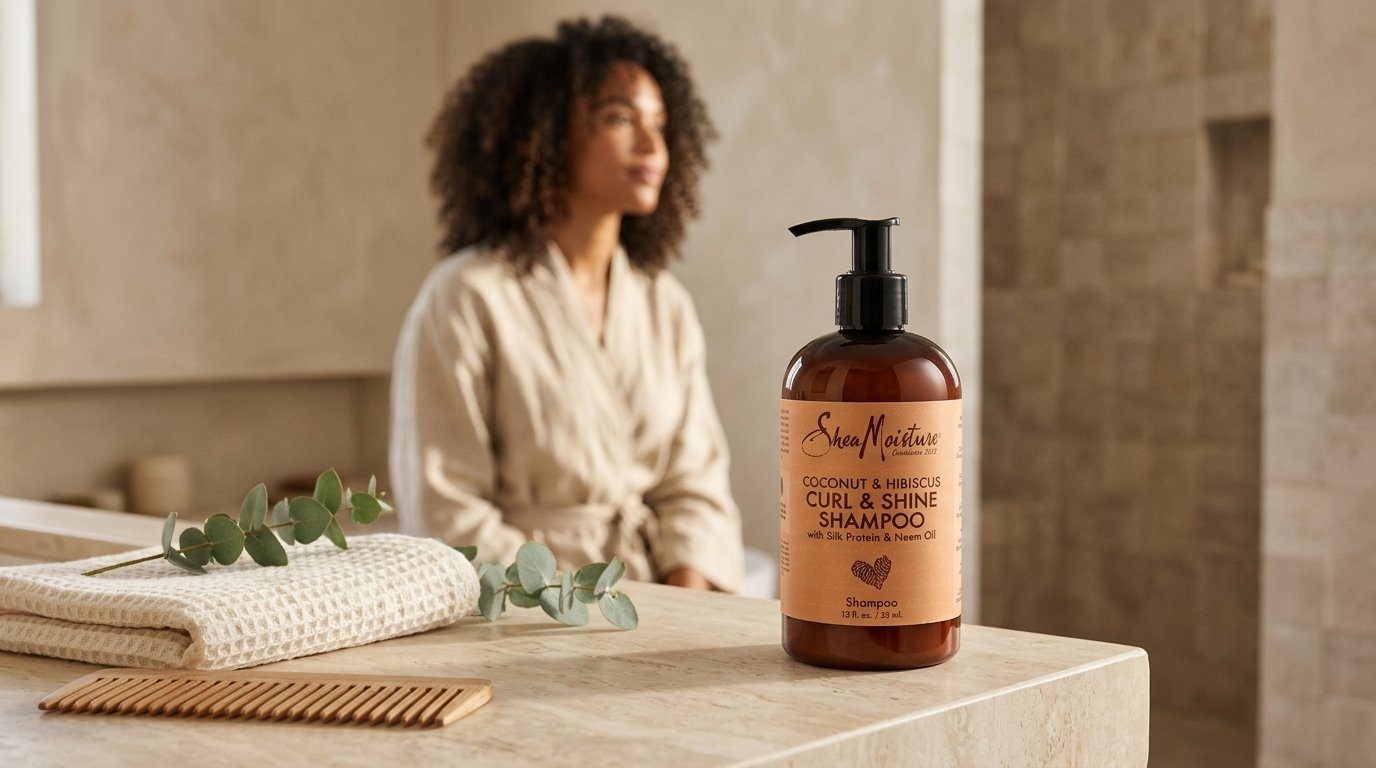
Choosing the right shampoo can make a noticeable difference in how your hair feels, looks, and behaves after washing. If your hair often feels dry, your curls lose definition, or your strands become difficult to manage, you may be looking for a shampoo that cleanses without leaving your hair feeling excessively stripped. This is one reason SheaMoisture shampoo has attracted attention among people exploring moisture-focused hair care.
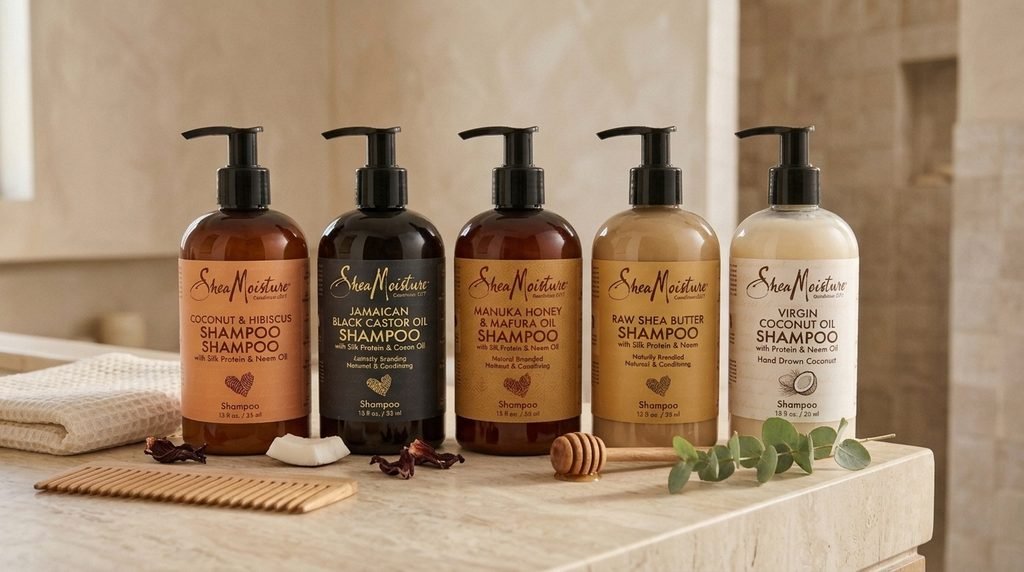
SheaMoisture offers several shampoo collections designed around different hair care priorities, including hydration, curl definition, cleansing, and the care of hair that feels dry or damaged. Popular options include Coconut & Hibiscus Curl & Shine Shampoo, Jamaican Black Castor Oil Strengthen & Restore Shampoo, Manuka Honey & Mafura Oil Intensive Hydration Shampoo, and Raw Shea Butter shampoo. Each formula has a different focus, so choosing the right one depends on your hair texture, scalp condition, styling routine, and personal preferences.
However, no single shampoo is ideal for everyone. A rich moisturizing formula may feel comfortable on thick, coily hair but leave fine hair feeling weighed down. A more clarifying formula may suit an oily scalp better than a person who washes dry curls frequently.
In this guide, we explore the different types of SheaMoisture shampoo, their advertised benefits, ingredients to understand, and practical ways to select and use the right formula. You will also learn what to consider before buying and how to build a simple hair-washing routine that fits your needs.
Table of Contents
- What Is SheaMoisture Shampoo?
- What Makes SheaMoisture Shampoo Popular?
- Best SheaMoisture Shampoo Types to Consider
- Key Ingredients and Their Roles
- Potential Benefits of SheaMoisture Shampoo
- Which SheaMoisture Shampoo Is Best for Your Hair Type?
- How to Use SheaMoisture Shampoo Correctly
- Tips for Getting Better Hair-Washing Results
- Potential Drawbacks and Things to Consider
- SheaMoisture Shampoo vs. Regular Shampoo
- How to Build a Complete Hair Care Routine
- Is SheaMoisture Shampoo Worth Trying?
- Frequently Asked Questions
- Final Thoughts
1. What Is SheaMoisture Shampoo?
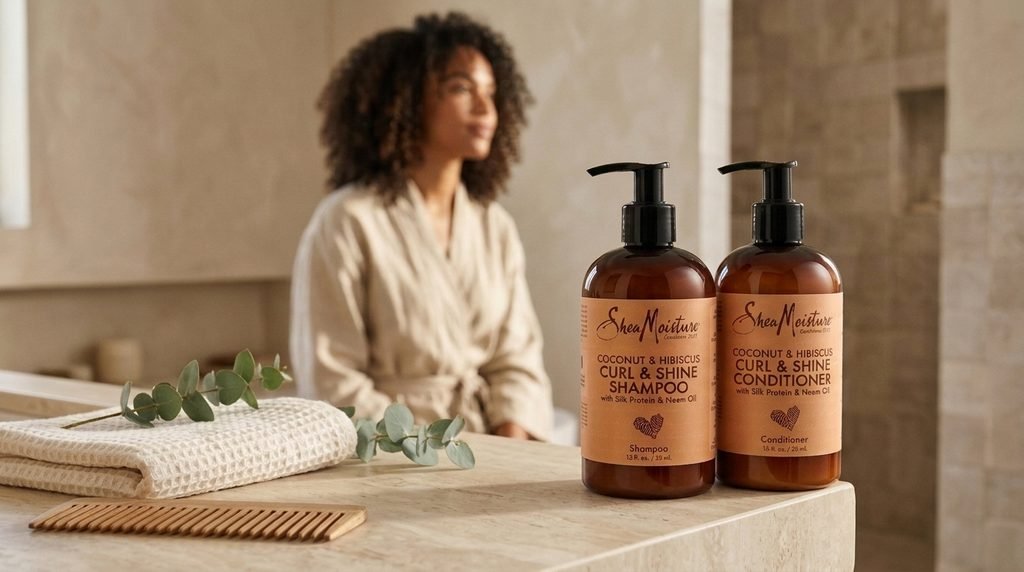
SheaMoisture is a hair and body care brand known for formulas featuring ingredients such as shea butter, coconut oil, Jamaican black castor oil, and honey. Its shampoo range includes products marketed for different hair textures and concerns, with options for curly, coily, dry, and other hair types.
Rather than offering only one general-purpose shampoo, the brand organizes products into collections with different goals. Some emphasize hydration, while others focus on curl appearance, cleansing, or strengthening and restoring the appearance of hair.
For example, Coconut & Hibiscus Curl & Shine Shampoo is positioned for curls, while Manuka Honey & Mafura Oil Intensive Hydration Shampoo focuses on moisture. Jamaican Black Castor Oil Strengthen & Restore Shampoo is another option for shoppers interested in a formula marketed toward strengthening and restoring hair.
The most important point is that the name of a collection does not tell you everything about how a shampoo will perform. Your results depend on the complete formula, how you use it, and how your hair responds.
Product availability and formulations can also differ by country. Always check the label on the specific bottle you intend to purchase.
Who might consider SheaMoisture shampoo?
It may be worth exploring if you:
- Have curly, coily, or wavy hair that needs a suitable cleansing routine.
- Prefer shampoos marketed around moisturizing ingredients.
- Want to compare different formulas for dryness, frizz, or curl manageability.
- Find that some shampoos leave your hair feeling rough or difficult to detangle.
- Prefer choosing hair products according to texture and specific needs rather than buying one formula for everyone.
People with fine hair, oily roots, sensitive scalps, or a preference for fragrance-free products should pay particular attention to the specific formula before purchasing.
2. What Makes SheaMoisture Shampoo Popular?
One reason SheaMoisture attracts shoppers is its variety of formulas. Instead of expecting a single shampoo to address every hair care concern, customers can compare collections built around different priorities.
A variety of hair care collections
The brand’s shampoo range has included Coconut & Hibiscus, Jamaican Black Castor Oil, Manuka Honey & Mafura Oil, Raw Shea Butter, and 100% Virgin Coconut Oil options. Its official product listings also feature other specialized formulas, although availability varies across markets.
This variety makes it easier to begin with a particular goal, such as moisture, curl definition, or a more thorough cleanse.
Ingredient-focused formulas
Many SheaMoisture products highlight familiar hair care ingredients, including plant oils, butters, and honey. These ingredients can serve different purposes in a finished cosmetic formula, from helping hair feel softer to improving slip and reducing the feeling of dryness.
Still, an ingredient’s presence alone does not guarantee a particular result. Concentration, the other ingredients in the formula, and how long the product remains on the hair all matter.
Options for different textures
Curly and coily hair can have different cleansing and conditioning needs from fine, straight hair. SheaMoisture’s collection-based approach gives shoppers several options to compare instead of treating every texture the same way.
The best approach is to consider both your hair strands and your scalp. A person can have dry lengths and an oily scalp, for example, and may need to focus shampoo on the roots while conditioning the lengths separately.
A focus on moisture and manageability
Several formulas are marketed around hydration, softness, or improved manageability. These qualities can be particularly appealing if your hair tangles easily or feels rough after washing.
Remember that shampoo is primarily a cleansing product. Conditioner, leave-in treatments, and styling products may contribute just as much to the finished appearance and feel of your hair.
3. Best SheaMoisture Shampoo Types to Consider
There is no universal winner among SheaMoisture shampoos. The most suitable option depends on your priorities, and the following comparisons can help narrow your choices.
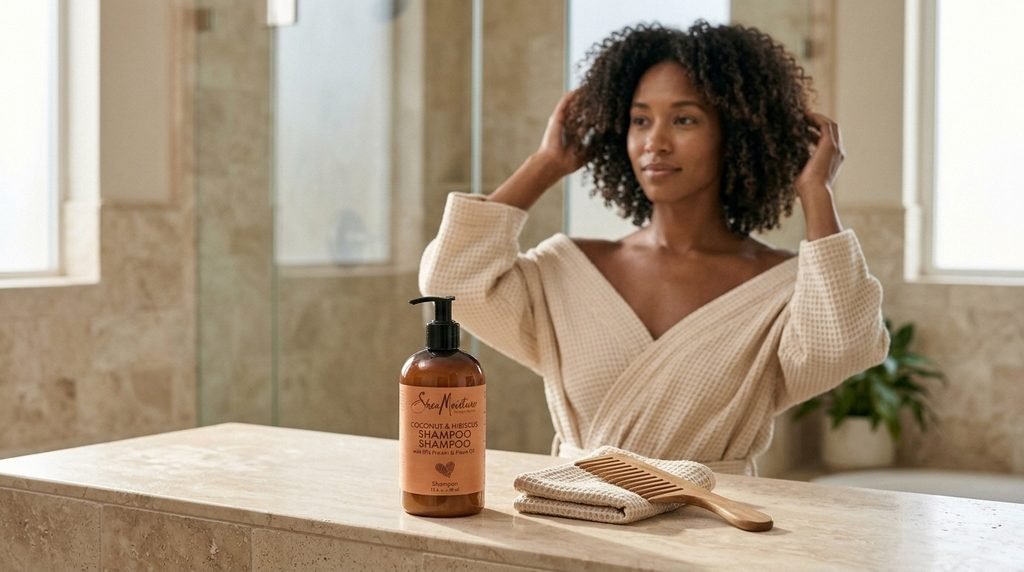
Coconut & Hibiscus Curl & Shine Shampoo
This collection is marketed toward curl care and manageability. It may be worth considering if you want a shampoo intended for curly hair and prefer products associated with a curl-focused routine.
People with curls often look for products that help them cleanse without making detangling unnecessarily difficult. However, the results can differ depending on curl pattern, strand thickness, styling products, and the condition of the hair.
If your curls are fine or easily weighed down, pay attention to how your hair feels after use. Follow with an appropriate conditioner and avoid applying heavy styling products automatically if your hair already has enough moisture.
Best to consider for: Shoppers seeking a curl-focused shampoo.
Jamaican Black Castor Oil Strengthen & Restore Shampoo
This formula is marketed around strengthening and restoring the appearance of hair. It may appeal to people whose strands feel fragile or who want a shampoo that fits into a conditioning-focused hair care routine.
A shampoo cannot guarantee faster hair growth or repair every form of hair damage. Breakage can have many causes, including friction, excessive heat, tight hairstyles, chemical treatments, and rough detangling.
If breakage is a concern, combine gentle cleansing with conditioner, careful handling, and reduced heat styling. Evaluate the shampoo by how your hair feels and behaves rather than expecting it to solve every problem by itself.
Best to consider for: People seeking a strengthening-focused cleansing routine.
Manuka Honey & Mafura Oil Intensive Hydration Shampoo
This collection is positioned for intensive hydration and softer-feeling hair. It may be a suitable option to investigate if your lengths frequently feel dry or difficult to manage.
Moisture-focused formulas can be useful when hair needs a gentler-feeling cleansing experience. Nevertheless, rich products may not suit everyone, particularly those with fine hair or roots that become oily quickly.
If you are unsure, start with a modest amount and observe how your hair feels once it has dried.
Best to consider for: Hair that tends to feel dry and needs a moisture-focused routine.
Raw Shea Butter Shampoo
The Raw Shea Butter collection is another option for shoppers interested in moisture and conditioning-focused hair care. It may be worth comparing with the Manuka Honey & Mafura Oil formula if your main priority is dry-feeling hair.
The two products should not automatically be treated as interchangeable. Their full ingredient lists, textures, cleansing performance, and regional formulations may differ.
Best to consider for: People exploring shea butter-focused hair care.
100% Virgin Coconut Oil Daily Hydration Shampoo
This shampoo is marketed around daily hydration, manageability, and shine. It may appeal to shoppers who want a moisture-oriented formula for their regular wash routine.
The word “daily” in a product name does not mean that everyone needs to wash their hair every day. Washing frequency should depend on scalp oiliness, sweating, product buildup, and personal comfort.
Best to consider for: Shoppers who prefer a coconut oil-focused shampoo and want to evaluate it for regular use.
Quick comparison
| Shampoo type | Main advertised focus | Consider it if |
|---|---|---|
| Coconut & Hibiscus | Curl definition and manageability | You have curls and want a curl-focused cleanser |
| Jamaican Black Castor Oil | Strengthening and restoring the appearance of hair | You want a product to complement a breakage-conscious routine |
| Manuka Honey & Mafura Oil | Intensive hydration | Your hair often feels dry |
| Raw Shea Butter | Moisture-focused care | You want to explore shea butter-based hair care |
| Virgin Coconut Oil | Daily hydration and manageability | You prefer a coconut oil-focused formula |
These descriptions summarize product positioning rather than independent clinical proof of performance. Always verify the exact product name and current label.
4. Key Ingredients and Their Roles
Understanding common ingredients can help you compare formulas more confidently. However, a product should be evaluated as a complete formula rather than judged by one featured ingredient.
Shea butter
Shea butter is a plant-derived fat used in many cosmetic products for its emollient properties. In hair care, it can help improve the feel of dry hair and support a softer, smoother finish.
A rich formula containing shea butter may feel comfortable on thick or coarse strands. Fine hair may need a lighter routine to avoid an overly coated feeling.
Coconut oil
Coconut oil is widely used in hair care because of its conditioning properties. Depending on the formula and how it is used, it may help reduce the feeling of dryness and improve the feel of hair.
Not everyone responds to coconut oil in the same way. Some people find coconut-oil-based products too heavy, while others enjoy the conditioning effect.
Jamaican black castor oil
Jamaican black castor oil is a featured ingredient in the brand’s Strengthen & Restore collection. Castor oil is thick and can contribute to the texture and conditioning characteristics of a cosmetic formula.
The presence of castor oil in a shampoo should not be interpreted as proof that the product will regrow hair, prevent hair loss, or increase hair density.
Manuka honey
Honey is used in cosmetics for its moisture-related properties. In a shampoo formula, its overall effect depends on the other ingredients and the product’s formulation.
Manuka honey is highlighted in the brand’s Manuka Honey & Mafura Oil collection, which is marketed around hydration.
Mafura oil
Mafura oil is another ingredient featured in the intensive hydration collection. Plant oils can contribute to the conditioning feel of hair care products, but the finished product’s performance depends on the entire formula.
Fragrance and cleansing ingredients
Beyond the featured ingredients, check the complete ingredient list for cleansing agents, fragrance, preservatives, and other components.
If you have a sensitive scalp, fragrance sensitivity, or a history of reactions to hair products, read the label carefully and consider a small-area test before using a new product routinely. Stop using it if irritation develops.
5. Potential Benefits of SheaMoisture Shampoo
The benefits you experience will depend on the shampoo you select and your hair’s needs. Here are the main qualities shoppers may be looking for.
Hair that feels cleaner without excessive dryness
A suitable shampoo should remove excess oil, sweat, dirt, and styling residue while leaving your scalp comfortable. If your current shampoo leaves your hair feeling unusually rough, comparing a different formula may be worthwhile.
However, no shampoo is guaranteed to be non-drying for every user. Your washing technique and frequency also affect the result.
Better-feeling curls and easier detangling
A curl-focused shampoo can form part of a routine designed to keep curls manageable. Conditioner is especially important because it can provide slip that makes detangling easier.
Avoid aggressively brushing wet curls. Instead, use a suitable conditioner and detangle gently in sections with your fingers or a wide-tooth comb.
Softer-feeling lengths
Conditioning ingredients may help hair feel smoother and more flexible. This can be useful for hair that feels rough after repeated heat styling or chemical processing.
Cosmetic softness is not the same as permanent structural repair. Continue using gentle styling practices to help minimize additional damage.
A routine tailored to your hair type
Having several formulas to compare makes it easier to build a routine around your priorities. For example, someone with dry curls might prefer a moisture-focused shampoo, while someone with an oily scalp may prioritize effective cleansing.
The goal is not to use the most moisturizing shampoo available. It is to find the right balance between a comfortable scalp and manageable lengths.
6. Which SheaMoisture Shampoo Is Best for Your Hair Type?
Your hair type provides a useful starting point, but it is not the only factor to consider.
For curly hair
Consider the Coconut & Hibiscus Curl & Shine Shampoo if you want a formula marketed toward curls. Follow with conditioner and a styling product appropriate for your curl pattern.
If your curls are fine, use a small amount of product initially and evaluate whether your hair retains its natural movement.
For coily hair
Coily hair can be more prone to tangling and may benefit from a routine that prioritizes gentle handling and conditioning.
A hydration-focused option such as Manuka Honey & Mafura Oil may be worth comparing with other formulas suited to your needs. Focus shampoo on the scalp and allow the lather to rinse through the lengths rather than rubbing the hair together.
For dry hair
Explore moisture-focused options such as Manuka Honey & Mafura Oil or Raw Shea Butter shampoo. Follow with a conditioner and consider a leave-in product if your hair still feels dry after washing.
If your hair remains brittle despite changing products, reassess heat styling, chemical treatments, and detangling practices.
For fine hair
Fine hair can become weighed down by heavy conditioning products, even when the ends feel dry.
Try a smaller amount of shampoo, rinse thoroughly, and apply conditioner mainly to the mid-lengths and ends. Avoid assuming that every product marketed for dry hair will suit your strands.
For an oily scalp
If your scalp becomes greasy quickly, choose a shampoo that cleanses effectively for your needs rather than automatically choosing the richest formula.
Apply shampoo to the scalp, massage gently with your fingertips, and rinse thoroughly. If you regularly use heavy oils, gels, or creams, you may occasionally need a more clarifying cleanser.
For damaged-looking hair
If heat styling, coloring, or chemical treatments leave your hair feeling fragile, a strengthening-focused shampoo may be one part of your routine.
Pair it with conditioner, reduce excessive heat, and handle wet hair carefully. A shampoo cannot reverse all existing structural damage, so realistic expectations are important.
7. How to Use SheaMoisture Shampoo Correctly
Even a suitable shampoo can deliver disappointing results if it is used incorrectly. A simple washing routine can help you evaluate whether a formula works for you.
Step 1: Thoroughly wet your hair
Use lukewarm water to wet the scalp and lengths. Make sure the hair is saturated before applying shampoo, as this helps the product spread more evenly.
Very hot water may leave some people feeling drier or less comfortable, so use a temperature that feels gentle.
Step 2: Apply a moderate amount
Start with a small amount of SheaMoisture shampoo. The amount you need depends on your hair’s length, density, and how much styling product you have used.
Rub the shampoo gently between your hands before applying it to the scalp. Add a little more only if necessary.
Step 3: Massage the scalp gently
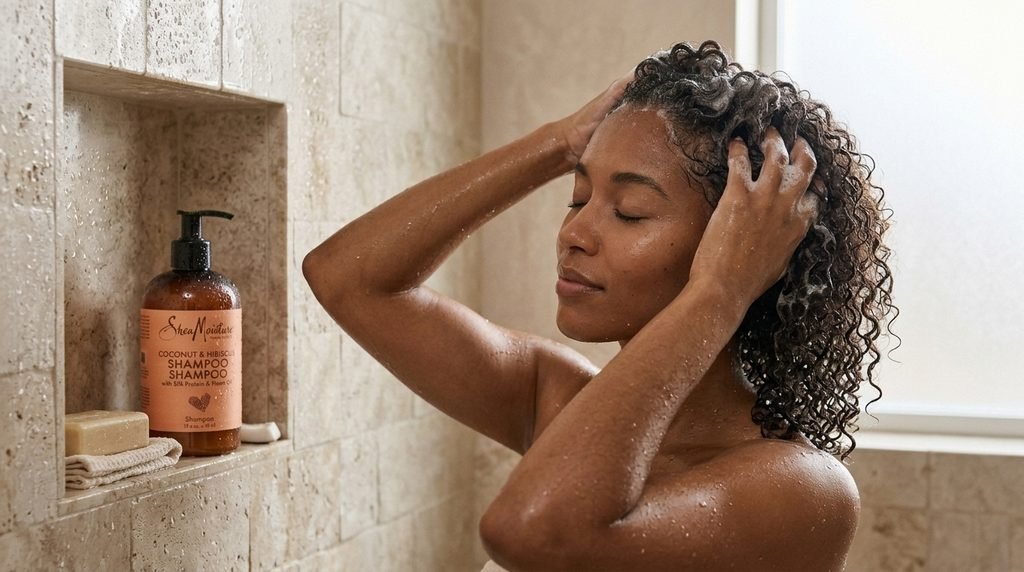
Use your fingertips to massage the shampoo across the scalp. Avoid scratching with your nails or aggressively rubbing the lengths together.
The scalp is where most cleansing is needed. As you rinse, the lather moving through your hair can help remove surface residue from the lengths.
Step 4: Rinse thoroughly
Rinse until the shampoo is removed and your scalp feels clean. Residue can affect how the hair feels and may contribute to an uncomfortable or coated sensation.
If your hair has substantial buildup, a second wash may sometimes be useful. It is not necessary to shampoo twice every time.
Step 5: Apply conditioner
Choose a conditioner suited to your hair type and follow its label directions. Focus on the mid-lengths and ends if your roots become oily easily.
For curly and coily hair, conditioner can help provide slip during gentle detangling.
Step 6: Style with care
Blot excess water with a soft towel or microfiber towel instead of vigorously rubbing your hair. Apply leave-in conditioner or styling products if they fit your routine.
Allow your hair to air-dry when convenient, or use a heat protectant before heat styling according to the product directions.
How often should you use it?
There is no single correct washing schedule. Some people wash several times a week, while others need more or less frequent cleansing.
Consider your scalp oiliness, activity level, climate, product buildup, and how your hair feels between washes. If your scalp becomes itchy, greasy, or uncomfortable, reassess your routine rather than following a fixed schedule solely because a bottle uses the word “daily.”
8. Tips for Getting Better Hair-Washing Results
A few small changes can make your hair care routine easier to maintain.
Match the shampoo to your scalp
Your scalp and hair lengths do not always have the same needs. Oily roots and dry ends can exist together.
Choose a cleanser that leaves your scalp comfortable, and use conditioner or leave-in products to support the lengths.
Avoid excessive product use
Using more shampoo does not automatically make hair cleaner. Start with a moderate amount and increase it only when your hair’s length or buildup makes that necessary.
Rinsing thoroughly is just as important as applying the product.
Detangle gently
Hair can become more vulnerable to mechanical damage when wet, especially if it is tangled or chemically processed. Avoid pulling a comb through knots.
Use conditioner to improve slip, work in sections, and start detangling from the ends before moving upward.
Introduce one new product at a time
Changing shampoo, conditioner, mask, oil, and styling cream together makes it difficult to identify which product is helping or causing a problem.
Start with one change and observe how your hair and scalp respond over several washes.
Give the routine a fair evaluation
One wash may not tell you everything, particularly if your hair has substantial styling buildup or you are adjusting from a very different routine.
Look for consistent changes in manageability, softness, scalp comfort, and buildup. Stop using a product if you develop irritation or another unwanted reaction.
9. Potential Drawbacks and Things to Consider
SheaMoisture shampoo may be a good fit for some people, but there are reasons to evaluate it carefully before buying.
Some formulas may feel too rich
Moisture-focused products may not suit every texture. Fine or low-density hair can sometimes feel flat or coated when the shampoo and conditioner combination is too heavy for its needs.
Try a modest amount and consider a lighter formula if your hair loses volume.
Fragrance may not suit everyone
Some hair care formulas contain fragrance or aromatic ingredients. These may be unsuitable for people with sensitivities.
Check the ingredient list before purchasing, especially if you have reacted to scented products in the past.
Results are individual
No shampoo can guarantee perfectly defined curls, zero frizz, rapid growth, or complete repair of damaged hair. Outcomes depend on hair condition, technique, the rest of your routine, and individual response.
Treat marketing language as product positioning, not a promise that you will experience every advertised benefit.
Formulas and availability can change
Products may be reformulated, renamed, discontinued, or sold in different versions across markets. Online descriptions may also refer to a different regional formula.
Check the current bottle and the manufacturer’s product page rather than relying exclusively on older reviews or photographs.
Price and value depend on use
The value of a shampoo depends on the amount needed per wash, how frequently you wash, local pricing, and whether the formula suits your hair.
A more expensive shampoo is not automatically better for your needs. Compare the full formula, bottle size, and practical results before committing to regular purchases.
10. SheaMoisture Shampoo vs. Regular Shampoo
The term “regular shampoo” covers a wide range of products, so the comparison is not simply natural versus chemical or good versus bad.
Both SheaMoisture shampoos and other shampoos use formulated cleansing ingredients to remove oil and residue. The important differences lie in the specific cleansing system, conditioning ingredients, intended use, fragrance, price, and how your hair responds.
| Feature | SheaMoisture shampoo | Other shampoos |
|---|---|---|
| Product selection | Multiple ingredient-focused collections | Ranges from simple cleansers to specialized formulas |
| Moisture options | Several products are marketed around hydration | Depends on the individual product |
| Curl-focused choices | Includes a curl-focused collection | Some brands also offer curl-specific products |
| Fragrance | Varies by formula | Varies by formula |
| Suitability | Depends on hair, scalp, and product choice | Depends on hair, scalp, and product choice |
Do not assume that every SheaMoisture product is sulfate-free or that all conventional shampoos contain harsh ingredients. Check the exact label for the product you plan to use.
The best comparison is between two specific shampoos that meet the same need, not between an entire brand and an undefined category of products.
11. How to Build a Complete Hair Care Routine
Shampoo is only one part of caring for your hair. Pairing it with a suitable conditioner and gentle styling practices can help you get more consistent results.
Start with a suitable shampoo
Choose a formula based on the balance you need between cleansing and conditioning. If your scalp is oily, prioritize effective cleansing. If your lengths are dry, choose supporting conditioning products rather than expecting shampoo alone to solve dryness.
Follow with conditioner
Conditioner helps improve slip, softness, and manageability. Apply it according to the product instructions and rinse as directed.
People with curly or coily hair may find section-by-section application useful when detangling.
Use a hair mask when appropriate
A hair mask may provide additional conditioning for hair that feels dry or difficult to manage. Use it according to its label rather than assuming that more frequent application always gives better results.
Choose a leave-in product if needed
Leave-in conditioners and styling creams can help with detangling and managing curls between washes. Fine hair may require a lighter product or a smaller amount.
Protect your hair during styling
Repeated high heat, aggressive brushing, tight hairstyles, and rough towel drying can contribute to breakage. Use lower heat settings when practical, apply heat protectant according to its directions, and avoid pulling tightly on the roots.
Keep your scalp comfortable
Wash as often as your scalp requires, and rinse products thoroughly. Persistent itching, redness, scaling, or unusual hair shedding should not automatically be attributed to shampoo alone. Consider professional advice if symptoms continue or worsen.
12. Is SheaMoisture Shampoo Worth Trying?
SheaMoisture shampoo may be worth considering if you want to compare moisture-focused and curl-focused formulas and are willing to select a product according to your own hair care needs.
The brand’s range offers several starting points, from Coconut & Hibiscus for curl-focused care to Manuka Honey & Mafura Oil for intensive hydration and Jamaican Black Castor Oil for a strengthening-focused routine.
However, the best product is not necessarily the most popular one. It is the formula that cleanses your scalp comfortably without leaving your hair feeling excessively dry, greasy, heavy, or irritated.
Before purchasing, review the ingredient list, confirm that the exact formula is available in your market, and consider how it fits into your existing routine. If possible, avoid buying several new products at once.
For a fair evaluation, assess your hair after several washes and pay attention to scalp comfort, manageability, and the amount of conditioning your hair needs afterward.
13. Frequently Asked Questions
1. Is SheaMoisture shampoo good for curly hair?
Some SheaMoisture formulas are specifically marketed for curls, including Coconut & Hibiscus Curl & Shine Shampoo. Whether it suits your curls depends on your hair texture, scalp needs, and how the formula performs for you. Pairing shampoo with an appropriate conditioner can help with manageability.
2. Which SheaMoisture shampoo is best for dry hair?
Manuka Honey & Mafura Oil Intensive Hydration Shampoo and Raw Shea Butter shampoo are options to compare if your hair tends to feel dry. Check their current labels and choose according to your hair’s response rather than assuming one formula works for everyone.
3. Can SheaMoisture shampoo help with frizz?
A suitable shampoo and conditioning routine may improve the feel and manageability of hair, which can make frizz easier to manage. Frizz also depends on humidity, hair texture, damage, drying technique, and styling products. A shampoo alone cannot guarantee frizz-free hair.
4. Does SheaMoisture shampoo make hair grow faster?
There is not enough basis to promise that a particular SheaMoisture shampoo will make hair grow faster. A shampoo is primarily designed to cleanse the scalp and hair. Gentle hair care may help reduce avoidable breakage, but that is different from increasing the rate of hair growth.
5. Is SheaMoisture shampoo suitable for fine hair?
It may be suitable depending on the formula, but some moisture-focused products may feel heavy on fine strands. Start with a small amount, rinse thoroughly, and pay attention to volume and residue. A lighter cleansing formula may suit your needs better.
6. Is SheaMoisture shampoo sulfate-free?
Sulfate status depends on the exact product and its current formulation. Do not assume every shampoo in a brand’s range has the same cleansing ingredients. Check the ingredient list on the bottle or the manufacturer’s product page before buying.
7. Can I use SheaMoisture shampoo every day?
That depends on your scalp, hair texture, activity level, and the specific formula. Some people need frequent washing, while others do better with less frequent cleansing. Follow the product directions and adjust your schedule according to scalp comfort and buildup.
8. Is SheaMoisture shampoo suitable for color-treated hair?
Suitability depends on the exact formula and the condition of your hair. If you have color-treated hair, check the manufacturer’s recommendations and your colorist’s advice. Use a suitable conditioner and avoid assuming that every moisturizing shampoo is automatically color-safe.
9. Should I use SheaMoisture shampoo and conditioner together?
You can use a matching conditioner if it suits your hair, but buying the same collection is not essential. Select a conditioner based on your hair’s need for slip, softness, and manageability. A different formula may work better for your particular texture.
10. Can SheaMoisture shampoo cause buildup?
Any hair care routine can contribute to residue if products are not suited to your scalp, used excessively, or rinsed poorly. If your hair feels coated or your roots become heavy, review your shampoo, conditioner, oils, and styling products. An occasional clarifying shampoo may be useful if appropriate for your hair.
11. Is SheaMoisture shampoo suitable for sensitive scalps?
Some people may tolerate a particular formula well, while others may react to fragrance or other ingredients. Check the full ingredient list and avoid known triggers. Stop using a product if irritation develops, and seek professional advice if symptoms persist.
12. Where should I buy SheaMoisture shampoo?
Start with the official SheaMoisture website or an established retailer that sells authentic hair care products. Availability differs by country, so compare the exact product name, bottle size, ingredients, and seller information before ordering.
14. Final Thoughts
SheaMoisture shampoo offers several formulas for shoppers who want to tailor their hair care routine to moisture, curl manageability, or other cleansing needs. Coconut & Hibiscus, Jamaican Black Castor Oil, Manuka Honey & Mafura Oil, Raw Shea Butter, and Virgin Coconut Oil are useful collections to explore when comparing your options.
The key is to choose according to your scalp and hair rather than relying on popularity or a featured ingredient alone. Use shampoo primarily to cleanse, follow with an appropriate conditioner, and handle your hair gently during drying and styling.
With a little experimentation and realistic expectations, you can determine whether a SheaMoisture shampoo fits your routine and helps your hair feel cleaner, softer, and easier to manage.
For the best experience, check the current product label before purchasing and give your hair care routine time to show how well it works for your individual needs.