
Introduction
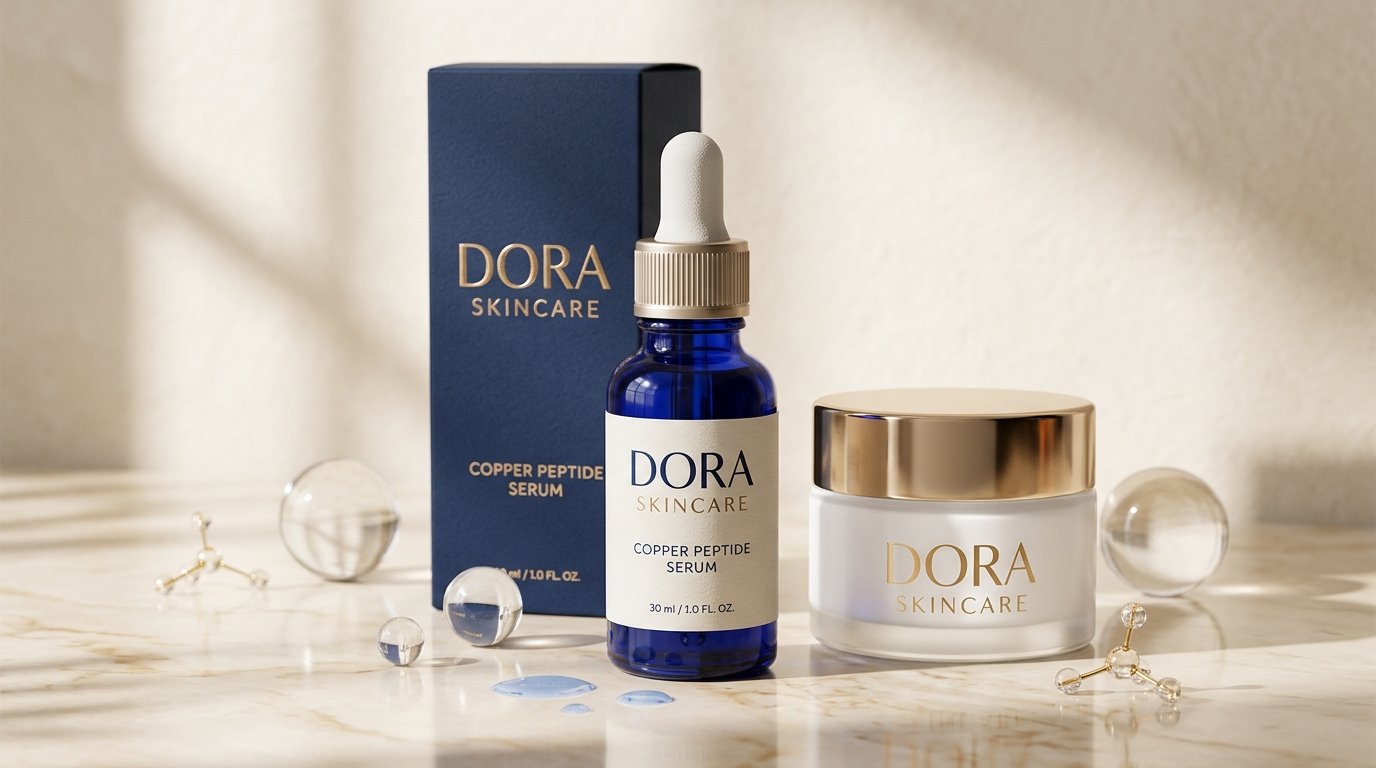
Skincare ingredients are constantly evolving, but some of the most interesting developments focus on supporting the skin rather than simply covering visible imperfections. Copper peptides are one ingredient group attracting growing attention among skincare enthusiasts, beauty professionals, and people interested in maintaining healthy-looking skin.
You may have seen copper peptide serums described as advanced anti-aging treatments, collagen-supporting formulas, or products designed to improve the appearance of fine lines and uneven skin texture. Their distinctive blue colour and growing presence in modern skincare routines have also made them popular subjects in beauty discussions.
But what exactly are copper peptides? Can they really help improve the appearance of ageing skin? Are they suitable for sensitive skin, and how should you incorporate them into an existing routine?
Copper peptides are small peptide compounds associated with copper ions. One commonly discussed example is GHK-Cu, also known as copper tripeptide-1 in cosmetic ingredient terminology. Researchers have investigated these compounds for their potential involvement in skin repair processes and the maintenance of skin structure.
However, it is important to separate promising scientific research from exaggerated marketing claims. Laboratory findings do not automatically prove that every cosmetic serum produces the same results in real-world use.
In this comprehensive guide, we will explore copper peptides in skincare, their potential benefits, how they work, application methods, ingredient compatibility, possible side effects, and what to consider before purchasing a copper peptide serum.
Table of Contents
- What Are Copper Peptides in Skincare?
- How Do Copper Peptides Work on the Skin?
- Potential Benefits of Copper Peptides for Skin
- Copper Peptides vs. Other Popular Skincare Ingredients
- Who Should Consider Using Copper Peptides?
- How to Use Copper Peptide Serum in Your Skincare Routine
- Can You Use Copper Peptides With Other Skincare Ingredients?
- Are Copper Peptides Safe for Sensitive Skin?
- Possible Side Effects and Important Considerations
- How Long Do Copper Peptides Take to Work?
- How to Choose the Best Copper Peptide Serum
- Common Copper Peptide Skincare Myths
- Copper Peptides in Skincare: Frequently Asked Questions
- Conclusion
1. What Are Copper Peptides in Skincare?
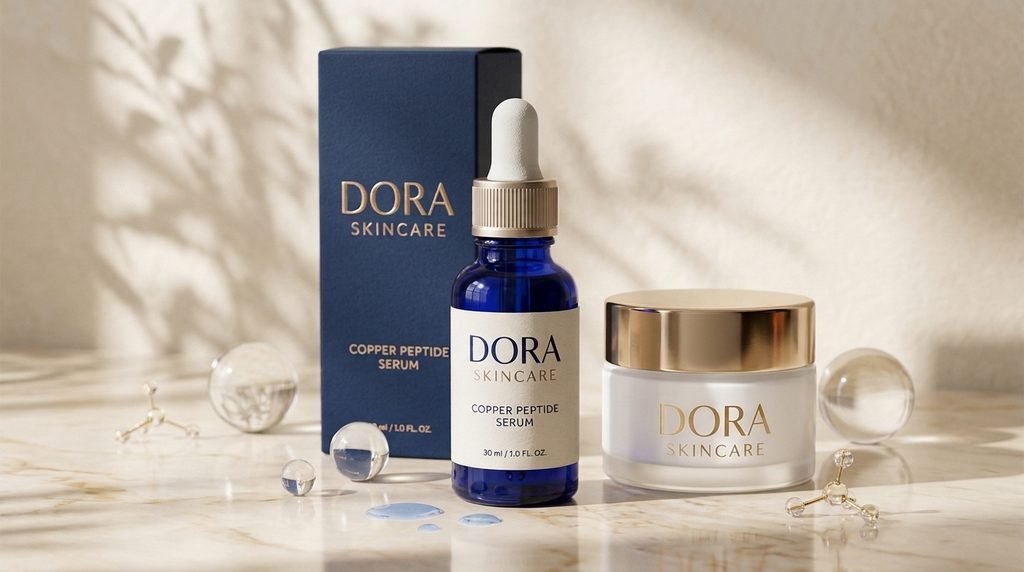
Copper peptides are compounds formed when certain peptides bind with copper ions.
Peptides are short chains of amino acids. Amino acids are the building blocks used by the body to create proteins, including collagen and elastin.
Copper is an essential mineral involved in several biological processes. When copper binds to a peptide, it creates a compound with properties that researchers continue to investigate.
One of the best-known examples is GHK-Cu, which stands for glycyl-L-histidyl-L-lysine copper.
In skincare, copper peptides are used in cosmetic formulations designed to support the appearance and condition of the skin.
You may find them in:
- Facial serums
- Anti-aging moisturizers
- Skin-conditioning creams
- Targeted treatment products
- Certain eye-care formulations
Copper peptide products are particularly popular among people interested in skin texture, visible signs of ageing, and maintaining a healthy-looking complexion.
Copper Peptides vs. Regular Peptides
Regular cosmetic peptides include several different ingredient families. Some are marketed for improving the appearance of fine lines, while others are used to support skin conditioning or hydration.
Copper peptides are different because they involve copper ions bound to specific peptide structures.
This distinction matters because not all peptides work in the same way, and evidence relating to one peptide cannot automatically be applied to another.
For example, a study involving GHK-Cu does not establish that every peptide serum offers identical benefits.
When shopping, check the ingredient list rather than relying entirely on a product’s front-label description.
2. How Do Copper Peptides Work on the Skin?
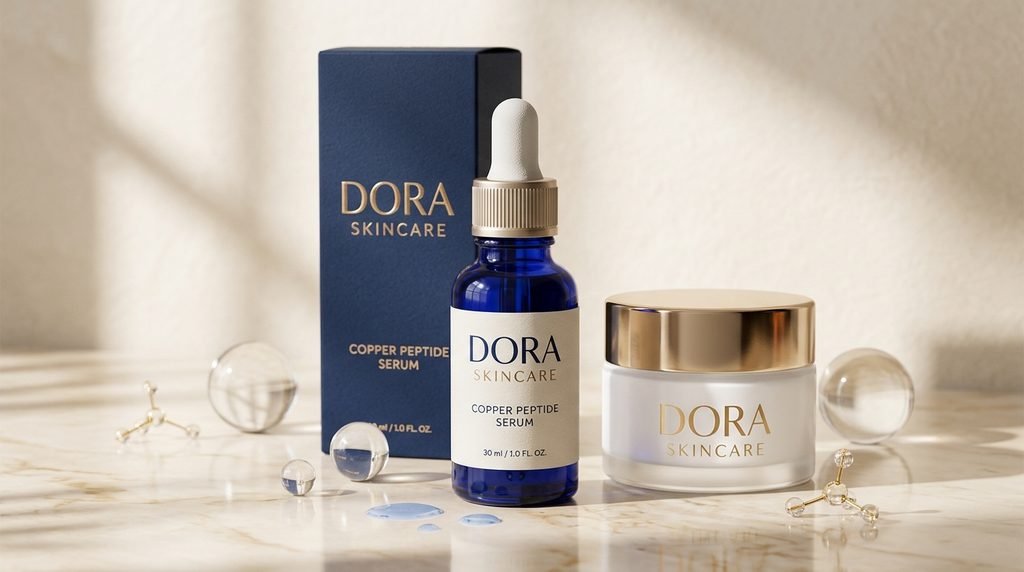
Copper peptides are being studied because of their potential involvement in biological processes related to skin structure and repair.
GHK-Cu has attracted particular interest in laboratory and dermatological research.
Researchers have investigated its relationship with:
- Collagen-related processes
- Skin extracellular matrix components
- Cellular activity
- Tissue repair mechanisms
- Inflammatory signalling pathways
Collagen is an important structural protein that helps skin maintain its firmness and support. As skin naturally ages, changes in collagen and elastin contribute to the development of fine lines, wrinkles, and reduced elasticity.
Copper peptides are therefore frequently included in cosmetic products marketed for mature-looking skin.
However, there is an important distinction between understanding how an ingredient behaves in experimental settings and proving that a finished skincare product delivers visible improvements.
The final result depends on several factors, including:
- The type of peptide used.
- The concentration and stability of the ingredient.
- The overall formulation.
- How the product is delivered to the skin.
- How consistently it is used.
- Individual skin characteristics.
A well-formulated product should be evaluated as a complete formula rather than judged by its headline ingredient alone.
3. Potential Benefits of Copper Peptides for Skin
Copper peptides are attractive because researchers have explored several possible skin-related applications.
Their potential cosmetic benefits should be considered carefully, as available human evidence remains limited and product formulations vary.
Supporting the Appearance of Firmer Skin
Collagen contributes to the skin’s structural support.
Copper peptides are studied for their potential relationship with processes involved in maintaining the extracellular matrix.
This has made them popular in skincare products designed for people concerned about visible loss of firmness.
A cosmetic copper peptide serum may be worth considering as part of a broader skincare routine, but it should not be presented as a guaranteed collagen replacement treatment.
Improving the Appearance of Fine Lines
Fine lines can become more noticeable as skin loses moisture, elasticity, and structural support.
Some copper peptide formulations are marketed for improving the appearance of ageing skin.
The potential benefit is one reason these ingredients appear in anti-aging serums and moisturizers.
Nevertheless, visible improvements depend on the specific product and the individual. Strong clinical evidence supporting every commercial copper peptide formula is not available.
Supporting Skin Conditioning
A useful skincare product should do more than contain an interesting active ingredient.
The moisturizing and conditioning components in a copper peptide serum may help improve the overall feel of the skin.
Some formulas combine peptides with ingredients such as glycerin, hyaluronic acid, or other moisturizing agents.
These additional ingredients can contribute to hydration and a smoother-looking complexion.
Supporting the Appearance of Healthy Skin
Copper peptides are also investigated in relation to skin repair biology.
This has created interest in their potential role in products intended to support the appearance of healthy skin.
However, a cosmetic serum should not be treated as a medical wound-healing treatment.
Do not apply ordinary cosmetic products to open wounds or damaged skin unless the product is specifically intended for that use and appropriate professional guidance has been obtained.
A Possible Option for Mature-Looking Skin
People concerned about early signs of ageing may be interested in adding a peptide-based serum to their routine.
Copper peptides offer another ingredient option alongside more established skincare ingredients.
They may appeal to people who prefer exploring different formulations rather than relying on a single active ingredient.
The important point is to have realistic expectations and avoid replacing treatments with stronger supporting evidence simply because a new ingredient is trending.
4. Copper Peptides vs. Other Popular Skincare Ingredients
Copper peptides are often compared with retinol, vitamin C, niacinamide, and hyaluronic acid.
Although these ingredients can appear in similar skincare routines, they serve different cosmetic purposes.
Copper Peptides vs. Retinol
Retinol is a vitamin A derivative widely used in skincare products targeting visible signs of ageing and uneven skin texture.
Copper peptides are marketed more broadly for skin conditioning and their potential relationship with skin-supporting processes.
Retinol has a more established evidence base for several cosmetic applications.
However, retinol can cause dryness, irritation, peeling, and increased sensitivity, especially when introduced too quickly.
Copper peptides may appeal to people interested in peptide-based skincare, but they should not be considered an equivalent replacement for retinoids.
Copper Peptides vs. Vitamin C
Vitamin C is commonly used in skincare products designed to improve the appearance of dullness and uneven skin tone.
It is also valued for its antioxidant properties.
Copper peptides are associated with a different set of research interests, particularly those involving peptide biology and skin structure.
If your main concern is dull-looking skin or uneven pigmentation, a well-formulated vitamin C product may be more directly aligned with that goal.
Copper Peptides vs. Niacinamide
Niacinamide is a form of vitamin B3.
It is commonly used to support the skin barrier, improve the appearance of uneven tone, and help manage excess oil.
Copper peptides are not direct substitutes for niacinamide.
Some people may choose to use both ingredients, provided the formulas are compatible and their skin tolerates the combination.
Copper Peptides vs. Hyaluronic Acid
Hyaluronic acid is a humectant that attracts and retains water in the skin.
It is particularly useful in moisturising formulations.
Copper peptides are not primarily hydration ingredients.
A copper peptide serum may contain hyaluronic acid, but the hydration benefit should be attributed to the complete formula rather than automatically to copper peptides.
5. Who Should Consider Using Copper Peptides?
Copper peptide skincare may interest several types of consumers.
People Concerned About Fine Lines
If you are beginning to notice fine lines around the forehead, eyes, or mouth, you may be exploring different cosmetic ingredients.
Copper peptide products are one option to research.
Consider them as a possible addition to a well-balanced routine rather than a guaranteed solution.
People Interested in Peptide-Based Skincare
Skincare enthusiasts who enjoy understanding ingredient formulations may appreciate exploring copper peptides.
They offer an opportunity to learn about peptide technology and how different cosmetic ingredients are formulated.
People Building a Long-Term Skincare Routine
A consistent routine is generally more useful than frequently switching between trending products.
If you are considering copper peptides, choose a suitable formula and allow enough time to assess how your skin responds.
People With Dry or Mature-Looking Skin
Some copper peptide serums include moisturizing ingredients that may suit people who prefer richer skincare formulations.
However, suitability depends on the complete ingredient list.
People with dry skin should also use a moisturizer that meets their individual hydration needs.
6. How to Use Copper Peptide Serum in Your Skincare Routine
Introducing a new skincare ingredient should be simple and gradual.
You do not need an elaborate routine to explore copper peptide products.
Step 1: Cleanse Your Face
Start with a gentle facial cleanser suitable for your skin type.
Remove makeup, sunscreen, and everyday impurities without excessive scrubbing.
If your skin is dry or sensitive, avoid cleansers that leave it feeling tight or uncomfortable.
Step 2: Apply Copper Peptide Serum
Follow the instructions provided by the manufacturer.
Apply the recommended amount to clean skin.
Avoid the eye area unless the product is specifically formulated for that region.
Do not assume that using more serum will produce faster or better results.
Step 3: Apply Moisturizer
Use a moisturizer suited to your skin type.
A moisturizer helps reduce moisture loss and supports the skin barrier.
For dry skin, a cream-based moisturizer may feel more comfortable than a lightweight gel.
For oily skin, a lighter lotion or gel moisturizer may be preferable.
Step 4: Use Sunscreen During the Day
Sunscreen is an essential part of a daytime skincare routine.
Choose broad-spectrum SPF 30 or higher and apply it according to the product instructions.
Sun protection helps reduce UV-related skin damage and supports long-term skin health.
Copper peptides should not be considered a replacement for sunscreen.
Morning Routine Example
- Gentle cleanser
- Copper peptide serum, if suitable for the formulation
- Moisturizer
- Broad-spectrum sunscreen SPF 30 or higher
Evening Routine Example
- Gentle cleanser
- Copper peptide serum
- Moisturizer
The exact order may vary depending on the product’s instructions and texture.
7. Can You Use Copper Peptides With Other Skincare Ingredients?
Ingredient compatibility is one of the most common questions surrounding copper peptide serums.
The answer depends on the exact formulas, their pH, stability, and the manufacturer’s directions.
Copper Peptides and Hyaluronic Acid
These ingredients can often be included in the same routine.
Hyaluronic acid helps attract moisture, while copper peptides serve a different cosmetic purpose.
A simple routine might include a hydrating serum followed by a copper peptide product, depending on their formulations.
Copper Peptides and Niacinamide
Niacinamide is generally considered a versatile skincare ingredient.
There is no universal reason that everyone must avoid using it alongside copper peptides.
However, individual formulas may differ.
Introduce products gradually and observe your skin’s response.
Copper Peptides and Retinol
Some skincare enthusiasts prefer separating copper peptide products and retinol into different routines.
This can make it easier to identify which ingredient causes irritation if a reaction occurs.
For example, you might use a copper peptide serum in the morning and retinol in the evening, provided both products are suitable for you.
This is a practical routine-management choice, not a universal rule that the ingredients are always incompatible.
Follow the manufacturers’ directions and seek professional advice if you are using prescription retinoids or other treatments.
Copper Peptides and Vitamin C
There is considerable discussion online about combining copper peptides with vitamin C.
Some formulations may have different pH requirements or stability considerations.
Rather than assuming every combination is unsafe, follow the product-specific instructions.
If you are unsure, use the products at different times of day or choose a routine recommended by the manufacturer.
Copper Peptides and Exfoliating Acids
AHAs and BHAs are used to exfoliate the skin.
Examples include glycolic acid, lactic acid, and salicylic acid.
Using several active ingredients together can increase the chance of irritation, particularly if you have sensitive skin.
A cautious approach is to introduce products separately and avoid layering multiple strong treatments until you understand how your skin responds.
8. Are Copper Peptides Safe for Sensitive Skin?
Copper peptide products are not automatically suitable for every skin type.
A formula’s complete ingredient list matters.
Fragrance, preservatives, botanical extracts, and other active ingredients may contribute to irritation.
People with sensitive skin should take a gradual approach.
Before applying a new product to the face, perform a patch test according to appropriate product guidance.
Look for signs such as:
- Persistent redness
- Burning or stinging
- Itching
- Swelling
- Unusual irritation
- Dryness that becomes uncomfortable
Stop using the product if you experience a significant reaction.
If symptoms are severe, persistent, or worsening, seek advice from a qualified healthcare professional.
People with eczema, rosacea, damaged skin barriers, or a history of allergic reactions may benefit from discussing new active ingredients with a dermatologist.
9. Possible Side Effects and Important Considerations
Copper peptides are frequently presented as gentle skincare ingredients, but this does not mean every formula is irritation-free.
Potential concerns include:
Skin Irritation
Some users may experience redness, stinging, or discomfort.
This may be related to the complete formulation rather than copper peptides alone.
Product Sensitivity
A person can react to preservatives, fragrance, or other ingredients in a serum.
Always review the full ingredient list.
Overuse of Active Ingredients
Combining too many active ingredients can make a skincare routine unnecessarily complicated.
If you are introducing copper peptides, avoid changing several other products at the same time.
Formulation Quality
Copper peptide products vary significantly.
The concentration, stability, packaging, and overall formula can influence product quality.
A higher advertised percentage does not automatically mean a better product.
Exaggerated Marketing Claims
Be cautious of products promising dramatic wrinkle removal, permanent skin tightening, or medical wound repair.
Cosmetic ingredients should be evaluated using realistic expectations.
The American Academy of Dermatology highlights that online claims surrounding copper peptides can exceed the available clinical evidence. It also notes that small clinical trials and variations in formulations limit what can be confidently concluded.
10. How Long Do Copper Peptides Take to Work?
There is no universal timeline for visible results from copper peptide skincare.
The outcome depends on the product, formulation, frequency of use, and individual skin characteristics.
Some users may notice that their skin feels more comfortable or hydrated because of moisturizing ingredients in the formula.
Changes in the appearance of fine lines, firmness, or skin texture are more difficult to predict.
Do not assume that a serum will produce visible anti-aging results within a few days.
A sensible approach is to:
- Photograph your skin under consistent lighting.
- Introduce the product gradually.
- Follow the manufacturer’s directions.
- Maintain a consistent routine.
- Monitor any irritation or discomfort.
- Evaluate whether the product is worth continuing.
If you experience no meaningful benefit or develop irritation, reconsider whether the product is appropriate for your routine.
11. How to Choose the Best Copper Peptide Serum
Choosing a suitable product involves more than selecting the most popular brand.
Consider the following factors before purchasing.
Check the Ingredient List
Look for the specific peptide ingredient.
Copper tripeptide-1 is a commonly used cosmetic ingredient name associated with GHK-Cu.
However, ingredient names and formulations should always be checked carefully.
Understand the Complete Formula
A copper peptide serum may also contain:
- Glycerin
- Hyaluronic acid
- Panthenol
- Ceramides
- Other peptides
- Soothing ingredients
These ingredients can influence the texture and overall skin feel.
Choose Suitable Packaging
Some active cosmetic ingredients can be affected by light, air, or storage conditions.
Consider packaging that protects the formula and follow the manufacturer’s storage recommendations.
Avoid Unsupported Claims
Be cautious of products claiming to replace professional cosmetic treatments or deliver guaranteed results.
Look for transparent product information and realistic descriptions.
Consider Your Skin Type
A lightweight serum may suit someone with oily skin, while a richer formula may appeal to someone with dry skin.
However, texture alone does not determine whether a product is suitable.
Buy From Reputable Retailers
When shopping in the USA, UK, Saudi Arabia, UAE, Qatar, Kuwait, Bahrain, Oman, Türkiye, or Egypt, check the retailer’s authenticity, product information, and return policies.
Regional product availability, packaging, and prices can differ.
Avoid unfamiliar sellers offering unusually cheap versions of premium skincare products.
12. Common Copper Peptide Skincare Myths
Myth 1: Copper Peptides Are Natural Botox
Copper peptides are not Botox.
Botulinum toxin treatments and topical cosmetic peptide products are entirely different.
A topical serum cannot be assumed to produce the same effects as an injectable medical treatment.
Myth 2: Higher Concentrations Always Work Better
A higher advertised concentration does not guarantee improved results.
Formulation stability, ingredient quality, and product testing are also important.
Myth 3: Copper Peptides Remove All Wrinkles
No cosmetic serum can guarantee the removal of all wrinkles.
Skin ageing is influenced by genetics, sun exposure, lifestyle, and natural biological changes.
Myth 4: Every Blue Serum Contains Effective Copper Peptides
The colour of a serum is not proof of its active ingredients or effectiveness.
Always examine the ingredient list and manufacturer information.
Myth 5: Copper Peptides Can Replace Your Entire Skincare Routine
Copper peptides do not replace cleansing, moisturizing, or sun protection.
A balanced skincare routine remains important.
13. Copper Peptides in Skincare: Frequently Asked Questions
What are copper peptides used for in skincare?
Copper peptides are used in cosmetic formulations designed to support skin conditioning and improve the appearance of ageing skin. Their biological properties are also being studied in dermatological research.
Are copper peptides good for mature skin?
They may be worth exploring if you are interested in peptide-based skincare and products targeting the appearance of fine lines. However, results vary and strong evidence is still limited for many commercial formulations.
Can beginners use copper peptides?
Many beginners can explore a suitable copper peptide product, provided they follow the manufacturer’s instructions and introduce it gradually.
Can I use copper peptides every day?
Frequency depends on the specific formulation. Some products are designed for daily use, while others have different instructions. Always follow the product label.
Are copper peptides suitable for oily skin?
They may be suitable for oily skin depending on the formula. A lightweight, non-greasy serum may be more comfortable than a rich cream.
Do copper peptides help with wrinkles?
They are studied for their potential relationship with skin structure and collagen-related processes. However, current evidence does not establish that every topical copper peptide product reliably reduces wrinkles.
Can I use copper peptides with niacinamide?
Some formulations can be used in the same routine. Introduce products gradually and follow their individual directions.
Should I use copper peptides in the morning or at night?
The best time depends on the product’s instructions. They can be incorporated into either routine if the formulation is suitable.
Are copper peptides better than retinol?
Neither ingredient is universally better. Retinol has a more established evidence base for several signs of photoaging, while copper peptides are an emerging cosmetic ingredient with more limited human evidence.
Can copper peptides help with skin hydration?
Copper peptides are not primarily hydration ingredients. Any moisturizing effect may come from supporting ingredients such as glycerin or hyaluronic acid.
Conclusion
Copper peptides in skincare are an interesting development for people who enjoy exploring modern cosmetic ingredients.
Their association with skin structure, collagen-related processes, and repair biology has made them popular in serums and anti-aging formulations.
However, popularity should not be confused with proven results. While research into GHK-Cu and related peptides continues, the clinical evidence for many topical cosmetic claims remains limited.
If you are considering a copper peptide serum, focus on the complete formulation, ingredient transparency, product quality, and suitability for your skin type.
Introduce it gradually, maintain a simple skincare routine, and continue using daily sunscreen.
Most importantly, avoid expecting one ingredient to transform your skin overnight. Healthy-looking skin is supported by consistent care, realistic expectations, and products selected according to individual needs.
Copper peptides may be an interesting addition to your skincare collection, but the best routine is always one that is appropriate, comfortable, and sustainable for your skin.