
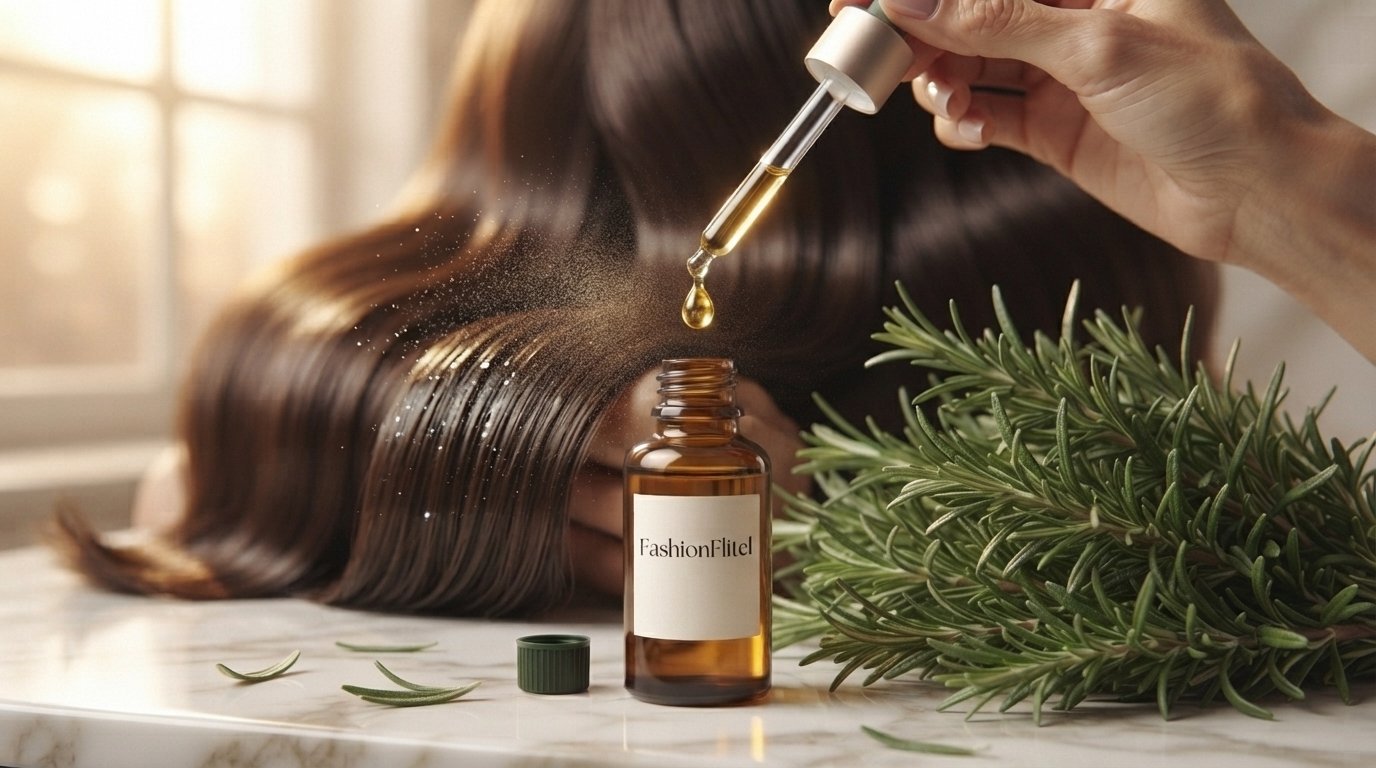
Healthy-looking hair begins with a scalp care routine that is gentle, consistent, and suited to your hair type. Among the natural ingredients gaining attention in beauty routines, rosemary oil has become a popular choice for people interested in fuller-looking hair, scalp massages, and simple hair care rituals.
But does rosemary oil actually help with hair growth? How should you apply it, and can you use it directly on your scalp?
Rosemary oil is an aromatic essential oil extracted from the rosemary plant. It is commonly used in hair care products, scalp treatments, and massage blends. Some early research suggests that rosemary oil may have potential for certain types of hair thinning, but the evidence remains limited. It should not be treated as a guaranteed solution for hair loss.
In this guide, you will learn about the potential benefits of rosemary oil for hair growth, how to dilute and apply it, how often to use it, and which mistakes to avoid. You will also discover how to build a practical rosemary oil hair routine without overwhelming your scalp or adding unnecessary steps to your beauty regimen.
What Is Rosemary Oil?
Rosemary oil is an essential oil obtained from the leaves and flowering tops of the rosemary plant, botanically known as Salvia rosmarinus. The plant is an aromatic evergreen herb traditionally used in cooking, fragrances, and personal care products.
In hair care, rosemary essential oil is most often included in scalp serums, shampoos, conditioners, and massage oils. Its distinctive herbal scent also makes it appealing to people who enjoy botanical beauty products.
It is important to distinguish rosemary essential oil from rosemary-infused carrier oil. Essential oil is concentrated and generally needs to be diluted before it is applied to the skin. Rosemary-infused oil is made by soaking rosemary plant material in a base oil, although the strength and composition can vary considerably.
These products are not interchangeable. Always read the label to understand which type you have and follow the manufacturer’s instructions.
Rosemary oil has attracted interest because laboratory research has explored some of its antioxidant and anti-inflammatory properties. However, laboratory findings do not automatically mean that applying the oil to your scalp will produce the same effects.
For everyday hair care, the most sensible approach is to use rosemary oil as an optional addition to a balanced routine rather than as a replacement for established treatments when hair loss is a concern.
Potential Benefits of Rosemary Oil for Hair Growth
Rosemary oil is popular for several reasons, from its pleasant herbal fragrance to its place in scalp massage routines. Some possible benefits are worth exploring, provided that expectations remain realistic.
1. It May Help With Certain Types of Hair Thinning
One small clinical study published in 2015 compared rosemary oil with 2% minoxidil in people experiencing androgenetic alopecia, a common form of patterned hair loss. After six months, both groups showed an increase in hair count compared with their starting measurements, and the researchers reported no significant difference between the groups at that point.
This finding is interesting, but it does not establish that rosemary oil is equivalent to minoxidil for everyone. The study was limited in size, and more robust research is needed to establish how effective rosemary oil is, which formulations work best, and who might benefit.
If you are experiencing persistent thinning, a widening part, bald patches, or sudden shedding, it is best to seek advice from a qualified healthcare professional. Hair loss can have several causes, including genetics, nutritional deficiencies, hormonal changes, medication effects, and scalp conditions.

2. It Can Make Scalp Massage More Enjoyable
Scalp massage is an easy way to turn a basic hair care routine into a relaxing self-care ritual. A small amount of suitable carrier oil can help your fingers glide over the scalp without excessive friction.
Some people like adding a properly diluted rosemary essential oil to their massage blend because of its herbal scent. The massage itself may feel soothing, although there is not strong evidence that scalp massage combined with rosemary oil reliably increases hair growth.
For a simple massage, use the pads of your fingers rather than your fingernails. Move gently in small circles without pulling on the hair or scratching the scalp.
You do not need to massage aggressively or for a long time. A few comfortable minutes is sufficient for a relaxing routine.
3. It May Support a More Thoughtful Scalp Care Routine
A healthy scalp care routine focuses on cleansing, comfort, and avoiding unnecessary irritation. Rosemary oil can be one optional element, but it is not a substitute for regular washing or treatment of an existing scalp condition.
If you use styling products, dry shampoo, or heavy oils, washing your scalp thoroughly can help remove accumulated residue. The best cleansing schedule depends on your scalp, activity level, and hair texture.
Rosemary oil should be avoided on skin that is already inflamed, scratched, or irritated. Adding a strongly scented essential oil to an uncomfortable scalp may make the problem worse.
4. It Adds a Botanical Fragrance to Hair Care
Rosemary has a fresh, herbal fragrance that many people enjoy. When used in a formulated shampoo or hair serum, it can contribute to a pleasant sensory experience.
However, fragrance is a cosmetic benefit, not proof of hair growth. A product that smells natural or contains botanical ingredients is not automatically more effective or gentler than a conventional hair care product.
If you are sensitive to fragrances, choose a fragrance-free option instead. Essential oils can trigger irritation or allergic contact dermatitis in some people.
How to Use Rosemary Oil for Hair Growth
Using rosemary oil properly matters more than using a large amount. Essential oils are concentrated, and applying them undiluted can irritate the skin.
The simplest approach is to choose one of three options: a ready-made product formulated for the scalp, a properly diluted essential oil blend, or a rosemary-infused carrier oil intended for topical use.
Method 1: Use a Ready-Made Rosemary Hair Serum
A commercial scalp serum is often the easiest option for beginners. Products vary in their ingredients, concentration, texture, and application directions, so check the label before buying.
Look for a product that clearly identifies how it should be used. Some formulas are designed to remain on the scalp, while others are intended to be rinsed out. Do not assume that every rosemary hair product can be used in the same way.
To apply a leave-in serum:
- Read the directions and check whether the product is suitable for your scalp.
- Part your hair into small sections if needed.
- Apply the recommended amount directly to the intended scalp areas.
- Massage gently if the instructions permit.
- Wash your hands and avoid getting the product in your eyes.
Start with the frequency stated on the product label. Using more product or applying it more often does not necessarily improve results.
Method 2: Dilute Rosemary Essential Oil in a Carrier Oil
A carrier oil helps disperse concentrated essential oil and makes it easier to apply. Common choices include jojoba, sunflower, and fractionated coconut oil, although individual skin sensitivities and hair preferences differ.
A conservative starting point for a small test batch is approximately a 1% dilution. This is a general skin-care starting point, not a guarantee that a product will be irritation-free.
For a 10 mL carrier oil blend, approximately two drops of essential oil may produce a dilution near 1%, depending on drop size and the oil’s dispensing method. Drop sizes are not standardized, so a measured, professionally formulated product is preferable when precise concentration matters.
To make a small blend:
- Measure 10 mL of your chosen carrier oil.
- Add rosemary essential oil in accordance with the essential oil manufacturer’s safety instructions.
- Mix in a clean, suitable container.
- Label the blend with its ingredients and preparation date.
- Store it according to the product guidance, away from heat and direct sunlight.
Do not apply undiluted rosemary essential oil directly to the scalp. Do not mix it with water and assume that the essential oil will dissolve; oil and water separate without an appropriate formulation.
If you are pregnant, breastfeeding, managing a skin condition, or unsure whether an essential oil is appropriate for you, consult a qualified healthcare professional before use.
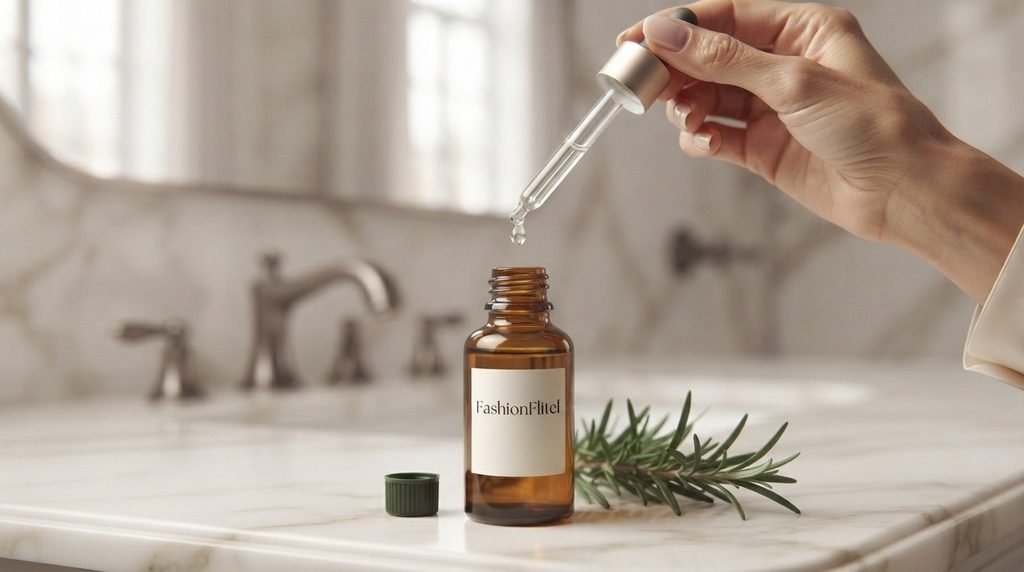
Method 3: Try a Rosemary-Infused Hair Oil
Rosemary-infused oil is another option, but it is different from rosemary essential oil diluted into a carrier oil.
An infused oil contains plant material that has been steeped in a base oil. Its strength depends on the ingredients and preparation method. It should not be assumed to have the same concentration or effects as an essential oil blend.
If you purchase an infused product, choose one intended for cosmetic use and follow its directions. Avoid homemade preparations that contain moisture, fresh plant material, or other ingredients that could make storage and contamination more difficult to manage.
A ready-made infused oil can be convenient for people who prefer a simple, pre-prepared product.
Step-by-Step Rosemary Oil Scalp Routine
You do not need a complicated routine to incorporate rosemary oil into your hair care schedule. A few careful steps are enough.
Step 1: Start With a Comfortable Scalp
Before applying any new product, check your scalp for redness, broken skin, soreness, or unusual irritation. If you have an active rash or inflamed scalp, postpone essential oil use until you understand the cause.
A clean scalp is useful when you are applying a leave-in product, but you do not necessarily have to shampoo immediately beforehand. Follow the directions for your particular formula.
Step 2: Perform a Small Skin Test
Before using a new rosemary oil preparation on a larger area, test a small amount of the finished, diluted product on a limited area of skin.
Follow the product manufacturer’s testing instructions and monitor the area for a delayed reaction. A single successful test cannot guarantee that you will never develop irritation or an allergy.
Stop using the product if you experience persistent itching, redness, burning, swelling, or a rash. Wash it off gently and seek medical advice if the reaction is significant or does not settle.
Avoid testing the oil near your eyes, inside your nose, or on sensitive mucous membranes.
Step 3: Section Your Hair
If your hair is thick, curly, coily, or long, part it into several sections. This helps you apply the product evenly without coating the hair excessively.
You can use clips to keep each section separate. The goal is to reach the scalp, not saturate the full length of the hair.
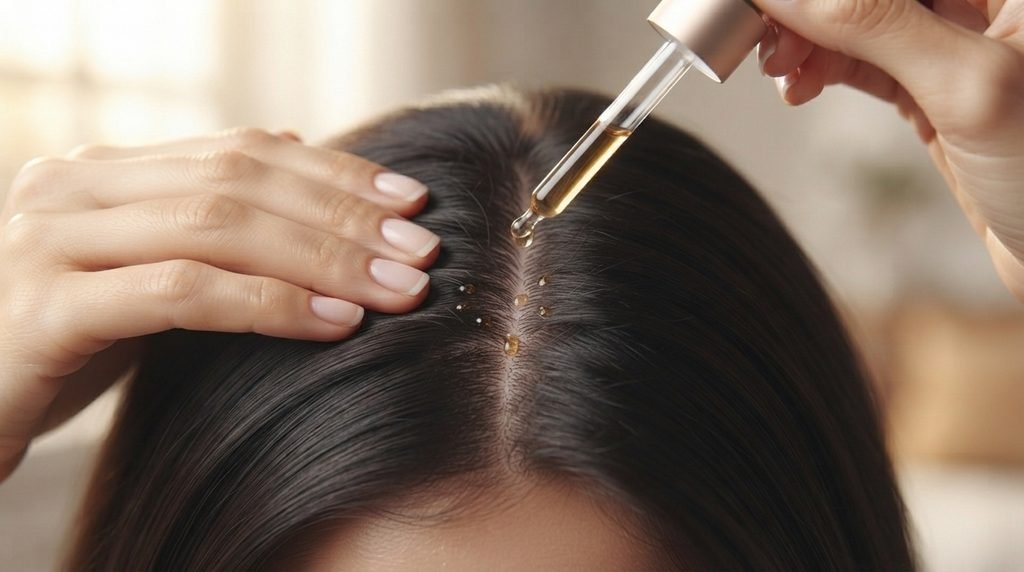
Step 4: Apply a Small Amount
Use only the quantity recommended by the product label. For a diluted oil blend, apply a small amount along the partings and spread it gently over the intended areas.
Avoid pouring a large quantity onto one spot. Excess oil can make hair difficult to wash, leave residue, and aggravate some people’s scalp discomfort.
Step 5: Massage Gently
Use your fingertips to move the product over the scalp in small, comfortable circles. Keep your nails away from the skin and avoid forceful rubbing.
A brief massage is enough to distribute the oil. There is no need to pull, tug, or repeatedly manipulate the hairline.
Step 6: Follow the Correct Rinsing Instructions
Some scalp products are leave-in formulas; others are pre-shampoo treatments. Follow the specific instructions rather than assuming that leaving the oil on longer will produce better results.
If you use a pre-shampoo oil, wash your hair with a suitable shampoo afterward. Depending on the amount applied and your hair type, you may need a second gentle wash to remove residue.
Avoid leaving an essential oil preparation on overnight unless the product is specifically designed and labelled for that use and you tolerate it well.
Step 7: Keep the Rest of Your Routine Simple
After washing, use conditioner on the lengths and ends as needed. Choose a detangling method that minimizes pulling, and avoid excessive heat or tight hairstyles if breakage is a concern.
Rosemary oil will not compensate for repeated mechanical damage, harsh chemical treatments, or an unsuitable cleansing routine.
How Often Should You Use Rosemary Oil?
There is no universally established frequency for rosemary oil use that guarantees hair growth. The appropriate schedule depends on the concentration, product instructions, scalp sensitivity, and whether the formula is intended to be rinsed out or left in.
If you are new to a rosemary scalp product, begin conservatively and follow the label. Do not increase the frequency simply because you have not noticed a visible change after a few applications.
A practical routine might involve a pre-shampoo treatment on a day when you already plan to wash your hair. Someone using a formulated leave-in serum may follow a different schedule entirely.
Consistency should mean using a suitable product as directed, not repeatedly coating the scalp or applying more essential oil than recommended.

When Can You Expect to See Results?
Hair changes slowly, so it is important to be patient and realistic. A few days or a couple of weeks is not enough to determine whether a product affects hair growth.
The small 2015 study of rosemary oil for androgenetic alopecia assessed outcomes over six months. This does not mean that every user should expect visible improvement at six months, or that a similar result will occur with a different product or application method.
If you want to monitor changes, take photographs under similar lighting and from consistent angles. Avoid relying only on daily mirror checks, which can make normal changes in styling, lighting, and hair positioning seem more significant.
It is also useful to distinguish between three different concerns:
- Hair growth: New hair emerging from the scalp.
- Hair shedding: Hair falling out from the scalp, which can fluctuate for many reasons.
- Hair breakage: Hair strands snapping along their lengths, often related to damage or mechanical stress.
An oil applied to the scalp is unlikely to resolve every cause of shedding or breakage. If hair loss is new, severe, persistent, or accompanied by scalp symptoms, seek professional evaluation instead of waiting for a cosmetic product to work.
Common Rosemary Oil Mistakes to Avoid
A natural ingredient can still cause problems when used incorrectly. Avoiding these mistakes can make a rosemary oil routine more comfortable and practical.
Mistake 1: Applying Essential Oil Undiluted
Pure rosemary essential oil is concentrated. Applying it directly to the scalp may lead to irritation or a skin reaction.
Use an appropriately formulated product or dilute the essential oil according to reliable safety guidance. Do not assume that a few drops are harmless simply because the ingredient is plant-derived.
Mistake 2: Using Too Much Oil
More oil does not mean more growth. Excessive application may leave a greasy coating, create buildup, and make cleansing more difficult.
Start with the recommended amount. If your scalp feels coated or uncomfortable, adjust your routine rather than adding more product.
Mistake 3: Ignoring Irritation
Burning, persistent itching, redness, or swelling are not signs that an oil is working. Stop using the product if these symptoms appear.
Wash the affected area gently and seek medical advice when necessary. If the product gets into your eyes, rinse them thoroughly with clean water and obtain medical guidance if discomfort persists.
Mistake 4: Expecting Overnight Results
Hair growth takes time, and results vary by individual and by the underlying cause of hair thinning. Rosemary oil cannot guarantee thicker hair, prevent all shedding, or replace treatment for every form of hair loss.
A product that promises dramatic growth in a few days should be approached with skepticism.
Mistake 5: Mixing Too Many Active Ingredients
Combining multiple essential oils, exfoliating scalp treatments, fragranced products, and strong hair treatments can make it difficult to identify what is causing irritation.
Introduce one new product at a time. This makes it easier to monitor how your scalp responds and to simplify your routine if a problem develops.
Mistake 6: Neglecting Hair Breakage
Sometimes hair appears thinner because strands are breaking before they reach their expected length. Frequent heat styling, tight ponytails, rough brushing, bleaching, and other chemical processes can contribute to breakage.
Use a conditioner suited to your hair, detangle gently, reduce unnecessary heat exposure, and avoid hairstyles that place repeated tension on the hairline.
Mistake 7: Using Homemade Products Without Considering Storage
Water-based mixtures and preparations containing fresh plant material can be difficult to preserve safely at home. A product may become contaminated or degrade even if it still looks and smells normal.
For beginners, a commercially prepared scalp product with clear directions and appropriate packaging is often the simpler choice.
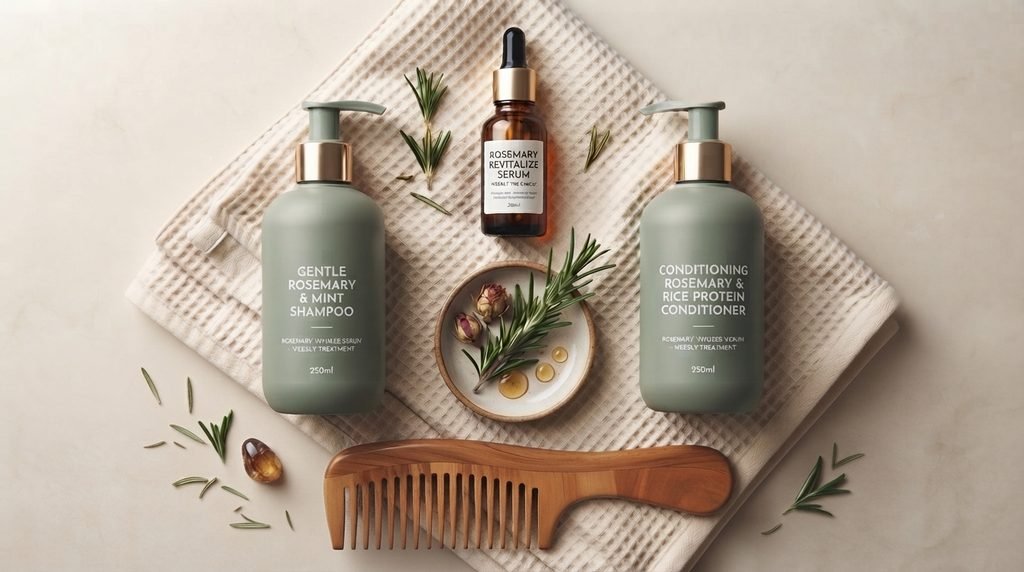
Is Rosemary Oil Suitable for Every Hair Type?
Rosemary oil is not limited to one hair texture, but the way you apply and remove it may need to change depending on your hair and scalp.
Fine or Oily Hair
Fine hair can become weighed down by heavy oils. If your hair loses volume easily, consider a lightweight formulated serum or a pre-shampoo treatment that you can rinse out.
Avoid applying large amounts near the roots if the product leaves your hair looking flat.
Dry or Coarse Hair
Coarse or dry hair may tolerate some oil-based products on the lengths, depending on individual preferences. However, rosemary essential oil should still be appropriately diluted when used on the scalp.
A separate conditioner or leave-in product formulated for the hair lengths may help with manageability and softness. Do not assume that a scalp oil alone provides sufficient conditioning.
Curly and Coily Hair
Curly and coily hair often benefits from careful detangling and reduced friction. Sectioning the hair can make scalp application easier and prevent unnecessary pulling.
Use a nozzle or dropper to apply a small amount along the partings. Keep the product away from the eyes, and choose a washing schedule that suits your scalp and styling routine.
Color-Treated or Chemically Processed Hair
If your hair is bleached, dyed, relaxed, or otherwise chemically treated, prioritize gentle cleansing, conditioning, and minimizing mechanical damage.
Check whether the product is compatible with your existing routine. If your scalp is sensitive after a chemical service, avoid experimenting with essential oils until the skin has recovered and you have appropriate guidance.
Sensitive Scalp
People with sensitive skin may find fragranced products and essential oils irritating. If you have a history of contact allergies, eczema, or recurrent scalp inflammation, consult a qualified professional before trying rosemary essential oil.
A fragrance-free, dermatologist-recommended approach may be more suitable than adding a botanical oil.

Rosemary Oil Compared With Other Hair Care Options
Rosemary oil is one of many products people consider when they want to improve the appearance or condition of their hair. Understanding what each option is designed to do can help you make a more informed choice.
Rosemary Oil vs. Coconut Oil
Coconut oil is a carrier oil commonly used to condition hair lengths and reduce some forms of hair damage. It is not the same as rosemary essential oil and does not serve the same role in a diluted essential oil blend.
Rosemary essential oil is concentrated and primarily used in formulated scalp products or diluted preparations. Coconut oil may be used alone on the hair lengths by people who tolerate it.
Neither oil should be presented as a guaranteed treatment for hair loss.
Rosemary Oil vs. Jojoba Oil
Jojoba oil is a wax ester commonly used as an emollient in skin and hair products. It can serve as a carrier for certain essential oils when used in an appropriate formulation.
Rosemary essential oil provides the aromatic botanical component, while jojoba oil acts as the base. The combination may be useful for someone who prefers an oil-based scalp massage, but evidence that this specific mixture promotes hair growth is limited.
Rosemary Oil vs. Minoxidil
Minoxidil is an established treatment option for certain types of hair loss, including some cases of patterned hair loss. Its suitability depends on the person, the formulation, and professional guidance where appropriate.
Rosemary oil has less extensive clinical evidence. One small study compared rosemary oil with 2% minoxidil, but that result is not sufficient to establish equivalence or justify replacing a proven treatment.
If you are considering treatment for ongoing hair loss, speak with a qualified healthcare professional about the likely cause and appropriate options.
Rosemary Oil vs. Caffeine Hair Products
Caffeine appears in some shampoos and scalp products marketed for hair thinning. Evidence varies by formulation, and the presence of caffeine does not guarantee a meaningful clinical benefit.
Choose products based on the problem you are trying to address, the quality of the evidence, your tolerance, and realistic expectations rather than the popularity of an ingredient.
How to Build a Simple Weekly Hair Care Routine
A useful hair care routine does not need to include a long list of oils, masks, serums, and supplements. Start with the basics and add products only when they meet a specific need.
On Wash Day
- Cleanse the scalp with a shampoo suited to your scalp type.
- If using a pre-shampoo rosemary oil product, apply it according to the label and rinse thoroughly.
- Condition the lengths and ends to improve manageability.
- Detangle gently, working in sections if needed.
- Use heat protection when styling with hot tools.
Between Wash Days
Keep the scalp comfortable and avoid applying multiple heavy products unnecessarily. If you use a leave-in rosemary serum, follow its directions and watch for irritation.
Use gentle styling techniques and avoid repeatedly pulling hair into tight styles. If your scalp becomes itchy or greasy, reassess the products and washing frequency rather than adding another oil.
Once a Week
Review how your hair and scalp feel. Check whether your products leave residue, cause discomfort, or make your routine unnecessarily complicated.
You can also take a consistent photograph if you are monitoring thinning. Remember that photographs document changes; they cannot diagnose the cause of hair loss.

Frequently Asked Questions About Rosemary Oil for Hair Growth
Can rosemary oil help hair grow faster?
There is limited clinical evidence suggesting that rosemary oil may have potential for certain types of patterned hair loss. However, it has not been established as a reliable way to accelerate hair growth for everyone. Results depend on the underlying cause of thinning, and more research is needed.
Can I apply rosemary oil directly to my scalp?
Do not apply pure rosemary essential oil directly to the scalp. Choose a formulated product intended for scalp use or dilute the essential oil appropriately in a suitable carrier oil. Follow the manufacturer’s safety instructions.
Should I use rosemary oil before or after shampooing?
This depends on the product. Pre-shampoo treatments should be rinsed out according to their instructions, while certain formulated serums are designed to remain on the scalp. Check the label instead of assuming that every product can be used in the same way.
Can I leave rosemary oil in my hair overnight?
Do not assume that overnight use is necessary or beneficial. Prolonged contact may increase the chance of irritation for some people, especially with unsuitable formulations. Only leave a product on overnight if it is specifically intended for that use and you tolerate it well.
How long does rosemary oil take to work?
There is no guaranteed timeline. The small 2015 clinical study evaluated changes over six months, but individual results and commercial products may differ. If your hair is thinning, identifying the cause is more useful than relying on a fixed timeline for a cosmetic oil.
Can I use rosemary oil every day?
Daily use is not necessary for everyone. The appropriate frequency depends on the concentration, formulation, label directions, and your scalp’s response. Start conservatively and stop if irritation occurs.
Does rosemary oil help with dandruff?
Rosemary oil should not be treated as a proven dandruff treatment. Dandruff and scalp flaking can have different causes, and essential oils may irritate an already sensitive scalp. If flaking persists, consider a suitable evidence-based dandruff product or seek professional advice.
Is rosemary water the same as rosemary oil?
No. Rosemary water and rosemary essential oil are different preparations with different compositions and concentrations. Rosemary water should not be assumed to provide the same effects as essential oil, and neither should be considered a guaranteed hair-growth treatment.
Can rosemary oil stop hair shedding?
There is insufficient evidence to conclude that rosemary oil reliably stops shedding across different causes of hair loss. Persistent or sudden shedding can have medical or nutritional causes that need proper assessment.
Is rosemary oil safe for sensitive skin?
Not necessarily. Essential oils can cause irritation or allergic reactions. If you have sensitive skin, a history of contact dermatitis, or an active scalp condition, consult a qualified healthcare professional before trying it.
Final Thoughts
Rosemary oil has become a popular addition to modern hair care routines because it offers a botanical fragrance, works well in scalp massage rituals, and has some preliminary research behind its potential use for certain types of hair thinning. However, the evidence is still limited, and it should not be viewed as a guaranteed solution for hair growth.
If you want to try rosemary oil, choose a well-formulated product, dilute essential oil appropriately, apply it gently, and follow the product’s directions. Avoid excessive amounts, undiluted application, and routines that leave your scalp irritated.
Just as importantly, build your routine around the basics: gentle cleansing, suitable conditioning, reduced breakage, and hairstyles that do not place excessive tension on the hairline.
If you notice persistent thinning, sudden shedding, bald patches, or scalp pain, seek professional advice to identify the underlying cause. A thoughtful hair care routine can support healthier-looking hair, but the right approach begins with understanding what your hair and scalp actually need.